
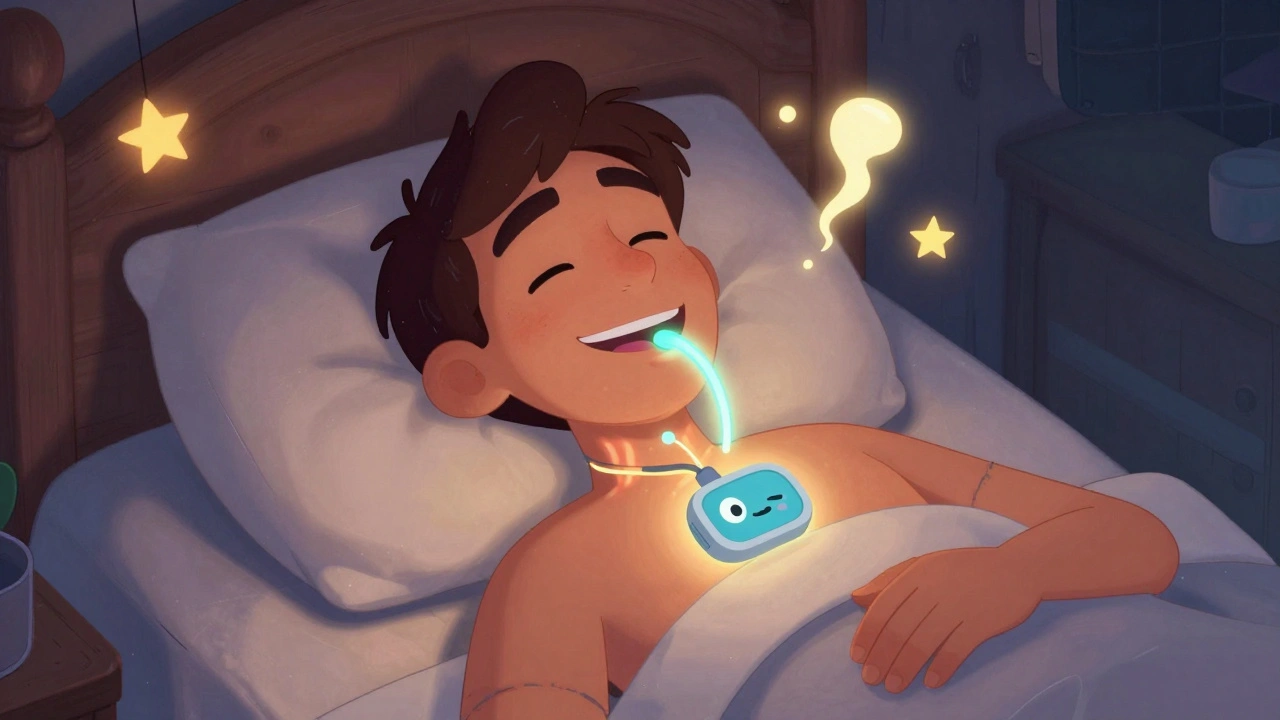
If you’ve tried CPAP for sleep apnea and gave up because it felt uncomfortable, noisy, or just plain unmanageable, you’re not alone. About 30-46% of people stop using their CPAP machine within the first year. But what if there was another option - one that doesn’t require a mask, hose, or nightly hassle? That’s where upper airway stimulation (UAS) comes in.
What Is Upper Airway Stimulation?
Upper airway stimulation is a surgically implanted device that treats obstructive sleep apnea by gently stimulating the nerve that controls your tongue. It’s designed for people who can’t tolerate CPAP but still need serious treatment for their sleep apnea. The most common system is called Inspire a fully implantable neurostimulation system approved by the FDA in 2014 to treat moderate to severe obstructive sleep apnea in patients who can’t use CPAP. Unlike CPAP, which pushes air into your airway, Inspire works by moving your tongue forward during sleep to keep your airway open.The device senses when you breathe in and sends a mild pulse to the hypoglossal nerve - the nerve that controls tongue movement. This causes your tongue to move slightly forward, preventing it from collapsing backward and blocking your airway. The whole thing turns on automatically when you’re asleep and turns off when you wake up, using a small remote control you keep by your bed.
How Does the Inspire System Work?
The Inspire system has three small parts implanted under your skin:- A stimulation lead - placed near the hypoglossal nerve in your neck
- A sensing lead - placed under your ribcage to detect your breathing pattern
- An implantable pulse generator (IPG) - about the size of a pacemaker, placed under your collarbone
There’s also a handheld remote you use to turn the device on before bed and off when you wake up. No masks. No tubes. No noise. Just a quiet night’s sleep.
The surgery is done as an outpatient procedure under general anesthesia. Doctors make three small incisions: one in your neck to access the nerve, another lower in your neck to place the breathing sensor, and one near your collarbone to tuck in the battery unit. Most people go home the same day.
Who Is a Good Candidate?
Not everyone with sleep apnea qualifies. Inspire isn’t meant for mild cases or people who can use CPAP. It’s for those who’ve tried and failed. Here’s who it’s designed for:- Ages 22 and older
- Diagnosed with moderate to severe obstructive sleep apnea (AHI between 15 and 100 events per hour)
- BMI under 35 (some centers accept up to 32)
- Less than 25% of your apneas are central or mixed (not caused by airway blockage)
- No complete collapse of the soft palate during sleep (confirmed by a special endoscopy test)
If you’ve been on CPAP for months and still feel tired, or if you’ve tried it for weeks and just couldn’t stick with it, you might be a candidate. Before moving forward, you’ll need a recent sleep study (within the last two years) and a sleep endoscopy - a procedure where a doctor watches your airway collapse while you’re lightly sedated.
How Effective Is It?
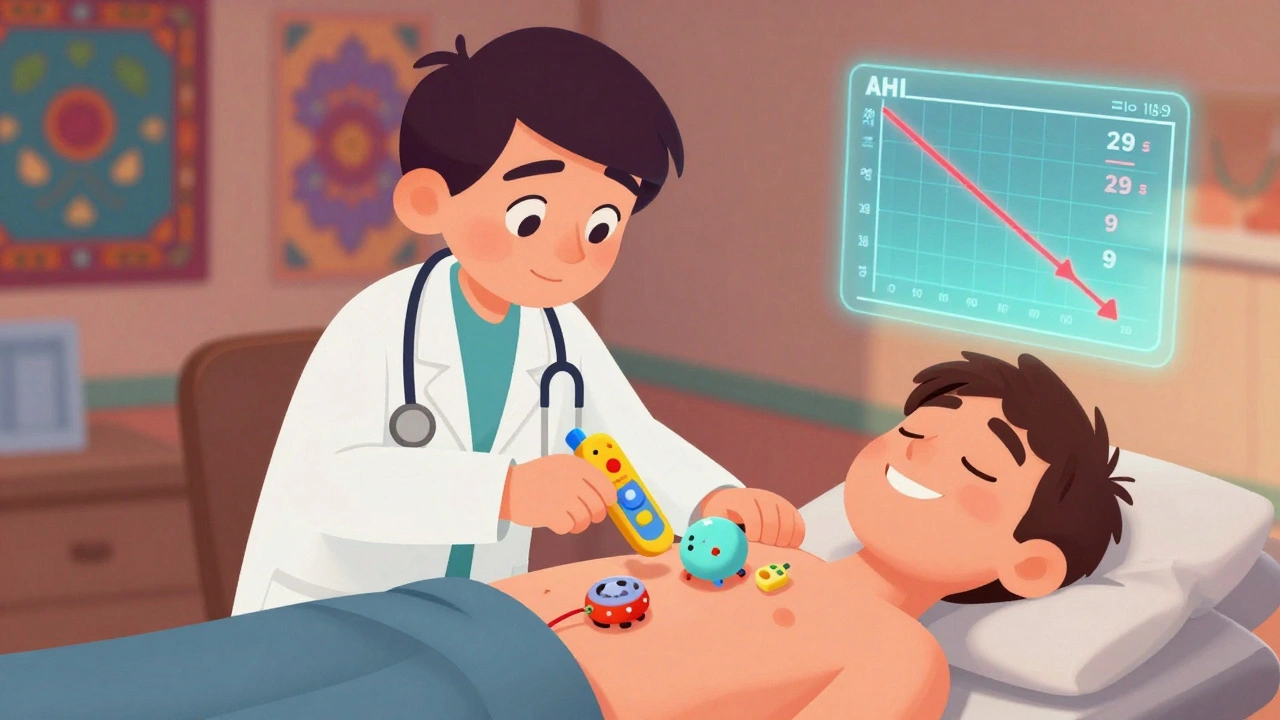
The data is strong. In the STAR trial - the largest long-term study on Inspire - patients saw their apnea-hypopnea index (AHI) drop from an average of 29.3 events per hour down to just 9.0 after one year. That’s a 68% reduction. Two-thirds of patients had their AHI cut in half or more, and nearly 80% were below the 20-event threshold that defines “successful treatment.”Real-world results match those numbers. The ADHERE Registry, which tracks patients years after implant, shows consistent results even for those with higher AHI (up to 100) and BMI (up to 40), thanks to expanded FDA approval in 2023. Daytime sleepiness dropped significantly. People reported feeling more alert, focused, and energetic.
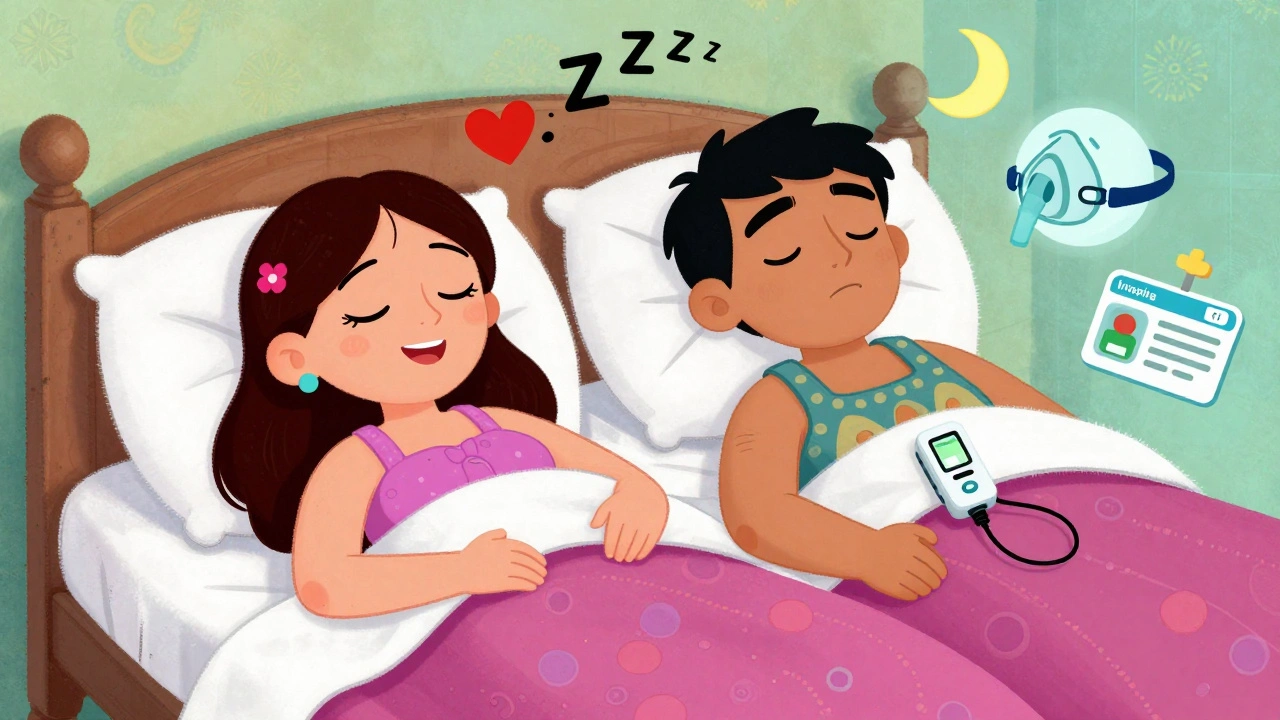
Bed partners noticed the difference too. At the four-year mark, 85% of partners said the patient snored only softly or not at all. One Reddit user wrote: “My wife says I’ve stopped snoring completely after two years. I feel more rested than I have in decades.”
How Does It Compare to CPAP and Surgery?
CPAP is still the gold standard - if you can use it. But for those who can’t, Inspire offers a real alternative.| Feature | CPAP | Inspire UAS | Traditional Surgery (e.g., UPPP) |
|---|---|---|---|
| Effectiveness (AHI reduction) | 70-90% if used consistently | 68% average reduction | 40-60% reduction |
| Adherence Rate | 54-71% abandon within 1 year | 90%+ use nightly after first year | High success rate, but recovery is long |
| Device Type | External machine with mask | Implanted device | Removal of tissue |
| Recovery Time | None | 5-7 days | 2-6 weeks |
| Reversibility | Yes (stop using) | Yes (device can be removed) | No (tissue is permanently altered) |
| Adjustability | Yes (pressure settings) | Yes (stimulation level via remote) | No |
Unlike older surgeries like uvulopalatopharyngoplasty (UPPP), which cut away tissue from the throat, Inspire works without removing anything. It’s reversible. If you ever decide to stop using it, the device can be safely removed. There’s no permanent change to your anatomy.
What Are the Risks and Side Effects?
The procedure is safe. In real-world use, 99.6% of patients had no major complications. Severe complications - like nerve damage or infection - happen in fewer than 0.5% of cases.Some minor side effects do occur:
- Temporary tongue weakness (about 5% of patients in early trials, usually resolves in weeks)
- Mild soreness or swelling at incision sites
- Minor infections (around 2%) - treated easily with antibiotics
- Discomfort from stimulation at first - most people adapt within 2-3 weeks
The biggest challenge isn’t physical - it’s behavioral. You have to remember to turn the device on every night. Some patients forget. Others feel awkward using the remote at first. But over time, it becomes routine - like charging your phone.
Cost and Insurance Coverage
The total cost of the Inspire system - including surgery, device, and follow-up - averages between $35,000 and $40,000. That sounds high, but it’s comparable to the long-term cost of CPAP when you factor in replacement masks, tubing, filters, and ongoing doctor visits over 5-10 years.Good news: insurance coverage has improved dramatically. As of 2025, 95% of Medicare patients and 85% of commercially insured patients have coverage for Inspire therapy. Most insurers require proof of CPAP failure - usually a 30-day trial with less than 4 hours of nightly use.
Many centers offer payment plans or financial assistance programs. The Inspire Patient Support Program also helps navigate insurance paperwork and connects you with patient advocates.
What Happens After Surgery?
The device isn’t turned on right away. You need about 4-6 weeks to heal. Then, your doctor will schedule your first activation visit. They’ll use a programming tablet to test different stimulation levels to find what works best for you - without waking you up or causing discomfort.Follow-up visits happen at 1, 3, 6, and 12 months. During these, your doctor fine-tunes the settings based on your sleep data and how you’re feeling. The device records your nightly usage and breathing events, so your care team can track progress remotely.
Most people return to normal activities within a week. You can shower, exercise, and travel normally. The device won’t set off airport metal detectors, but you’ll be given a medical ID card to show if needed.
What Do Patients Say?
Real people, real results:- “I used to wake up 10 times a night. Now I sleep through. My wife says I’m a different person.” - Mark, 58, Florida
- “I was so tired all day. Now I’m back to coaching my kid’s soccer team. I didn’t realize how much energy I’d lost.” - Lisa, 49, Ohio
- “The first week was weird - I felt my tongue twitching. But after two weeks, I forgot I even had it.” - Jamal, 44, Texas
On Inspire’s patient forum, 86% say it’s better than CPAP. 80% would recommend it to someone else.
Is It Right for You?
If you’ve struggled with CPAP and your sleep apnea is still affecting your life - your energy, your mood, your relationships - then Inspire might be worth exploring. It’s not a cure. It’s not for everyone. But for the right person, it’s life-changing.Start by talking to a sleep specialist who has experience with UAS therapy. Ask if they’ve done sleep endoscopies. Ask about their success rates. Ask how many patients they’ve implanted. Don’t settle for a doctor who only offers CPAP and surgery - you deserve to know all your options.
Sleep apnea isn’t just about snoring. It’s linked to high blood pressure, heart disease, stroke, and even depression. Treating it isn’t optional - it’s essential. And if CPAP isn’t working for you, upper airway stimulation is no longer a last resort. It’s a proven, effective, and quiet alternative.
Is upper airway stimulation the same as a pacemaker?
It works similarly - both are implanted devices that send electrical pulses - but they target different nerves and treat different conditions. A pacemaker regulates heart rhythm. Inspire stimulates the hypoglossal nerve to keep your airway open during sleep. The device is about the same size as a pacemaker and is implanted in a similar location under the collarbone.
Can I still use a CPAP if I get Inspire?
You don’t need to. Once the Inspire system is properly programmed and working, most patients stop using CPAP entirely. The device is designed to fully replace CPAP for eligible patients. Some people use it temporarily during the first few weeks after surgery while adjusting, but long-term use of CPAP isn’t required.
Does Inspire help with snoring?
Yes. In fact, reducing snoring is one of the most noticeable benefits. Studies show that 85% of bed partners report little to no snoring at the four-year mark. The device prevents the tongue from collapsing and vibrating against the throat, which is the main cause of loud snoring in obstructive sleep apnea.
How long does the battery last?
The implantable pulse generator has a battery life of about 8 to 11 years, depending on usage and stimulation settings. When the battery runs low, you’ll need a minor surgical procedure to replace the generator. This is a simple outpatient surgery - same as the original implant, just swapping out the battery unit.
Can I get an MRI with Inspire?
Yes - but only under specific conditions. The Inspire system is MRI-conditional, meaning you can safely have an MRI of your head or extremities, as long as the machine is set to certain parameters and the device is turned off during the scan. Full-body MRIs are not allowed. Always inform your radiology team that you have an implanted device before any scan.
What if I gain weight after getting Inspire?
Weight gain can reduce the effectiveness of Inspire. The device works best when your BMI is under 35. If you gain weight after implantation, your airway may narrow again, requiring higher stimulation levels. Your doctor can adjust the settings, but significant weight gain might reduce the therapy’s success. Maintaining a healthy weight helps ensure long-term results.
Is Inspire covered by Medicare?
Yes. As of 2025, Medicare covers Inspire therapy for eligible patients who have tried and failed CPAP. You’ll need documentation from your sleep specialist showing CPAP intolerance and a qualifying sleep study. Most Medicare Advantage plans also cover it, but always confirm with your provider before scheduling surgery.
Next Steps If You’re Considering Inspire
1. Get a sleep study - if you haven’t had one in the last two years, you’ll need a new one.2. Try CPAP for at least 30 days - insurers require proof you’ve tried and failed.
3. Find a specialist - look for a sleep center or ENT surgeon who performs Inspire implants regularly. Ask how many they’ve done.
4. Schedule a sleep endoscopy - this determines if your airway anatomy is suitable.
5. Check insurance coverage - call your insurer and ask about pre-authorization requirements.
6. Talk to patients - join online communities like Apnea Board or Reddit’s r/sleepapnea to hear real experiences.
Sleep apnea steals your rest, your health, and your life. You don’t have to live with it. If CPAP isn’t working, upper airway stimulation offers a quiet, effective, and permanent solution - one that lets you sleep like you used to, without the mask, without the noise, without the frustration.


Written by Guy Boertje
View all posts by: Guy Boertje