
OTC Heartburn Meds: What Works, What to Avoid, and How to Use Them Safely
When your chest burns after eating, OTC heartburn meds, over-the-counter medications designed to reduce stomach acid and relieve burning sensations. Also known as heartburn relief drugs, they’re the first line of defense for millions who get acid reflux after meals or lying down. But not all of them are the same—and using the wrong one, or using any of them too long, can do more harm than good.
You’ve got three main types: antacids, fast-acting chewables or liquids that neutralize stomach acid right away, like Tums or Rolaids. They give quick relief but don’t last long. Then there are H2 blockers, medications that reduce acid production over several hours, such as famotidine (Pepcid) and ranitidine (though ranitidine is mostly off the market now). They kick in slower than antacids but last longer. And then there are proton pump inhibitors, stronger drugs that shut down acid production at the source—like omeprazole (Prilosec) and esomeprazole (Nexium 24HR). These take a day or two to work but are the go-to for frequent heartburn.
Here’s the catch: antacids are fine for occasional use, but if you’re popping them daily, you’re masking a bigger problem. H2 blockers help with mild-to-moderate cases, but they’re not meant for long-term daily use either. And PPIs? They’re powerful, but using them for more than 14 days without a doctor’s advice can lead to nutrient deficiencies, bone loss, or even kidney issues. The FDA warns against using PPIs longer than recommended without medical supervision. Many people don’t realize their heartburn is tied to diet, weight, or even sleep position—not just stomach acid.
And it’s not just about picking the right pill. Timing matters. Taking an antacid right after eating helps, but if you take it too early, it won’t work. H2 blockers work best when taken 30 to 60 minutes before a meal. PPIs need to be taken before breakfast to block acid production for the whole day. Swallowing a pill with a full glass of water makes a difference too—some medications can irritate your throat if they don’t go down fast enough.
What’s missing from the shelf? Real answers about why you’re getting heartburn in the first place. Is it spicy food? Late-night snacks? Stress? A hiatal hernia? Or something more serious like GERD? OTC meds are a bandage, not a cure. If you’re using them more than twice a week for over two weeks, it’s time to talk to a doctor. No pill fixes a lifestyle that’s causing the problem.
Below, you’ll find real, no-nonsense guides on how to choose between these options, what side effects to watch for, how to avoid dangerous interactions with other meds, and when to stop self-treating and start treating the root cause. No marketing fluff. Just what works, what doesn’t, and what you need to know before the next burn hits.
OTC Heartburn Medications: Antacids, H2 Blockers, and PPIs Explained
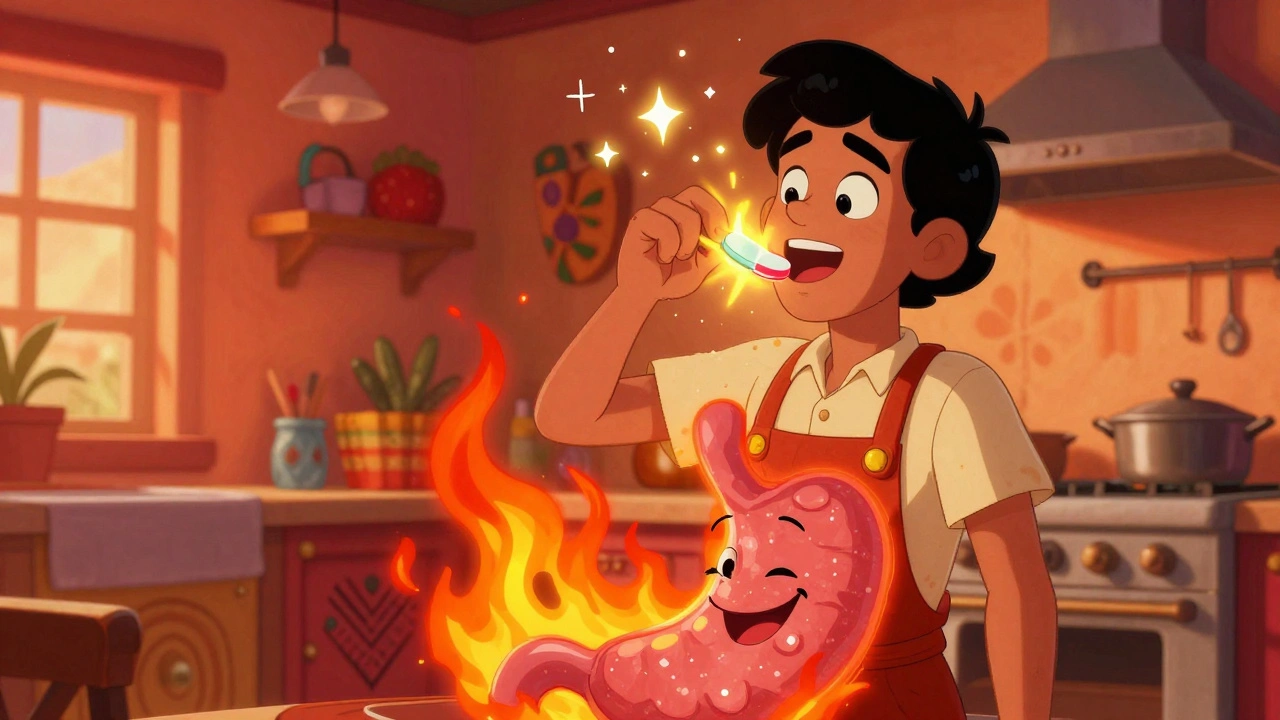
Learn how antacids, H2 blockers, and PPIs work for heartburn - and which one is right for your symptoms. Get clear, practical advice on safe use, timing, and when to see a doctor.
- Dec 2, 2025
- Connor Back
- 9