
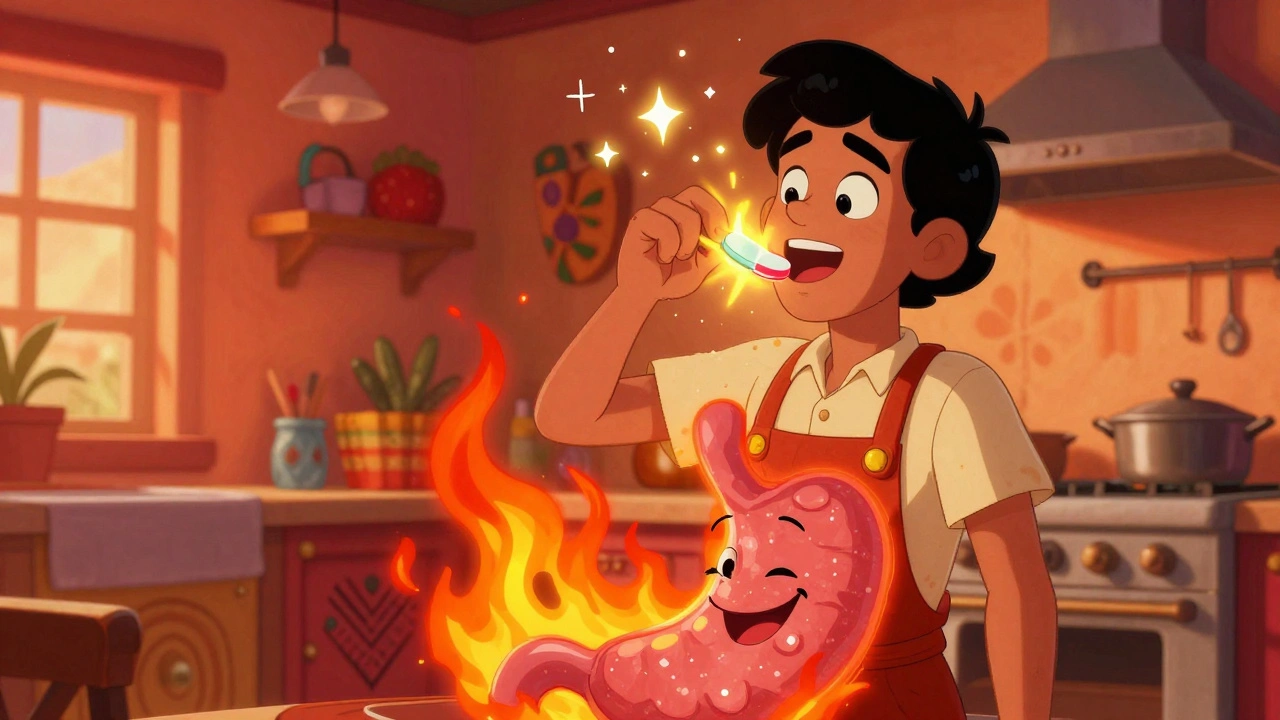
Heartburn hits hard. You feel that burning in your chest, maybe a sour taste in your mouth, and suddenly your whole day feels off. You reach for the medicine cabinet. But what’s the difference between Tums, Pepcid, and Prilosec? And why does one work fast but fade quick, while another takes days to kick in but lasts all day? If you’ve ever been confused by the rows of OTC heartburn pills at the store, you’re not alone. Millions of people in the U.S. use these meds every week - but most don’t know how they actually work, or when to use which one.
Antacids: Fast Relief, Short Stay
Antacids are the OG of heartburn relief. Think Tums, Rolaids, or Milk of Magnesia. These work by neutralizing stomach acid right where it’s causing trouble. They’re like pouring baking soda into a fire - it doesn’t stop the fire from starting again, but it puts out the flames fast.
Onset? Under two minutes. You chew a Tums, and in 60 seconds, that burning starts to fade. But here’s the catch: the relief lasts about 30 to 60 minutes. If you eat a spicy pizza at 8 p.m., take an antacid, and then have dessert at 9:30? You’re back to square one.
Common ingredients? Calcium carbonate (Tums), magnesium hydroxide (Milk of Magnesia), and aluminum hydroxide (Alternagel). Calcium carbonate is popular because it’s cheap and effective - one tablet can neutralize up to 24 milliequivalents of acid. But it can also cause rebound acid production in about 30% of users. That means after the antacid wears off, your stomach overcompensates and makes even more acid. Not ideal if you’re using it daily.
Antacids are best for occasional heartburn - less than once a week. They’re not for chronic issues. And if you’re taking other meds, watch out: antacids can block absorption of antibiotics, iron, or thyroid meds. Always wait two hours between taking an antacid and anything else.
H2 Blockers: Slower But Longer Lasting
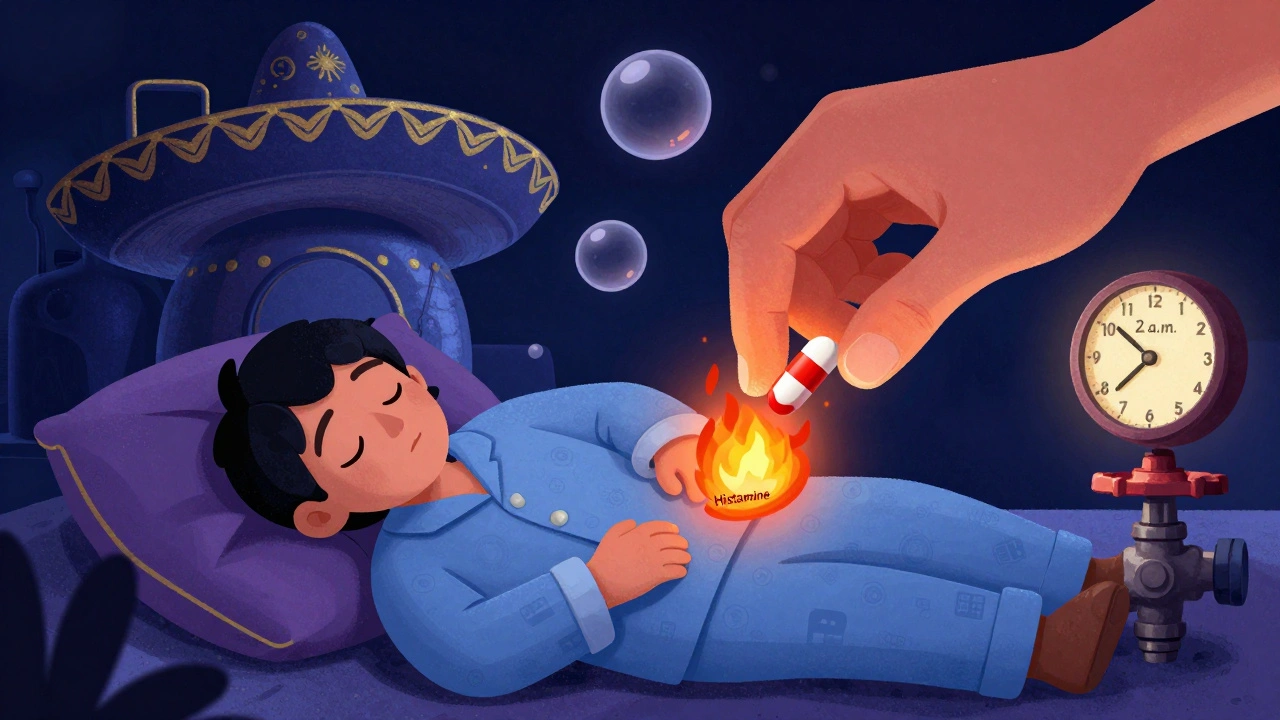
If antacids are the fire extinguisher, H2 blockers are the smoke alarm. They don’t stop the fire, but they turn down the gas supply. Drugs like famotidine (Pepcid AC), cimetidine (Tagamet HB), and nizatidine (Axid AR) block histamine - a chemical that tells your stomach to make acid. Less histamine signal = less acid production.
They take longer to work - 60 to 180 minutes - so they’re not great for sudden heartburn. But once they kick in, they last 8 to 12 hours. That makes them perfect for planned situations: you know you’re going out for pizza tonight? Take a Pepcid AC 60 minutes before eating. You’re less likely to wake up at 2 a.m. with heartburn.
Studies show H2 blockers reduce acid by about 60-70%. That’s solid, but not as strong as PPIs. And here’s something many don’t know: their effectiveness drops after 2-3 weeks of daily use. Your body gets used to them. That’s why they’re not recommended for long-term daily use unless directed by a doctor.
They’re also more likely to interact with other drugs. Cimetidine can interfere with blood thinners like warfarin and seizure meds like phenytoin. That’s why Pepcid (famotidine) is often preferred - fewer interactions.
Best for: People who get heartburn 1-2 times a week, especially after meals or at night. Not for daily, all-day relief.
PPIs: The Heavy Hitters
Proton pump inhibitors - omeprazole (Prilosec OTC), esomeprazole (Nexium 24HR), lansoprazole (Prevacid 24HR) - are the most powerful OTC heartburn meds. They don’t just reduce acid. They shut down the acid-making machinery at the source: the proton pumps in your stomach lining.
They’re not fast. Don’t expect relief in an hour. It takes 24 to 72 hours for them to reach full effect. That’s why people get frustrated - they take Prilosec on Monday, feel no difference, and think it’s broken. But if you take it every morning for 3-5 days, the difference is dramatic. Studies show PPIs reduce symptoms by 90% in people with frequent heartburn (2+ days a week), compared to 65% for H2 blockers.
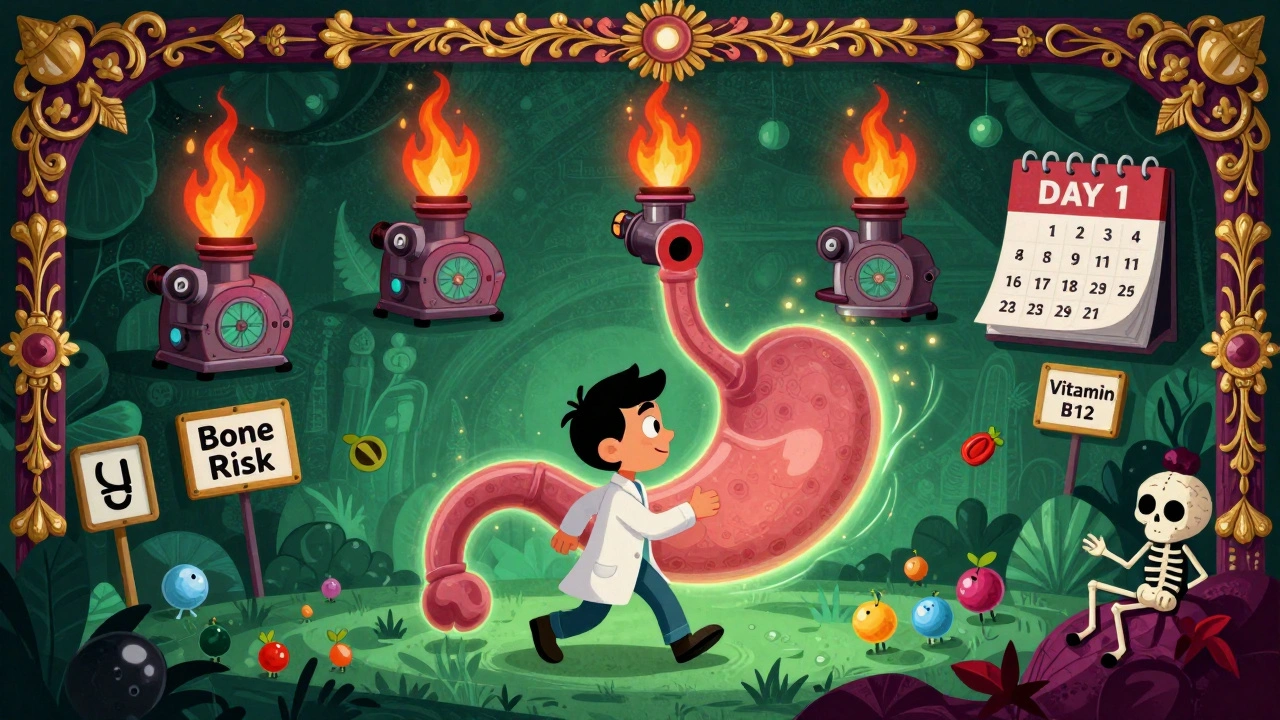
They’re designed for daily use - but only for 14 days in a row. After that, you need to stop and see a doctor. Why? Because long-term use comes with real risks. The FDA has issued multiple warnings: increased chance of Clostridium difficile infection (a serious gut bug), hip fractures (35% higher risk with high-dose, long-term use), and low magnesium levels. Some studies also link long-term PPI use to vitamin B12 deficiency and even chronic kidney disease.
And here’s a big one: they only work if taken correctly. Take them 30-60 minutes before breakfast. If you take them after eating, or with orange juice (which breaks down the coating), they won’t absorb properly. Many users don’t know this - and that’s why they think PPIs “don’t work.”
Market-wise, PPIs are the most expensive - $12-$20 per pack - but generics like Curist’s versions now cost under $5. They’re also the fastest-growing segment, making up nearly half of all OTC heartburn sales. But that doesn’t mean they’re right for everyone.
Which One Should You Choose?
It’s not about which is “best.” It’s about which fits your life.
- Once a week or less? Go with antacids. Chew a Tums. Feel better fast. No fuss.
- 1-2 times a week, predictable (like after dinner or weekends)? Try an H2 blocker. Take Pepcid AC 60 minutes before your trigger meal. It’ll carry you through the night.
- 2+ days a week? You likely need a PPI. But only for 14 days. If it helps, talk to a doctor - you might have GERD, not just heartburn.
Here’s what most people get wrong: they use PPIs like antacids. They take one when they feel burning. That’s useless. PPIs aren’t painkillers. They’re preventive tools.
And don’t combine meds without knowing why. Some people take Tums with Prilosec - that’s fine for breakthrough symptoms. But if you’re doing that every day, you’re masking a deeper problem. You need to understand why you’re getting heartburn - not just cover it up.
What No One Tells You
OTC heartburn meds are safe - when used as directed. But the real danger isn’t the pills. It’s the habit.
43% of people using PPIs take them longer than 14 days, according to JAMA Internal Medicine. They feel better after a week, so they keep going. That’s how you end up with low magnesium, bone loss, or gut infections.
And antacids? They’re not harmless. Too much calcium carbonate can cause kidney stones. Too much magnesium can cause diarrhea. Too much aluminum? It can build up in your body if you have kidney problems.
The truth? Most people don’t need OTC meds at all. Lifestyle changes fix heartburn better than pills. Eat smaller meals. Avoid late-night snacks. Skip spicy food, caffeine, alcohol, and chocolate. Don’t lie down for 3 hours after eating. Lose 5-10 pounds if you’re overweight. Elevate the head of your bed.
But if you’re using OTC meds? Use them wisely. Know what you’re taking. Know why. Know how long.
When to See a Doctor
Stop self-treating and call a doctor if:
- Heartburn happens more than twice a week for more than two weeks
- You have trouble swallowing, vomiting blood, or black stools
- You’ve been using PPIs for more than 14 days without relief
- You’re over 50 and just started having heartburn
- You’re taking other meds that interact with heartburn drugs
These aren’t just “bad heartburn.” These could be signs of GERD, Barrett’s esophagus, or even esophageal cancer. OTC meds are a bandage - not a cure.
Can I take antacids and PPIs together?
Yes, but only for breakthrough symptoms. If you’re on a 14-day PPI course and still get sudden heartburn, a Tums or Rolaids can help right away. Don’t use antacids daily to compensate for a PPI that isn’t working - that means the PPI isn’t being taken correctly, or you need a different approach.
Why does my PPI not work right away?
PPIs don’t neutralize acid - they shut down acid production. That takes time. The proton pumps in your stomach need to be fully inhibited, which requires 2-5 days of daily dosing. Taking it only when you feel heartburn won’t help. Take it every morning, 30-60 minutes before breakfast, for the full 14 days.
Are generic PPIs as good as brand names?
Yes. Generic omeprazole, esomeprazole, and lansoprazole are bioequivalent to brand names like Prilosec and Nexium. The FDA requires them to work the same way. Curist and other generics cost 80% less and are just as effective. Save your money - unless you have a specific reason to prefer a brand.
Can I take H2 blockers every day?
Not long-term. H2 blockers lose effectiveness after 2-3 weeks of daily use. Your body adapts. They’re meant for short-term, on-demand use - like before a big meal or during a flare-up. If you need daily acid control for more than two weeks, talk to a doctor about PPIs or other options.
What’s the safest OTC heartburn medicine?
For occasional use, antacids like Tums are the safest - minimal side effects, no long-term risks. For frequent heartburn, H2 blockers like famotidine have fewer long-term risks than PPIs. But if you need strong, daily control, PPIs are still the most effective - just use them for only 14 days at a time and never without medical advice if symptoms persist.
Next Steps
Start by tracking your heartburn. Write down when it happens, what you ate, and what you took. After a week, you’ll see patterns. If it’s just after pizza on weekends? Try Pepcid before dinner. If it’s every morning? You might need a PPI - but only for 14 days. If it’s still there after that? See a doctor.
Don’t let OTC meds become your crutch. They’re tools - not solutions. The real fix? Understanding your body. Eating smarter. Living better. Pills can help you breathe easier while you figure it out. But they shouldn’t be your only plan.


Written by Connor Back
View all posts by: Connor Back