
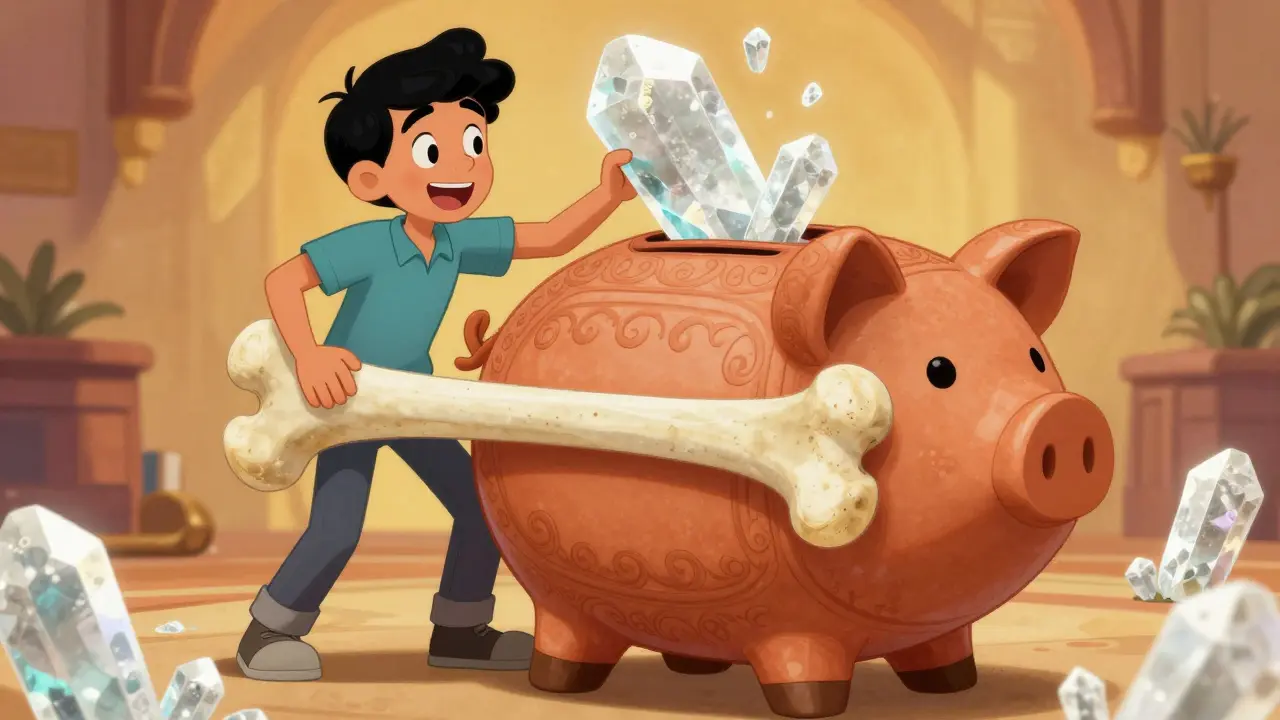
Imagine your bones are like a savings account. During your teens and twenties, you're making massive deposits of minerals. But by the time you hit 30, you stop depositing and start withdrawing. If you withdraw more than you put in, your "bone bank" goes bankrupt. That is essentially what happens with osteoporosis is a systemic skeletal disease where bone mass drops and the tissue structure deteriorates, making bones fragile and easy to break. It is a silent thief; most people don't even know they have it until a bone snaps from a simple trip or even a sneeze.
Quick Facts on Bone Health
- The Danger Zone: 1 in 3 women and 1 in 5 men over 50 will suffer an osteoporotic fracture.
- The Critical Window: You hit your peak bone mass between ages 25 and 30.
- High Stakes: Hip fractures carry a staggering 20-24% mortality rate within a year.
- The Silent Gap: Over 60% of people over 65 don't recognize early signs of bone loss.
Who is Actually at Risk?
Not everyone faces the same level of risk. Some things you can change, and some you simply can't. Let's break them down so you know where you stand.
First, the non-modifiable factors. Age is the obvious one; after 30, most of us lose bone at a rate of 0.3-0.5% per year. However, for women, this accelerates wildly during the first few years after menopause, jumping to 2-3% annually. Biology also plays a role. Women are four times more likely to develop the condition because they generally have lower peak bone mass and experience a sharper drop in estrogen.
Genetics are a huge predictor. If one of your parents had a hip fracture, your own risk jumps by 60-80%. Ethnicity matters too; research shows White and Asian women face a higher risk compared to Black or Hispanic women. Then there is the timing of menopause. If it happens before age 45, the risk increases by more than double.
Then there are the things you can control. Your diet is the foundation. If you get less than 1,000mg of calcium a day, your fracture risk climbs by 30-40%. Vitamin D is the "key" that lets calcium into your bones; without it (serum levels under 20ng/mL), you're looking at a 33% higher risk of breaks. Lifestyle choices like smoking and heavy drinking are also culprits. Smoking a pack a day can hike your risk by 55%, while drinking more than two units of alcohol daily increases hip fracture risk by 41%.
Primary vs. Secondary Osteoporosis
It's important to understand that not all bone loss is caused by aging. While 95% of cases are primary (related to age and menopause), about 5% are secondary, meaning they are caused by other medical issues or medications. Secondary osteoporosis is often more aggressive.
| Type | Common Causes | Typical Bone Loss Rate | Risk Impact |
|---|---|---|---|
| Primary (Age/Menopause) | Estrogen drop, natural aging | 0.5% - 3% annually | Gradual decline |
| Secondary (Corticosteroids) | Long-term steroid use | 5% - 15% in first year | Rapid and severe |
| Secondary (Diabetes) | Type 1 or Type 2 Diabetes | Variable (often looks normal on scans) | Up to 6x higher risk (Type 1) |
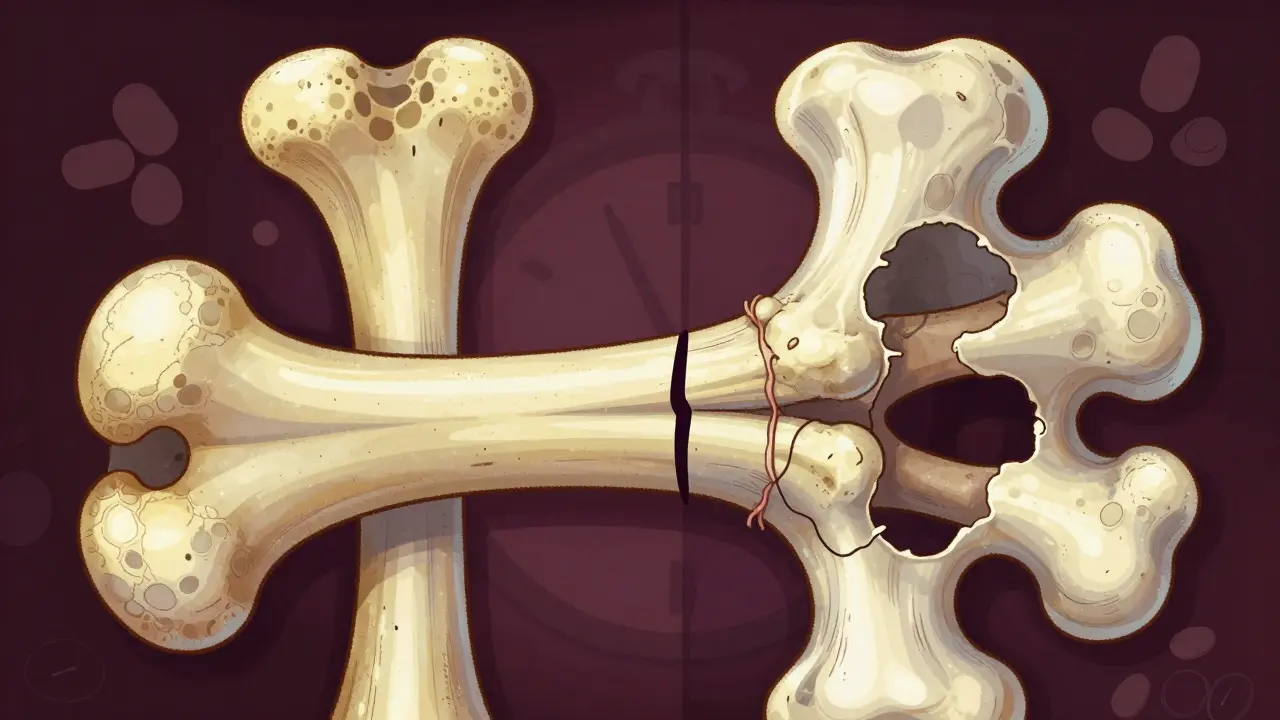
For example, people using corticosteroids for chronic inflammation might lose up to 15% of their bone mass in just one year. Even more confusing is the "diabetes paradox." People with Type 2 diabetes often have normal bone density readings on a scan, yet they still suffer more fractures. This is why relying on a single test can be dangerous.
How to Test and Measure Your Risk
You can't feel your bones getting thinner, so you need a way to see inside. The gold standard is the DXA scan is a dual-energy X-ray absorptiometry test that measures bone mineral density by sending low-dose X-rays through the body. It takes about 20 minutes and has very low radiation-about the same as three hours of just existing in the natural environment.
When you get your results, you'll see a "T-score." Here is how to read it:
- Normal: -1.0 or higher. You're in the clear.
- Osteopenia: Between -1.0 and -2.5. Your bones are thinning, and you're in the "warning zone."
- Osteoporosis: -2.5 or lower. You have a high risk of fracture.
However, experts warn that the T-score isn't the whole story. A person with a slightly better T-score but a history of one "fragility fracture" (a break from a minor fall) is actually at higher risk than someone with a lower score who has never broken a bone. To fix this, doctors use the FRAX tool is a clinical algorithm developed by the WHO that calculates the 10-year probability of a major osteoporotic fracture. It combines your scan results with your lifestyle and medical history to give a much more accurate prediction.
The Blueprint for Fracture Prevention
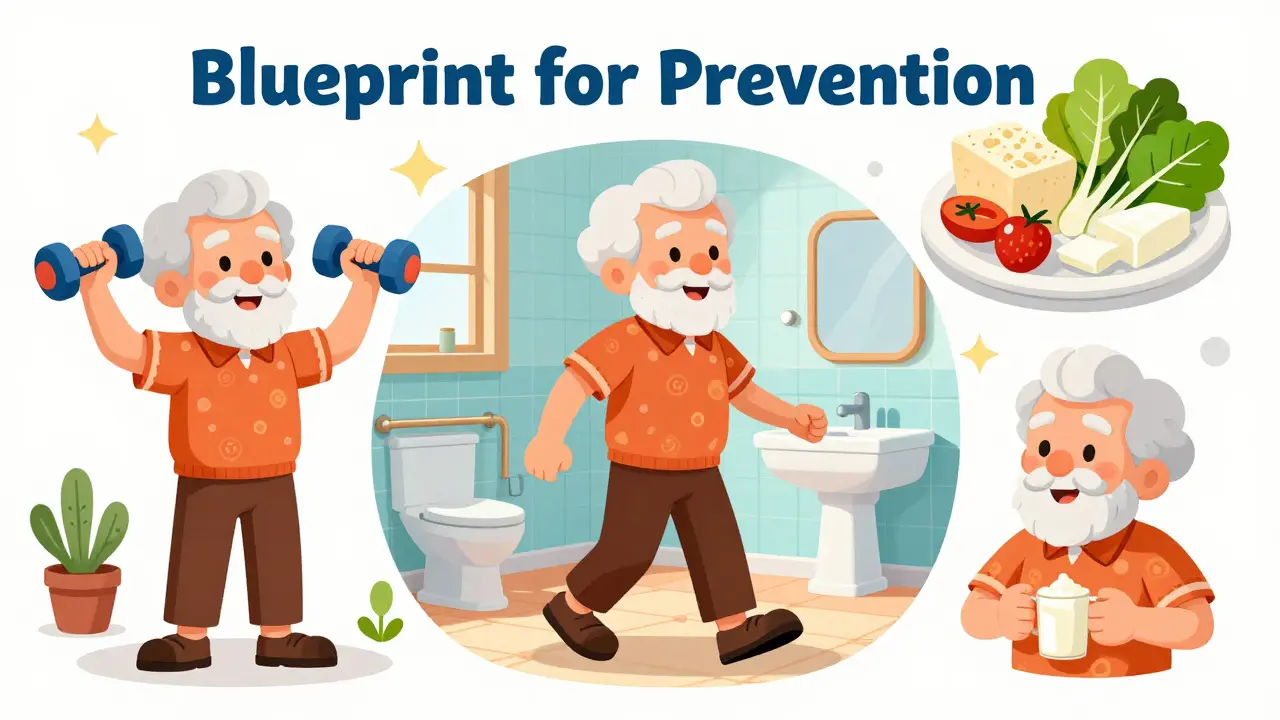
Preventing a break isn't just about taking a pill; it's a three-pronged approach involving nutrition, movement, and environment.
1. Nutrition and Supplementation
Calcium is the brick, and Vitamin D is the mortar. For most adults, 1,000 to 1,200mg of elemental calcium daily is the goal. A pro tip here: don't take it all at once. Your body can only absorb so much at a time, so split your dose into 500-600mg increments with your meals. This increases absorption to about 25-35%.
For Vitamin D, 800-1,000 IU per day is the baseline. If you're severely deficient (under 20ng/mL), you might need 2,000 IU to get back to a protective level. It usually takes 3-4 months of consistent supplementation to see these levels stabilize in your blood.
2. The Right Kind of Exercise
Walking on a treadmill is okay, but your bones need "stress" to grow. This means weight-bearing and resistance training. The American College of Sports Medicine suggests 30-45 minutes of brisk walking, jogging, or stair climbing five days a week. Add in resistance training (weights or bands) two days a week. You'll start seeing actual density improvements in 6-12 months if you stay consistent.
3. Fall-Proofing Your Life
If you have osteoporosis, the goal shifts from "preventing bone loss" to "preventing the fall." A simple trip can lead to a life-altering hip fracture. Balance training and home modifications-like removing loose rugs and adding grab bars in the shower-can reduce your fracture risk by nearly 30% in a single year.
Modern Treatments and Future Trends
If diet and exercise aren't enough, medication becomes necessary. Many people are familiar with bisphosphonates, but these can cause stomach issues, leading many to quit within a year. Newer options are emerging. For instance, the FDA recently approved Romosozumab, which does something unique: it increases bone formation while simultaneously slowing down bone loss. In clinical trials, it reduced new vertebral fractures by 73% compared to older drugs.
We're also seeing a shift toward "life-course" health. Instead of treating the elderly, the focus is moving toward children and teens. Since 60-80% of your lifetime risk is determined by the peak bone mass you hit by age 30, getting kids active and well-nourished now can cut their future fracture risk in half.
Can I reverse osteoporosis with diet alone?
Generally, no. Once you have progressed to osteoporosis (T-score ≤-2.5), diet and exercise can slow the loss and prevent further fractures, but they rarely "regrow" the bone to a normal state. Medical treatments like bisphosphonates or Romosozumab are usually required to significantly increase density or stop rapid loss.
How often should I get a DXA scan?
The USPSTF recommends women over 65 and high-risk individuals over 50 get screened. The frequency depends on your results. If you have osteopenia or are on treatment, your doctor may want a scan every 2-3 years to monitor if the medication is working or if your density is dropping further.
Are calcium supplements better than food?
Food is always preferred because it comes with other nutrients that help bone health. However, many people struggle to hit 1,200mg through diet alone. Supplements are a helpful tool to fill the gap, but be mindful of gastrointestinal side effects, which are common. Splitting doses helps minimize these issues.
What is the difference between osteopenia and osteoporosis?
Osteopenia is the precursor. It means your bone density is lower than normal but not yet low enough to be classified as osteoporosis. Think of it as a warning light on your dashboard. While your risk of fracture is higher than a healthy person's, it's the perfect time to intervene with diet and exercise to prevent it from becoming full-blown osteoporosis.
Does walking prevent osteoporosis?
Brisk walking is a great start because it is weight-bearing, but it may not be enough on its own for someone already at high risk. To truly strengthen the bone matrix, you need a combination of weight-bearing aerobic exercise (like jogging or dancing) and resistance training (like lifting weights), which puts a targeted load on the bones.
What to Do Next
If you're over 50 or have a family history of hip fractures, don't wait for a break to happen. Start by requesting a FRAX assessment from your doctor. If you're already managing the condition, focus on the "three pillars": split your calcium doses, incorporate weight-bearing exercise at least five days a week, and clear those tripping hazards from your hallways. Small changes today prevent a major crisis tomorrow.
Written by Connor Back
View all posts by: Connor Back