

Psychiatric Medication Review Checklist
How to use this tool: Add your current psychiatric medications below. Use this list to identify potential "prescribing cascades" (taking a drug to fix a side effect) and prepare a structured conversation with your doctor about optimization and deprescribing.
Add Medication
Current Medication Profile
Preparation Summary for Doctor
Taking one pill for a specific condition is straightforward. But what happens when a person needs two, three, or five different psychiatric medications just to feel stable? This is called psychiatric polypharmacy is the concurrent prescription of two or more psychiatric medications to a single patient . While it often starts as a way to tackle stubborn symptoms, it can quickly turn into a complex web of drug-drug interactions that might do more harm than good.
The reality is that many people living with severe mental illness don't fit neatly into a single diagnosis. They might deal with schizophrenia and high blood pressure, or bipolar disorder and chronic insomnia. This creates a precarious balancing act for doctors. If they add a new drug to fix a side effect of the first one, they risk triggering a cascade of new issues. The goal isn't just to suppress symptoms, but to find the smallest number of medications that provide the highest quality of life.
The Rising Trend of Multiple Medications
We've seen a dramatic shift in how mental health is treated over the last few decades. It used to be that a single "gold standard" drug was the primary tool. Now, the "kitchen sink" approach is more common, where clinicians add medications without always checking if the current regimen could be simplified. For instance, research in JAMA Psychiatry showed a staggering four-fold increase in antipsychotic polypharmacy among Medicaid enrollees with schizophrenia between 1999 and 2005, jumping from 3.3% to 13.7%.
Why is this happening? Often, it's because of treatment-resistant conditions. When a patient doesn't respond to a first-line drug, the instinct is to add another. However, this trend has outpaced the actual evidence. While some combinations are backed by clinical trials, many others are based on anecdotal success or a "let's try it and see" mentality. This is particularly risky for those with treatment-refractory mood disorders; some data shows a rise from 3.3% to nearly 44% of patients taking three or more medications over a twenty-year span.
When Polypharmacy Makes Sense vs. When It Doesn't
Not all polypharmacy is bad. In many cases, combining medications is the evidence-based way to save a life or restore function. The key is whether the combination is "empirically supported" or just a guess. For example, adding bupropion hydrochloride to citalopram hydrobromide can help people who only partially respond to a single antidepressant. Similarly, using a mood stabilizer alongside an antipsychotic is often the standard for managing acute mania.
The danger zone appears when clinicians prescribe two different antipsychotics at once. Unlike augmentation strategies, this practice is mostly supported by case reports rather than rigorous, double-blind randomized controlled trials. When we move away from structured protocols, the risk of adverse drug interactions spikes, and the actual clinical benefit becomes uncertain.
| Combination Type | Example / Strategy | Evidence Level | Typical Goal |
|---|---|---|---|
| Antidepressant Augmentation | Bupropion + Citalopram | High | Improve response in partial responders |
| Mania Management | Antipsychotic + Mood Stabilizer | High | Stabilize acute manic episodes |
| Psychotic Depression | Antidepressant + Antipsychotic | High | Treat depression with psychotic features |
| Dual Antipsychotics | Two different antipsychotic agents | Low/Mixed | Treatment of refractory schizophrenia |
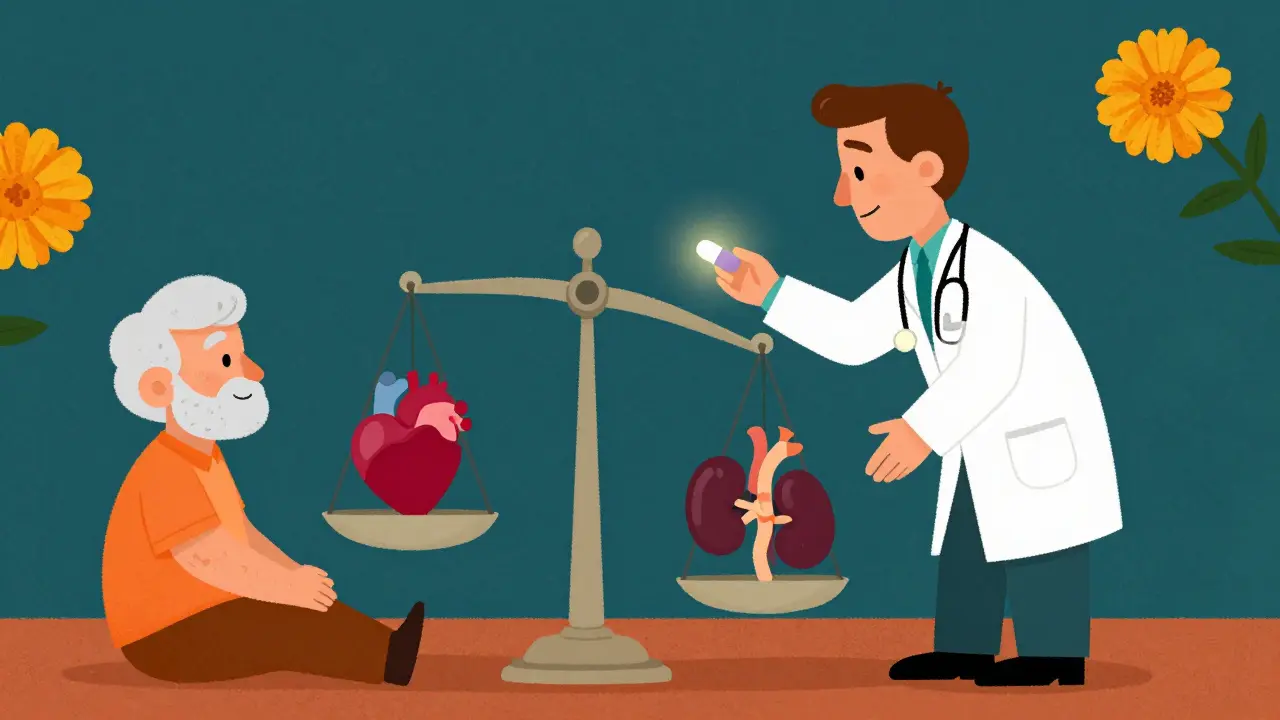
The Danger for Older Adults and Multimorbidity
Age changes everything when it comes to how the body processes chemicals. For older adults, multimorbidity-having multiple physical health conditions-is a huge driver of polypharmacy. An elderly patient might be taking meds for schizophrenia, diabetes, and hypertension. This is a recipe for disaster because psychiatric drugs often interact with cardiovascular medications.
The American Psychiatric Association (APA) warns that older patients are at a much higher risk for severe side effects from antipsychotics. Their kidneys and livers may not function as well as they used to, meaning medication stays in the system longer, increasing the chance of toxicity. Furthermore, a CDC study found that people taking five or more medications concurrently reported a significantly lower health-related quality of life. It's a cruel irony: the more pills you take to feel better, the worse your overall physical well-being can become.

The Path to Deprescribing and Optimization
If the problem is over-medication, the solution is "deprescribing." This isn't just about stopping drugs cold turkey-which can be dangerous-but systematically reducing the medication burden. Some successful programs have used an 18-month window to slowly taper patients off unnecessary adjunct meds. The results are often surprising: not only do the psychiatric symptoms (measured by PHQ-9 and GAD-7 scores) remain stable or improve, but physical markers like BMI, blood pressure, and cholesterol levels also drop.
One of the most exciting tools in this fight is pharmacogenomic testing. Instead of the "trial and error" method, doctors can use a patient's genetic profile to predict how they will metabolize a specific drug. This can potentially reduce adverse reactions by 30% to 50%, allowing doctors to pick the *right* drug the first time rather than adding a second drug to mask the side effects of the first.
However, reducing meds isn't easy. About 68% of clinicians report that balancing medication reduction with stability is the hardest part of the process. Patients are often scared that if they stop a pill, they'll relapse. This is why a structured titration protocol-a slow, measured decrease-is essential.
Practical Tips for Patients and Caregivers
Navigating a complex medication list requires a proactive approach. You shouldn't just be a passive recipient of prescriptions. Instead, treat your medication review as a collaborative project with your provider. Ask specifically why each medication is necessary and if there is a plan to eventually reduce the dose.
- Maintain a Master List: Keep a current list of every supplement, over-the-counter drug, and prescription you take. This prevents the doctor from prescribing something that clashes with a medication prescribed by a different specialist.
- Ask About the "Exit Strategy": When a new medication is added, ask, "What is the goal for this drug, and at what point will we evaluate if it's still needed?"
- Monitor Physical Health: Keep a close eye on weight, blood pressure, and blood sugar. Many psychiatric medications can impact metabolic health, and these changes often signal that a regimen needs adjustment.
- Discuss Genetic Testing: Ask your doctor if pharmacogenomic testing is an option to help narrow down which medications are most likely to work for your specific biology.
Is taking multiple psychiatric medications always a bad thing?
No, it is not always bad. In many complex cases, such as treatment-resistant depression or acute mania, a combination of medications is the most effective evidence-based approach. The risk arises when medications are added without a clear clinical goal or without considering the interactions between them.
What are the main risks of psychiatric polypharmacy?
The primary risks include adverse drug-drug interactions, an increase in side effects (such as weight gain or metabolic syndrome), and a decrease in overall physical health-related quality of life. For older adults, there is an added risk of toxicity due to decreased renal and hepatic function.
How can I tell if I'm over-medicated?
Signs of over-medication often include excessive drowsiness, emotional blunting (feeling "flat"), extreme weight gain, or the appearance of new physical symptoms that weren't there before. If you feel that your medications are treating the side effects of other medications rather than your original symptoms, it's time for a review.
What is deprescribing?
Deprescribing is the supervised process of reducing or stopping medications that may no longer be beneficial or may be causing harm. It is a gradual process involving titration to ensure the patient remains stable while reducing the total chemical burden on the body.
Can genetic testing really help choose the right medication?
Yes, pharmacogenomic testing analyzes how your genes affect your response to drugs. It can help identify which medications you are likely to metabolize too quickly (making them ineffective) or too slowly (increasing the risk of toxicity), potentially reducing adverse reactions by 30-50%.
Written by Guy Boertje
View all posts by: Guy Boertje