
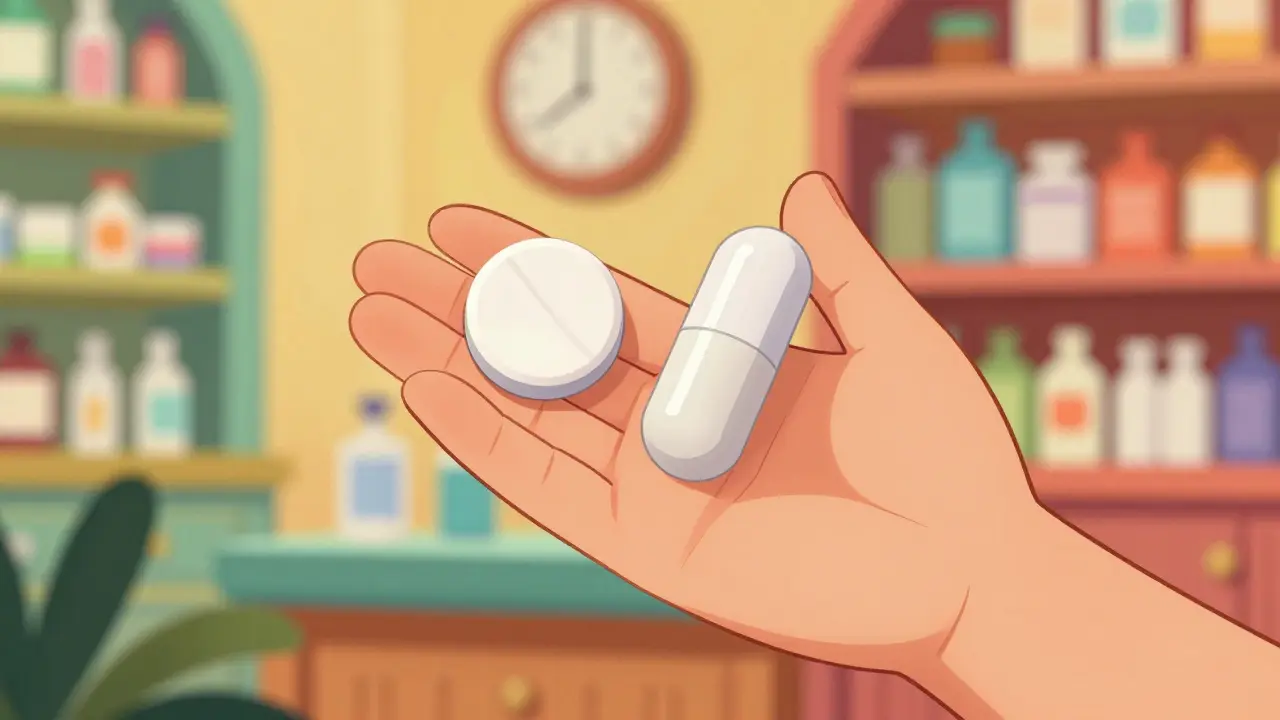
Have you ever picked up a prescription and noticed the pill looks different, or perhaps your doctor switched you from a daily injection to a once-a-week tablet? You aren't imagining things. This is the result of medication reformulations, a strategic process where pharmaceutical companies change how a drug is delivered or composed without changing the core medicine that does the work.
For a patient, this can feel like a random change, but for the industry, it is a calculated move to make a drug safer, easier to take, or more effective. While some critics call this "evergreening"-a way to keep patents active-many reformulations solve real-world problems, like turning a painful shot into a swallowable pill. If you've ever wondered why a drug you've taken for years suddenly has a "new and improved" version, here is exactly what is happening behind the scenes.
The Basics: What Actually Changes in a Reformulation?
To understand reformulation, we first need to look at what makes up a pill or liquid. Every medication consists of an Active Pharmaceutical Ingredient (API) is the specific chemical molecule responsible for the drug's therapeutic effect and a set of inactive ingredients called excipients.
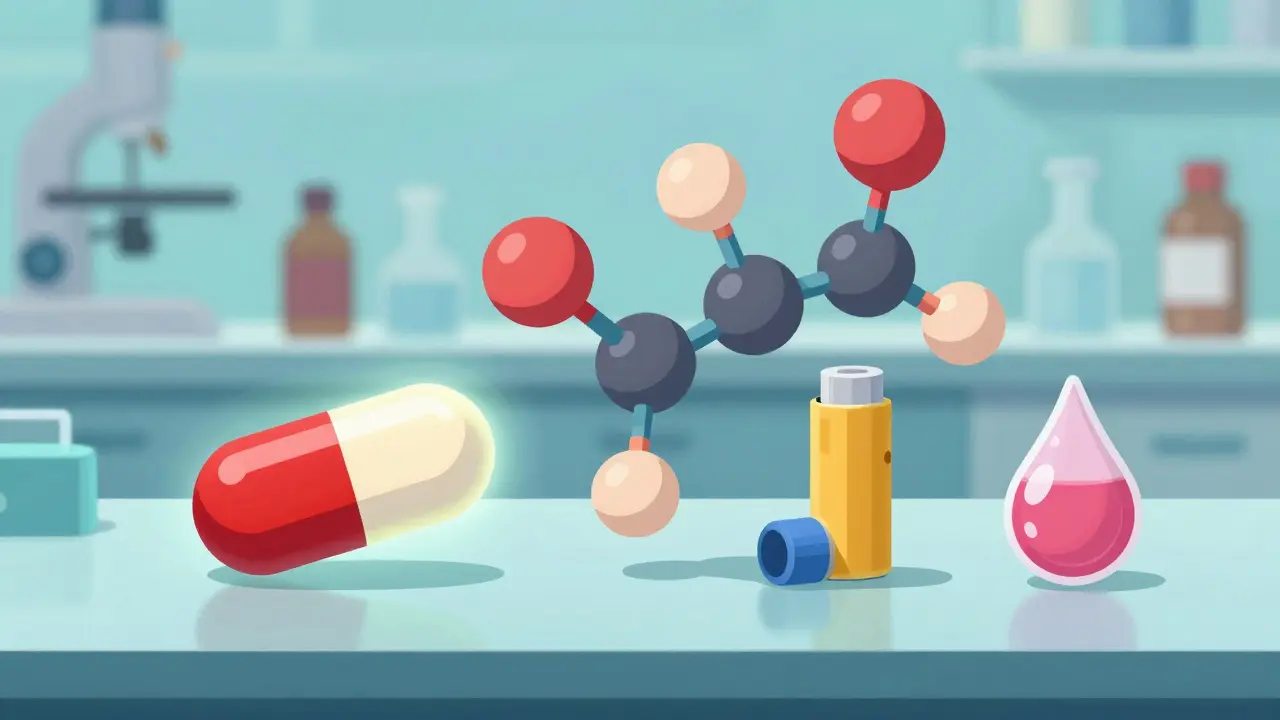
In a true reformulation, the API stays the same. The company isn't inventing a new molecule; they are changing the "vehicle" that carries it into your body. These changes usually fall into a few specific categories:
- Changing Excipients: Swapping out a filler or binder to make the pill more stable or remove an allergen.
- Adjusting Concentration: Changing the amount of API per dose to reduce side effects or increase potency.
- Modifying Delivery Routes: This is a big one. For example, converting an oral tablet into an inhalable form to get the medicine into the lungs faster.
- Altering Release Mechanisms: Moving from an immediate-release version to an extended-release (ER) or sustained-release (SR) version, so you only have to take the medicine once a day instead of three times.
The goal here is usually to improve bioavailability-which is just a fancy way of saying how much of the drug actually reaches your bloodstream and how fast it gets there.
The Regulatory Shortcut: The 505(b)(2) Pathway
Developing a brand-new drug from scratch is a nightmare for pharmaceutical companies. It can take 10 to 15 years and cost upwards of $2.6 billion. Because of this, companies love the 505(b)(2) is a regulatory pathway established by the FDA that allows sponsors to rely on existing data from previously approved drugs to support a reformulated version pathway.
Think of it as a "fast track." Instead of running every single clinical trial from zero, the company can point to the original drug's safety data and simply prove that the new version is "bioequivalent"-meaning it performs the same way in the body as the old one. This reduces the development time to roughly 3 to 5 years and drops the cost to between $50 million and $100 million. It is a massive win for the company's bottom line, but it also means improved versions of drugs hit the market much faster.
Why Bother? The Real Drivers Behind Formula Changes
Companies don't change formulas just for the sake of it. There are usually three main drivers: patient compliance, therapeutic efficacy, and market competition.
Patient Compliance is the most human element. Let's be honest: nobody likes taking a pill four times a day or dealing with a needle every morning. If a company can reformulate a drug into a long-acting injectable or a tasty chewable for kids, patients are much more likely to actually take their medicine. When patients adhere to their treatment, health outcomes improve, which is a win for everyone.
Therapeutic Efficacy comes from real-world data. Often, a drug is approved based on a few thousand people in a clinical trial. But once tens of millions of people start using it, doctors notice patterns. They might realize the drug is absorbed too quickly or causes unnecessary stomach upset. Reformulation allows the company to fix these issues based on actual patient experience.
Market Competition is the business side. When a patent on an original drug is about to expire, generic competitors move in. By creating a reformulated version-like a specialized pump or a specific slow-release coating-the original company can protect its market share. While this can be controversial, these proprietary technologies often make it very difficult for generics to replicate, ensuring the original company stays profitable.
Comparing Reformulation vs. Novel Drug Development
To see why the industry is leaning so heavily into this, look at the success rates. Developing a completely new molecular entity is a gamble. In contrast, reformulating an existing drug is far more predictable.
| Feature | Novel Drug Development | Medication Reformulation |
|---|---|---|
| Average Cost | ~$2.6 Billion | $50 - $100 Million |
| Development Time | 10 - 15 Years | 3 - 5 Years |
| Approval Success Rate | ~10% | ~30% |
| Risk Level | High (Unknown safety/efficacy) | Moderate (Proven API) |
The Impact on Rare Diseases and Orphan Drugs
Reformulation is a game-changer for people with rare diseases. These medications, known as Orphan Drugs are pharmaceuticals developed specifically to treat rare medical conditions that affect a small percentage of the population , often have very limited options. Because the patient population is so small, companies aren't always incentivized to spend billions on a brand-new molecule.
However, reformulating an existing drug to be more effective for a specific orphan indication is a viable strategy. It allows mid-size pharma companies to bring critical treatments to patients on an aggressive timeline. In some documented cases, registration batches for these specialized drugs have been completed within just 12 months of project kickoff. For a patient with a rare disease, those saved years are everything.

What to Watch For as a Patient
Most reformulations are a step forward, but they aren't without risks. If you notice your medication has changed, there are a few things you should keep in mind:
- Check for New Side Effects: Even if the API is the same, a change in excipients (the inactive ingredients) can cause reactions in sensitive people. If you suddenly develop a rash or stomach issues after a formula change, tell your doctor.
- Confirm the Dosage: Not all "improved" versions are a 1:1 swap. An extended-release version may have a different dose than an immediate-release one. Always verify the instructions on the new bottle.
- Ask About the "Why": If your pharmacist gives you a different-looking pill, ask why the formula changed. Was it to improve stability? To make it easier to swallow? Knowing the reason helps you monitor how it's working for you.
Is a reformulated drug the same as a generic?
No. A generic drug is designed to be an exact copy of the original brand-name drug. A reformulation, however, intentionally changes something-like the delivery method or the inactive ingredients-to improve the drug's performance or make it easier to take. While generics aim for identicality, reformulations aim for improvement.
Why do companies change formulas just before a patent expires?
This is often referred to as "evergreening." By creating a new, reformulated version of a drug (like a once-daily version instead of three times a day), the company can file for a new patent. This allows them to maintain a level of market exclusivity and discourage patients from switching to cheaper generics.
Does the FDA approve every formula change?
Yes, any significant change to a drug's composition, dosage form, or route of administration requires FDA review. Depending on the scale of the change, the company might use the 505(b)(2) pathway, providing data to show the new version is as safe and effective as the old one.
Can a reformulated drug be less effective than the original?
While the goal is always improvement, some patients may react differently to a new formula. Changes in excipients or absorption rates can occasionally lead to a perceived or actual drop in efficacy for a small subset of users. This is why clinical bioequivalence is required during the approval process.
What is a "chiral switch" in reformulation?
A chiral switch is a specific type of reformulation where a company develops a drug using only one of the two "mirror-image" versions of a molecule. This can often reduce side effects and make the drug more potent, though it technically involves a minor change to the API's structure.
Next Steps for Patients and Caregivers
If you are currently taking a medication that has undergone a reformulation, start by documenting your experience. Keep a simple log of when you take the dose and any changes in how you feel. If you are a caregiver for someone with a complex regimen, double-check the packaging of every refill to ensure the formulation hasn't shifted without notice.
For those struggling with current drug delivery-such as people who hate needles or have trouble swallowing large pills-it may be worth asking your doctor if a reformulated version of your current medication exists. You might find that a newer delivery system could significantly improve your quality of life without needing to switch to an entirely different class of medicine.
Written by Connor Back
View all posts by: Connor Back