
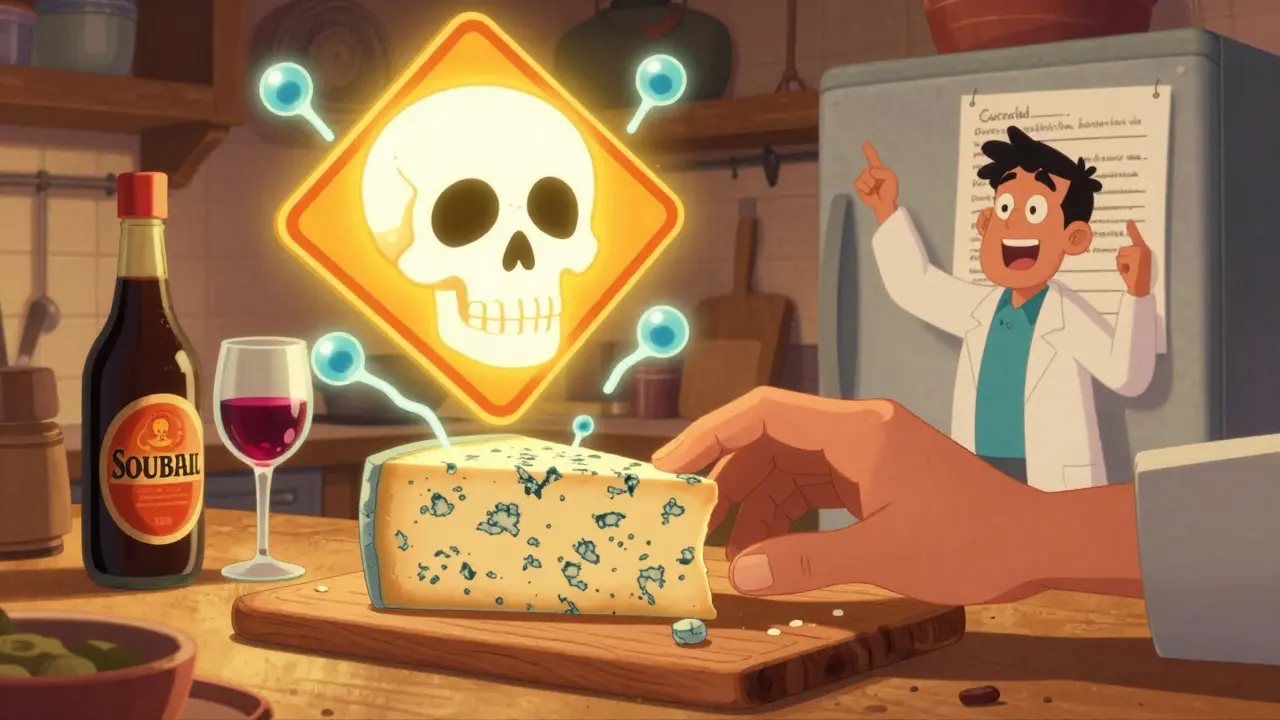
MAO inhibitors are one of the oldest classes of antidepressants, but they’re also among the most dangerous if not used with extreme care. These drugs work by blocking the enzyme monoamine oxidase, which breaks down key brain chemicals like serotonin, norepinephrine, and dopamine. While that helps lift mood in treatment-resistant depression, it also means even small mistakes-like taking a common cold medicine or eating aged cheese-can trigger life-threatening reactions. Many people don’t realize how easily these interactions happen, and doctors still see avoidable emergencies every year.
What Happens When MAOIs Mix with Other Drugs?
MAOIs don’t just affect your mood-they change how your body handles a wide range of substances. The two biggest dangers are hypertensive crisis and serotonin syndrome. Hypertensive crisis happens when tyramine, a compound found in certain foods and drugs, builds up in your system. Normally, your body breaks down tyramine using monoamine oxidase. But if you’re on an MAOI, that enzyme is blocked. Tyramine then causes a sudden, massive release of norepinephrine, which spikes your blood pressure. Cases have been documented where systolic pressure jumped over 200 mmHg within an hour after eating just one ounce of strong blue cheese.
Serotonin syndrome is even more unpredictable. It occurs when too much serotonin floods your nervous system. This can happen if you take an MAOI with another drug that boosts serotonin-like an SSRI, tramadol, or even a cough syrup with dextromethorphan. Symptoms start mild: shivering, sweating, diarrhea. But they can escalate fast. High fever, muscle rigidity, seizures, and organ failure can follow. The Mayo Clinic reports mortality rates between 2% and 12% in severe cases. One patient in a 2019 case report ended up intubated after taking a single 50mg dose of tramadol while on selegiline.
Medications You Must Avoid
Some drug interactions are so dangerous they’re outright banned. The FDA has black box warnings on all MAOI labels for good reason. Here are the most critical ones:
- SSRIs and SNRIs (like fluoxetine, sertraline, venlafaxine): Never take these with an MAOI unless you’ve waited at least 14 days after stopping the first drug. For fluoxetine, you need to wait five weeks because it sticks around in your system much longer.
- Linezolid (an antibiotic): This drug also inhibits monoamine oxidase. Using it with an MAOI can cause serotonin syndrome. There’s a documented case of a 65-year-old woman who died after taking both.
- Tramadol, meperidine, methadone: These opioids are especially risky. Even a single dose can trigger serotonin syndrome. Emergency rooms have treated patients who didn’t realize their painkiller was dangerous.
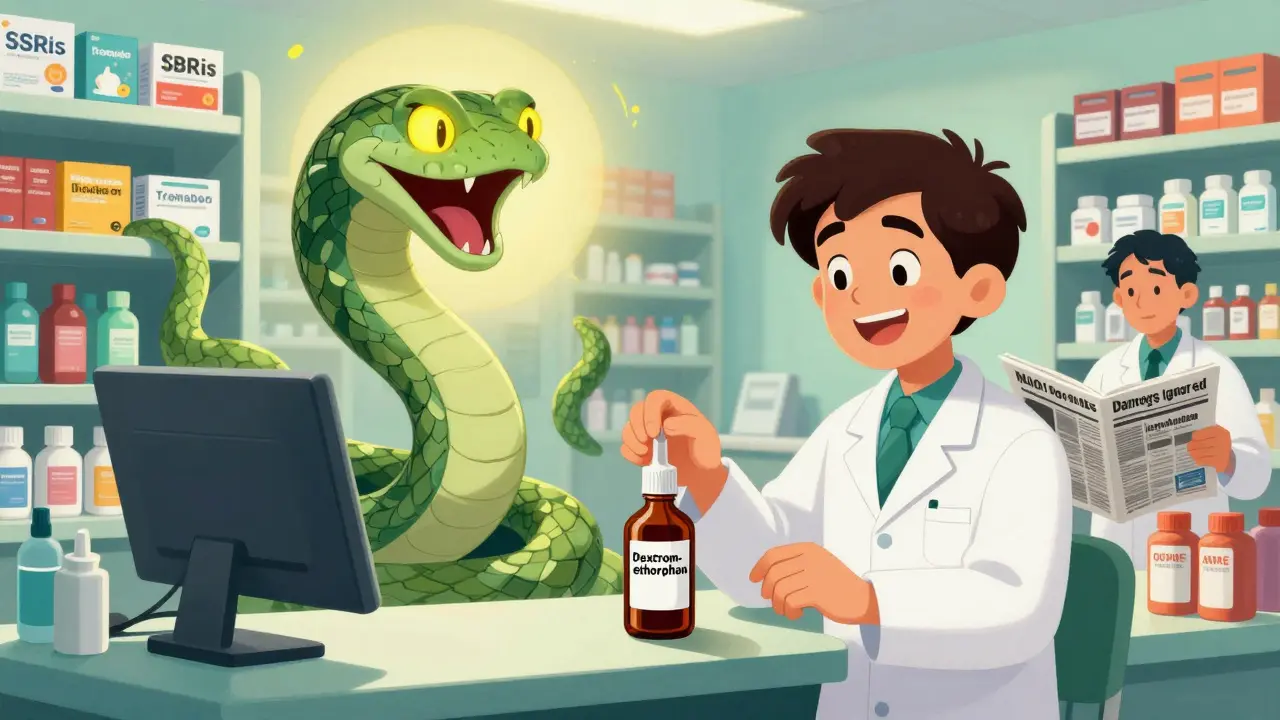
- Dextromethorphan: Found in over 100 over-the-counter cough syrups and cold pills. A 26-year-old woman was hospitalized after taking one 30mg dose while on phenelzine. The FDA has warned about this since 1992.
- Ephedrine and phenylephrine: Common in decongestants like Sudafed and NyQuil. These directly stimulate your blood vessels and can cause a hypertensive emergency within minutes.
Even supplements can be dangerous. St. John’s Wort, 5-HTP, and SAMe are marketed as natural mood boosters-but they raise serotonin levels. A 2018 case study showed a patient developing a 40.5°C fever and blood pressure of 220/110 after taking 5-HTP with phenelzine. Ginseng has also been linked to mania and tremors in people on MAOIs, though some early reports may have been due to caffeine contamination.
Food Risks Are Real-And Often Overlooked
Most people know they shouldn’t eat aged cheese on MAOIs. But what about soy sauce? Tap beer? Pepperoni? These are common foods that contain enough tyramine to trigger a crisis. A tablespoon of soy sauce can have up to 30mg of tyramine. A 5-ounce glass of Chianti wine has about 8mg. A single ounce of aged cheddar or blue cheese? Around 15mg. The threshold for danger? Just 10-25mg. That means you don’t need to binge-you just need one bite of the wrong thing.
Some foods are riskier than others:
- Aged cheeses (over 6 months old): Parmesan, blue, gorgonzola, cheddar
- Cured or fermented meats: Salami, pepperoni, liverwurst
- Fermented soy: Soy sauce, miso, tempeh
- Tap beer and draft beer (bottled beer is usually safe)
- Red wine, especially Chianti or Burgundy
- Overripe fruits, especially bananas and avocados
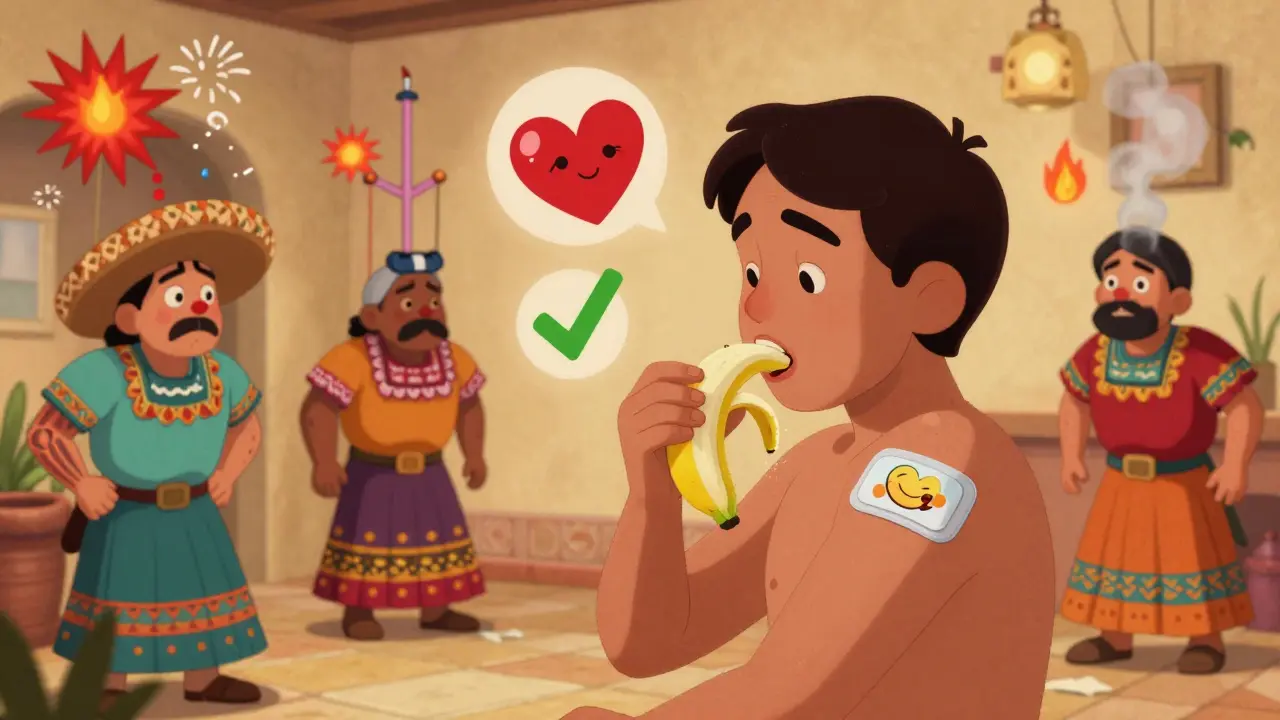
There’s one exception: the selegiline patch (Emsam). At the lowest dose (6mg/24hr), studies show it doesn’t interfere with tyramine breakdown. That means patients on this form can eat most foods without restriction. It’s one reason why this patch now makes up nearly 70% of all MAOI prescriptions in the U.S.
Why Are These Risks Still Happening?
You’d think with all the warnings, these interactions would be rare. But they’re not. A 2021 study found that 34% of primary care doctors didn’t know dextromethorphan was unsafe with MAOIs. Many patients don’t tell their doctors they’re taking MAOIs-especially if they’re seeing a specialist for something else. A patient might get a cold, buy cough syrup at the pharmacy, and never mention their antidepressant.
Electronic health records now block prescriptions that clash with MAOIs, but that doesn’t stop someone from buying OTC meds online or from a corner store. The FDA requires warning labels on dextromethorphan products, but a 2020 government audit found 12% of them didn’t have the warning at all.
Many patients don’t carry any kind of reminder. The American College of Medical Toxicology recommends every MAOI user keep a wallet card listing all dangerous drugs and foods. Yet only 78% of psychiatrists routinely give them out. If you’re on an MAOI, you need one. Print it. Put it in your wallet. Show it to every pharmacist and ER nurse.
What If You Need to Switch Medications?
Some people start on an MAOI, then want to switch to something safer. But you can’t just stop one and start another. The washout period is non-negotiable. For most MAOIs, you need 14 days without the drug before starting an SSRI. For fluoxetine, it’s five weeks because its metabolite sticks around for days after you stop taking it. Skipping this step is a recipe for serotonin syndrome.
Same goes for going the other way: if you’ve been on an SSRI, you can’t jump to an MAOI without waiting. The same rules apply. There’s no shortcut. Your doctor should map this out clearly before making any changes.
Is There a Safer Alternative?
Outside the U.S., moclobemide is widely used. It’s a reversible MAO-A inhibitor, meaning it doesn’t block the enzyme permanently. That reduces the risk of food and drug interactions dramatically. But the FDA never approved it-partly because clinical trials showed only modest benefits over other antidepressants. So in the U.S., the only real alternative is to stick with the safer MAOI option: the selegiline patch.
It’s not perfect. It can still cause side effects like skin irritation or insomnia. But compared to oral MAOIs, it’s far less likely to cause a hypertensive crisis. That’s why it’s now the most prescribed MAOI in the country.
Bottom Line: Respect the Risk
MAOIs aren’t the first-line treatment for depression anymore. That’s for good reason. But they still save lives for people who haven’t responded to anything else. The problem isn’t the drug itself-it’s the lack of awareness. People assume antidepressants are all the same. They’re not. An MAOI is like a landmine in your medicine cabinet. One wrong step, and it goes off.
If you’re on an MAOI, know your triggers. Keep a list. Tell every healthcare provider. Avoid OTC meds unless your psychiatrist says it’s safe. Don’t assume your pharmacist knows. Don’t assume your doctor remembers. Take responsibility. Your life depends on it.
Can I take ibuprofen with an MAOI?
Yes, ibuprofen and other common NSAIDs like naproxen are generally safe with MAOIs. They don’t affect serotonin or tyramine levels. But always check with your doctor before starting any new medication, even over-the-counter ones, because some NSAIDs can increase bleeding risk, especially if you’re also on blood thinners.
Is it safe to drink alcohol while on an MAOI?
It’s not recommended. Alcohol can raise blood pressure and interact unpredictably with MAOIs. Red wine, in particular, contains tyramine and can trigger a hypertensive crisis. Even small amounts of beer or spirits may cause dizziness, headaches, or dangerous spikes in blood pressure. If you choose to drink, limit it to one small serving and monitor how you feel. But the safest choice is to avoid alcohol entirely.
What should I do if I accidentally take a contraindicated drug?
Call emergency services immediately. If you’ve taken something like dextromethorphan, tramadol, or a decongestant, don’t wait for symptoms. Head to the ER. Early treatment with benzodiazepines and cooling measures can prevent severe complications. Bring your MAOI medication bottle and a list of everything you’ve taken. Time is critical-symptoms can escalate within minutes.
Are there any MAOIs that are safer than others?
Yes. The selegiline transdermal patch (Emsam) at the 6mg/24hr dose has significantly lower risks for food and drug interactions because it delivers the drug slowly through the skin, reducing overall enzyme inhibition. At this dose, most dietary tyramine is processed normally. Higher doses of the patch still require dietary restrictions. Oral MAOIs like phenelzine and tranylcypromine are far more dangerous in this regard.
Can I take an MAOI if I’m over 65?
Older adults are at higher risk for drug interactions because they often take multiple medications. The average person over 65 takes 4.5 prescription drugs. That increases the chance of accidental MAOI interactions. While MAOIs can be used in older patients, they require extra caution. The selegiline patch is often preferred because of its safer profile. Close monitoring and clear communication with your doctor are essential.


Written by Connor Back
View all posts by: Connor Back