
Hypoglycemia Treatment Calculator
Current Blood Sugar Assessment
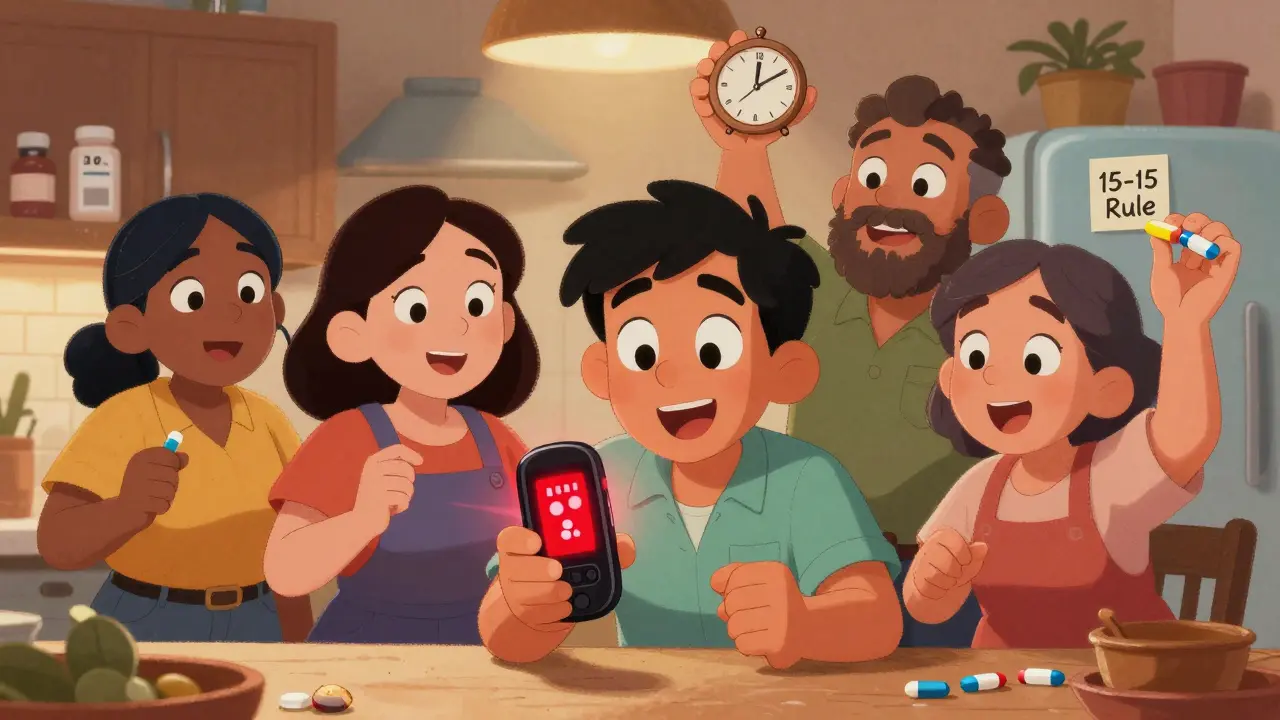
Low blood sugar from diabetes meds isn’t just an inconvenience-it can be dangerous. If you’re on insulin, sulfonylureas, or meglitinides, you’re at real risk of hypoglycemia. And it’s more common than most people think. About 1.5 to 2.5 episodes per patient per year happen in those using insulin or sulfonylureas, according to the American Diabetes Association. For some, it’s a nightly fear. For others, it’s a surprise during a workout or after skipping lunch. The good news? You can manage it. Not perfectly, but effectively-with the right plan, tools, and awareness.
What Counts as Low Blood Sugar?
Hypoglycemia isn’t just "feeling shaky." It’s defined by numbers. The standard threshold is 70 mg/dL. Below that, your body starts sending signals: sweating, trembling, hunger, a racing heart. These are your body’s way of saying, "I need glucose now." If you ignore them and your blood sugar drops further-below 54 mg/dL-your brain starts to suffer. That’s when confusion, drowsiness, slurred speech, or even seizures can happen. This is called Level 2 hypoglycemia. Level 3? That’s when you need someone else to help you-because you’re unconscious or unable to treat yourself.
Not everyone feels the warning signs. About 25% of type 1 and 10% of type 2 patients develop hypoglycemia unawareness after 15+ years of diabetes. Their body stops sounding the alarm. That’s when things get risky. No shaking. No sweating. Just suddenly passing out. That’s why checking your numbers regularly isn’t optional-it’s lifesaving.
Which Medications Cause the Most Problems?
Not all diabetes drugs are created equal when it comes to low blood sugar.
- Sulfonylureas (glimepiride, glipizide, glyburide): These are the biggest offenders. Up to 30% of users have at least one episode per year. They force your pancreas to keep releasing insulin-even when you’re not eating.
- Insulin: All forms carry risk. Long-acting insulins like glargine can cause overnight lows. Rapid-acting ones like lispro or aspart spike and crash if you miscalculate carbs. 20-40% of insulin users experience hypoglycemia annually.
- Meglitinides (repaglinide, nateglinide): These act fast and fade fast. Great for post-meal spikes, but if you eat late or skip a bite, you’re setting yourself up for trouble.
On the safer side:
- Metformin: Less than 5% risk alone.
- GLP-1 agonists (semaglutide, liraglutide): Under 2%.
- SGLT2 inhibitors (dapagliflozin, empagliflozin): Around 3%.
If you’re on a combo of insulin + sulfonylurea, your risk doubles. That’s not a coincidence-it’s a red flag. Talk to your doctor if you’re on both. There are better options.
Who’s at Highest Risk?
Hypoglycemia doesn’t hit everyone the same. Some people are walking time bombs without knowing it.
- Age 65+: Risk jumps by 40%. Kidneys slow down, meds stick around longer, appetite changes. Older adults often need higher targets-like 80-130 mg/dL-to stay safe.
- Chronic kidney disease: If your eGFR is below 60, your risk triples. Many diabetes drugs are cleared by the kidneys. When they fail, the drugs build up.
- Long-standing diabetes: After 15+ years, your body’s natural counter-regulatory response weakens. You stop feeling the warning signs.
- Beta-blockers: Used for high blood pressure or heart issues. They mask sweating and trembling-the two most reliable early signs of low blood sugar. You won’t know you’re dropping until it’s too late.
- Alcohol: Even one drink can trigger a low, especially if you’re on insulin. Alcohol blocks the liver from releasing glucose. For people under 40, alcohol is linked to 22% of severe hypoglycemia events.
If any of this sounds like you, you need a personalized plan-not a one-size-fits-all target.
The 15-15 Rule (And Why Most People Get It Wrong)
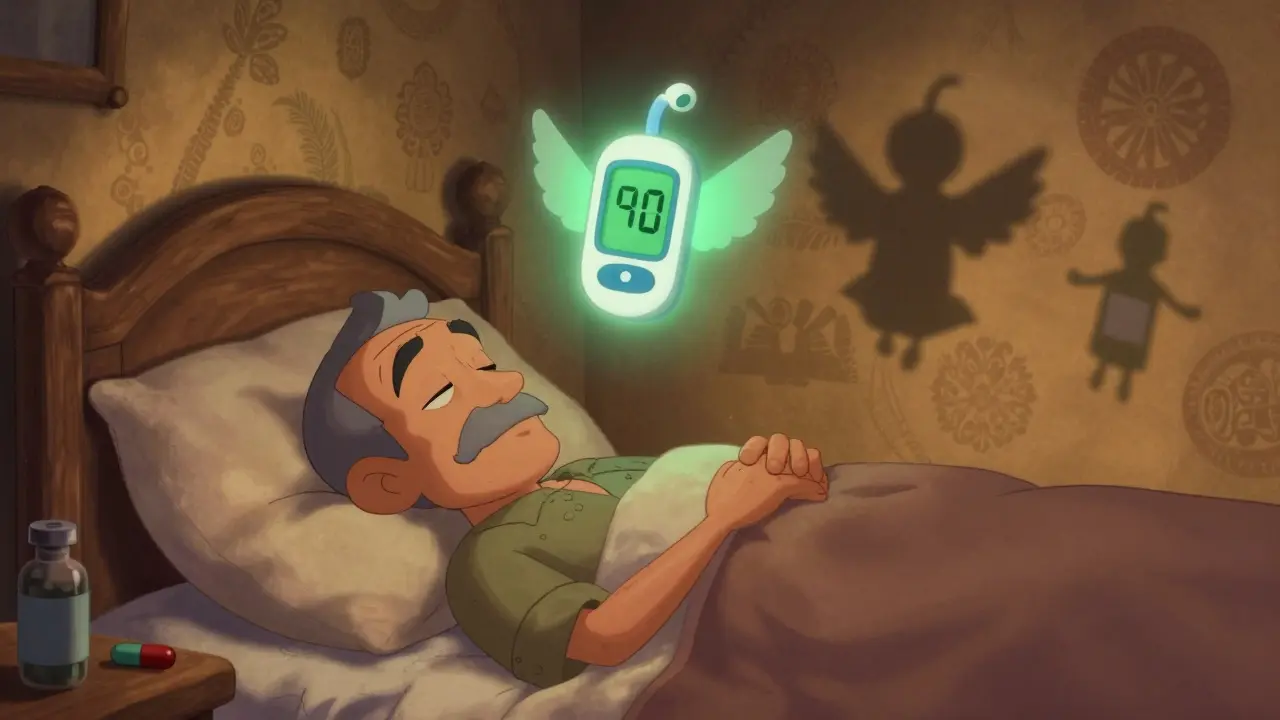
When your blood sugar drops below 70, you need fast-acting sugar. Not candy. Not fruit juice. Not a banana. The gold standard is the 15-15 rule:
- Take 15 grams of fast-acting carbohydrate.
- Wait 15 minutes.
- Check your blood sugar again.
- If still below 70, repeat.
Here’s what 15 grams looks like:
- 3-4 glucose tablets
- 1 tube of glucose gel
- 4 ounces (½ cup) of regular soda (not diet)
- 1 tablespoon of honey or sugar
But here’s the problem: 63% of people use the wrong stuff. They grab sugar-free gum. They drink diet soda. They eat a granola bar. None of those work fast enough. Glucose tablets are the only thing designed to raise blood sugar within minutes. Everything else is a gamble.
And don’t forget: after you recover, eat a snack with protein and complex carbs-like peanut butter on toast-to prevent another drop in an hour.
Technology That Actually Helps
CGMs (continuous glucose monitors) aren’t just for tech lovers. They’re for anyone who’s had a low that came out of nowhere.
Studies show CGMs reduce hypoglycemia time by 35% and severe events by 48%. That’s not a small win. That’s life-changing. The Dexcom G7 and Freestyle Libre 3 are now smaller, cheaper, and more accurate than ever. But cost is still a barrier. Medicare now covers CGMs for all insulin users-but out-of-pocket costs can still be $89/month for sensors. For low-income patients, that’s unaffordable. And 35% of them skip them because of it.
Smart insulin pens? They track doses, time, and even remind you if you’re about to overdose. The Cost is around $150, with monthly sensor replacements at $50. Not cheap, but if you’re having frequent lows, it’s worth the investment.
And don’t ignore automated insulin delivery systems. The Tandem x2 pump with Control-IQ reduces overnight lows by 3.1 hours per night. That’s 21 hours a week of safer sleep. The catch? It costs about $6,500 a year. But if you’re hospitalized for hypoglycemia once, that cost pays for itself.
What You Can Do Right Now
You don’t need to wait for a doctor’s visit. Start today.
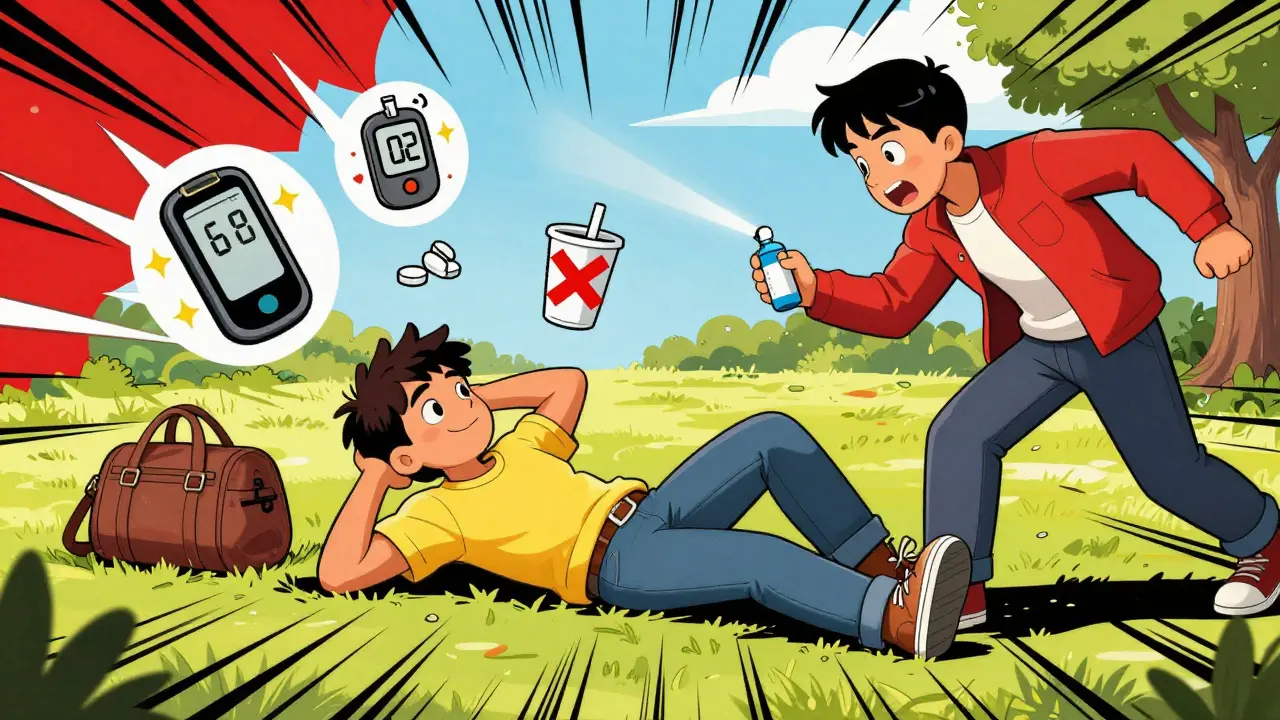
- Carry glucose tablets-not just one pack. Keep them in your car, your purse, your desk drawer, your gym bag. 54% of users who survive lows say they kept "hypo bags" in multiple places.
- Teach someone how to use your glucagon kit. Baqsimi (nasal spray) or Gvoke (injection) should be in your home, your workplace, your child’s school. Glucagon saves lives when you can’t swallow or are unconscious.
- Set phone alarms for meals and snacks. 67% of users who log their lows say alarms helped them avoid them.
- Log every low. Not just once. Every time. Write down: time, symptoms, what you ate, your meds, your activity. People who log consistently cut their lows by 37% in three months. But only 28% keep it up beyond six weeks. Don’t be one of them.
- Review your meds. If you’re on a sulfonylurea and insulin, ask: Is this really necessary? There are safer alternatives now.
The Bigger Picture
Hypoglycemia isn’t just a side effect-it’s a system failure. We’ve spent decades chasing HbA1c targets like 7% or lower. But that’s the wrong goal for many. 40% of patients with "acceptable" HbA1c levels still have dangerous low blood sugar patterns that go unnoticed.
The new standard? Individualized care. For older adults? Higher targets. For people with unawareness? CGMs and glucagon kits. For those with kidney issues? Switch away from sulfonylureas. For everyone? Education.
The ADA’s "Hypoglycemia Uncovered" program shows that just 60 minutes of focused training cuts events by 45% in six months. That’s not magic. That’s knowledge. You need to know your numbers. Your triggers. Your rescue plan.
And if you’re still using old-school finger sticks and paper logs? Upgrade. The tools exist. The data proves they work. The cost is real-but so is the risk of doing nothing.
Frequently Asked Questions
What should I do if I pass out from low blood sugar?
If you’re unconscious or unable to swallow, someone must give you glucagon. Never try to put food or liquid in your mouth-this can cause choking. Use a Baqsimi nasal spray or a Gvoke injection if available. Call 911 immediately, even after glucagon is given. Glucagon works, but you still need medical evaluation.
Can I stop my diabetes meds to avoid low blood sugar?
No. Stopping insulin or other diabetes medications without medical supervision can lead to dangerously high blood sugar, ketoacidosis, or long-term organ damage. Instead, talk to your doctor about switching to a lower-risk medication. Options like GLP-1 agonists or SGLT2 inhibitors may offer similar glucose control with far less hypoglycemia risk.
Why do I get low after exercising, even if I eat?
Exercise increases insulin sensitivity for hours afterward. Your muscles pull glucose from your blood, and if your insulin dose hasn’t been adjusted, your blood sugar drops. Always check your glucose before, during (if long activity), and after exercise. Have fast-acting carbs on hand. Consider reducing your insulin dose before workouts if you’re on insulin.
Are glucose tablets better than juice or candy?
Yes. Glucose tablets are pure, fast-acting glucose with no fat, fiber, or protein to slow absorption. Juice and candy often contain fructose or fat, which delays the rise in blood sugar. A can of soda might take 20+ minutes to work. Glucose tablets work in 5-10 minutes. Precision matters when your brain is shutting down.
Is it safe to use alcohol with diabetes meds?
It’s risky. Alcohol blocks your liver from releasing stored glucose, which is your body’s backup defense against low blood sugar. If you drink, always eat food with it, avoid sugary mixers, and check your blood sugar before bed. Never drink alone if you’re on insulin or sulfonylureas. Alcohol is linked to 22% of severe lows in people under 40.


Written by Connor Back
View all posts by: Connor Back