
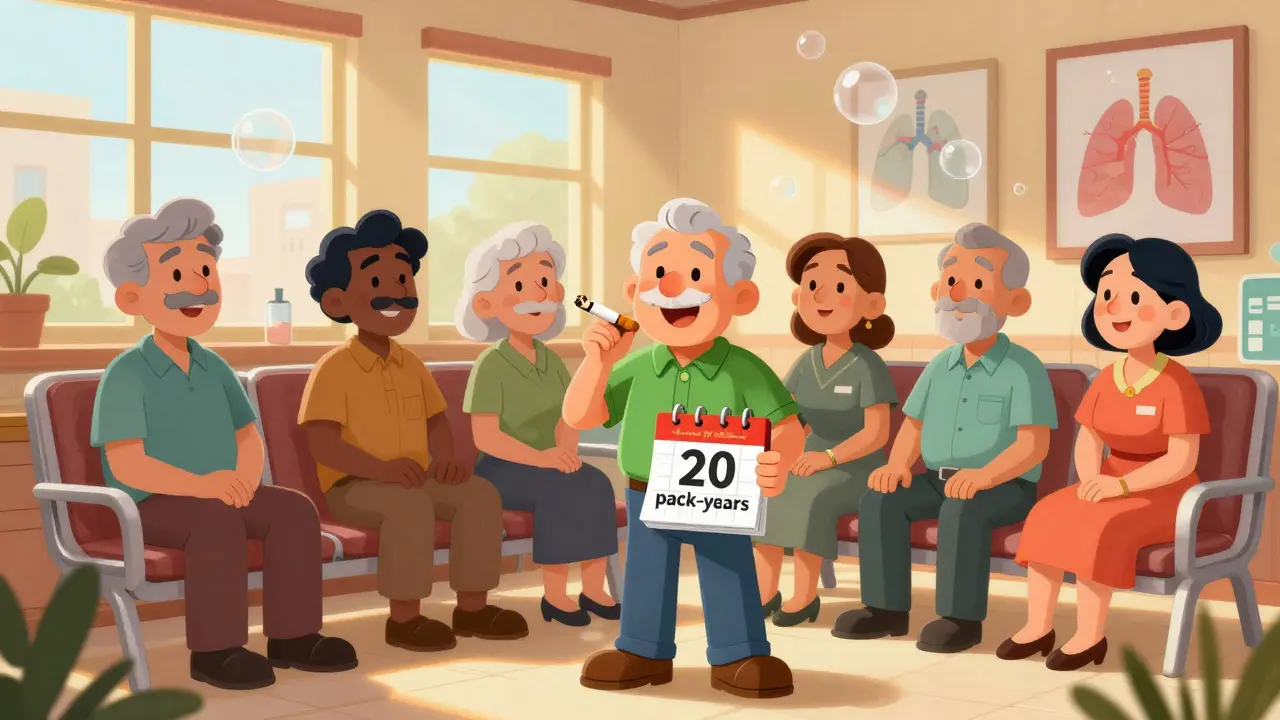
Every year, over 130,000 people in the U.S. die from lung cancer. Most of them weren’t screened. But for those who qualify, a simple, low-radiation scan called low-dose CT can catch cancer early-when it’s still curable. This isn’t science fiction. It’s real, proven medicine. And if you’re in the right risk group, it could save your life.
Who Should Get Screened?
If you’re between 50 and 80 years old and have smoked at least 20 pack-years, you’re likely eligible. A pack-year means smoking one pack a day for a year. So if you smoked a pack a day for 20 years, or two packs a day for 10 years-that’s 20 pack-years. You don’t have to be smoking right now. If you quit within the last 15 years, you still qualify under current U.S. guidelines.The U.S. Preventive Services Task Force updated its rules in 2021 to include more people. Before, you needed 30 pack-years and had to be at least 55. Now, it’s 20 pack-years and starting at 50. That change alone added millions more people who can benefit. Medicare, Medicaid in expansion states, and most private insurers cover this scan yearly with no out-of-pocket cost-if you meet the criteria.
But eligibility isn’t just about smoking. Some guidelines, like those from the National Comprehensive Cancer Network (NCCN), also consider other risks: family history of lung cancer, exposure to asbestos or radon, or having COPD or pulmonary fibrosis. If you’ve been around these hazards for years, talk to your doctor-even if you never smoked.
How the Scan Works
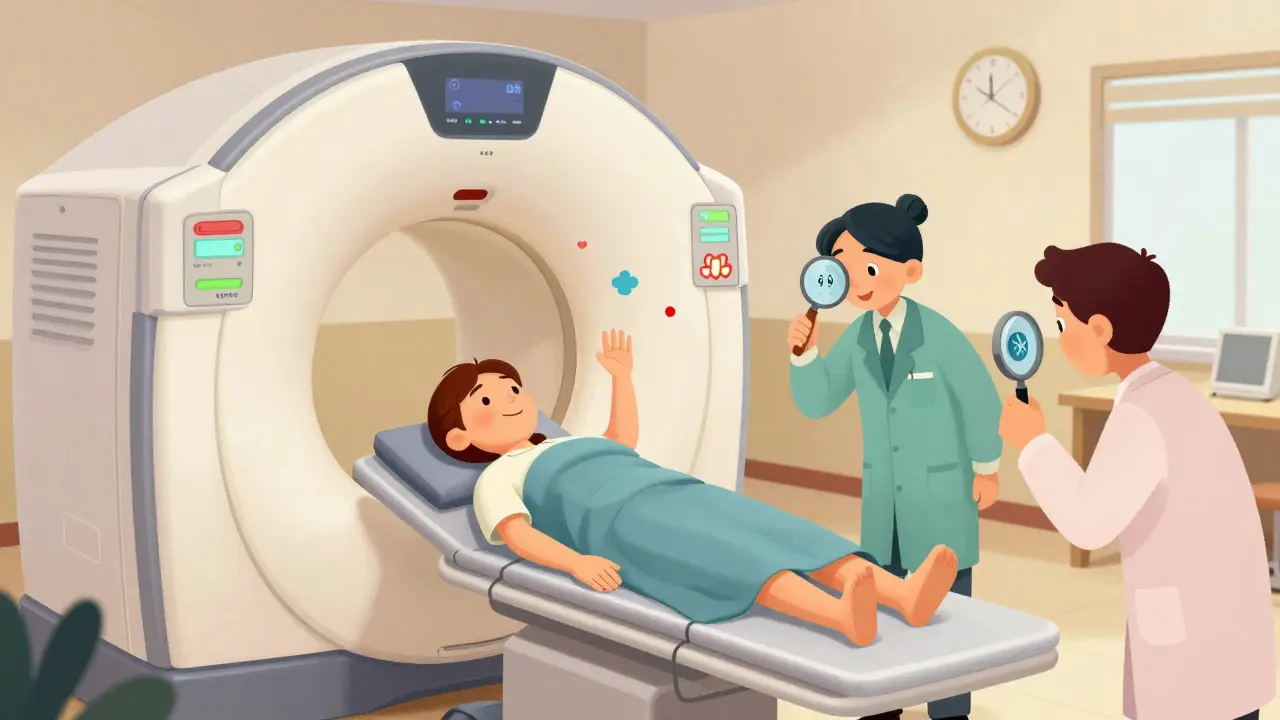
The scan itself takes less than 10 seconds. You lie on a table, raise your arms, and hold your breath while the machine spins around you. No needles. No fasting. No contrast dye. It’s not like a regular CT scan. The radiation dose is about 1.2 millisieverts-less than a mammogram and only about one-tenth of a standard chest CT. Modern machines use advanced software to cut the dose even lower, sometimes down to 0.8 mSv.The images are reviewed by radiologists trained in lung screening. They look for tiny nodules-small spots in the lungs that aren’t cancer yet but could become one. The system flags anything over 4 millimeters. Most of these are harmless: scar tissue, old infections, or benign growths. But catching the rare ones early makes all the difference.
What the Results Mean
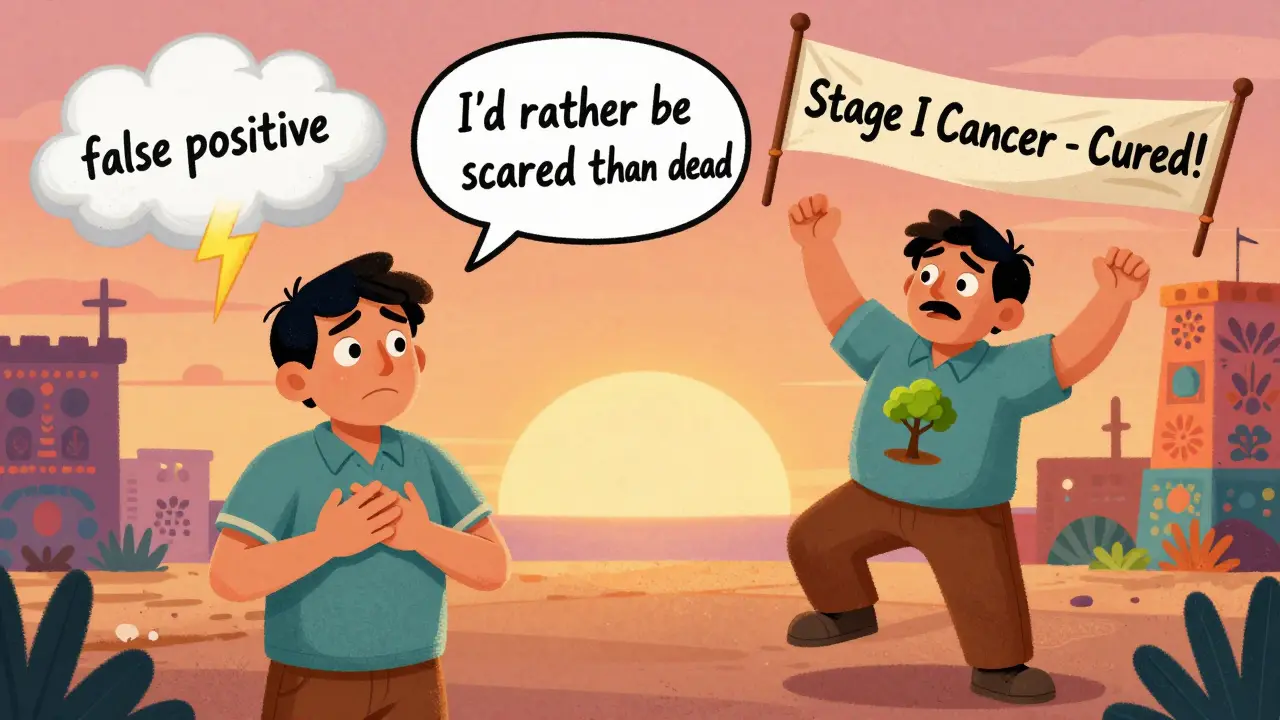
About 1 in 4 people will get a positive result on their first scan. That sounds scary. But here’s the key: 96% of those positive results turn out to be nothing. That’s the false-positive rate. It’s high, but it’s intentional. Better to catch a few extra nodules than miss one that’s growing.If your scan shows a nodule, you won’t get a cancer diagnosis right away. You’ll get a follow-up scan-usually in 3 to 6 months-to see if it’s growing. If it stays the same, you’re likely fine. If it grows, you’ll need more tests: a PET scan, biopsy, or sometimes surgery. The good news? Most cancers caught this early are Stage I. That means they haven’t spread. Surgery alone can cure them.
One woman from Ohio, Mary Johnson, found a 6mm nodule on her scan. It was Stage I adenocarcinoma. She had surgery. No chemo. No radiation. She’s now five years cancer-free. That’s the power of early detection.
But it’s not all smooth. James Wilson, 62, got a false positive. He spent three months in anxiety, had two follow-up scans, and paid $450 out of pocket. He still got screened the next year. “I’d rather be scared than dead,” he told his doctor.
The Real Benefits
The science is clear. The National Lung Screening Trial, which followed over 53,000 people, showed that annual low-dose CT scans cut lung cancer deaths by 20% compared to chest X-rays. That’s 1 in 5 lives saved. It also lowered overall death rates by 6.7%-because people were catching other problems too.And it’s not just about survival. Early-stage lung cancer patients live longer, need less aggressive treatment, and recover faster. Surgery today is often done through small keyhole incisions (VATS), with hospital stays down to just 3 days. In 2010, it was 5 days. Technology has made it safer.
For every 810 people screened annually for 6.5 years, one lung cancer death is prevented. That’s not a huge number, but when you scale it up-millions of people screened-it adds up to tens of thousands of lives saved every year.
The Catch: False Positives and Access
The biggest downside? Anxiety. Waiting for results is hard. Many people report stress, sleepless nights, even panic attacks during the follow-up window. That’s why shared decision-making is required before your first scan. Your doctor should sit down with you, explain the risks and benefits, and make sure you’re ready.Another problem? Access. In rural areas, the nearest screening center might be 30 miles away. A 2023 study found only 18.5% of eligible people in rural areas got screened-compared to 34.7% in cities. Transportation, lack of providers, and awareness gaps keep people from getting tested.
And there’s a racial disparity. Black Americans have higher lung cancer rates but are screened at nearly 30% lower rates than White Americans. Why? Lack of provider recommendation, distrust in the system, and fewer clinics in their neighborhoods.
What’s Next?
The government is reviewing whether to remove the 15-year quit rule. Why? Because research shows lung cancer risk stays high for 25+ years after quitting. One study found 34% of lung cancers occur in people who quit more than 15 years ago. If the rule changes, millions more will qualify.Artificial intelligence is helping too. New software can analyze scans faster and more accurately than humans. One tool, LungPoint®, cuts reading time by 30% and still catches 97% of dangerous nodules. AI won’t replace radiologists-it helps them focus on the real threats.
And in the future, blood tests might help. The EarlyCDT-Lung test detects antibodies linked to early cancer. In trials, it had a 94% negative predictive value-meaning if it’s negative, you’re very unlikely to have cancer. It’s not ready for prime time yet, but it’s coming.
What to Do Now
If you think you qualify, don’t wait. Talk to your doctor. Ask: “Am I eligible for low-dose CT screening?” If they say no, ask why. If they’re unsure, ask for a referral to a screening program. Most hospitals and imaging centers now have dedicated lung cancer screening clinics.If you’re still smoking, this is the best time to quit. Screening doesn’t replace quitting. But it gives you a safety net while you work on it.
And if you’ve already been screened? Keep going. Annual scans are the rule. Missing one year cuts the benefit. Stick with it.
Lung cancer doesn’t always cause symptoms until it’s advanced. That’s why screening matters. You can’t feel a 4mm nodule. But you can find it. And if you do-you might just save your life.


Written by Connor Back
View all posts by: Connor Back