

When you hear the word biosimilar, you might think it’s just a cheaper version of a brand-name biologic drug. But here’s the catch: unlike generic pills, which are exact chemical copies, biosimilars are made from living cells. That means tiny differences can creep in during manufacturing - differences that might affect how your immune system reacts.
Why Your Body Might React Differently
Biologics are complex proteins, often monoclonal antibodies, designed to target specific parts of your immune system. Think of them like precision tools - they’re not just chemicals. Biosimilars are built to match these tools as closely as possible. But because they’re grown in living cells (like Chinese hamster ovary cells), small variations in sugar attachments (glycosylation), protein folding, or even trace contaminants can happen. These aren’t mistakes - they’re unavoidable byproducts of biological production. Your immune system is incredibly sensitive to changes in protein structure. Even a slight shift in how a sugar chain is attached can make a protein look “foreign” to your body. That’s when it starts producing anti-drug antibodies (ADAs). These aren’t always bad - many people develop low-level ADAs without any symptoms. But in some cases, those antibodies can block the drug from working, or worse, trigger serious reactions like anaphylaxis. Take cetuximab, a cancer drug. Some patients had life-threatening allergic reactions because of a sugar molecule called galactose-α-1,3-galactose - a remnant from the animal cells used to grow it. That’s not a manufacturing error; it’s a biological reality. Biosimilars face the same risks. If the cell line or culture conditions differ even slightly from the original, those sugar patterns can change.How Delivery and Dosing Play a Role
It’s not just about the drug itself. How you get it matters too. If a biologic is given through an IV, your body has time to adjust. But if it’s injected under the skin - like many biosimilars for arthritis - your immune system gets a more concentrated, localized dose. Studies show subcutaneous delivery increases immunogenicity risk by 30-50% compared to IV. That’s why some biosimilars, even if chemically identical, might trigger more ADAs just because of how they’re administered. Dosing frequency also plays a part. If you’re getting the drug every week, your immune system has less time to recover between doses. That can lead to tolerance. But if you’re on an every-other-week schedule, your body gets a chance to “reset,” making it more likely to recognize the drug as foreign. One study found intermittent dosing raised ADA risk by about 25% compared to continuous therapy.What’s in the Bottle - Beyond the Active Ingredient
Look at the inactive ingredients. They’re not just filler. Polysorbate 20 and polysorbate 80 are common stabilizers. They sound similar, but they’re chemically different. The original rituximab (Rituxan) uses polysorbate 20. One biosimilar (Rixathon) uses polysorbate 80. That small switch can affect how the protein behaves in solution. It might increase aggregation - clumps of proteins that your immune system sees as invaders. And then there are impurities. Host cell proteins left over from manufacturing - even at levels as low as 100 parts per million - can trigger immune responses. Studies show ADA incidence jumps 87% when these contaminants exceed that threshold. Biosimilar manufacturers must prove their product has similar levels of impurities as the original. But proving similarity doesn’t mean identical. And in immunology, “similar” isn’t always good enough.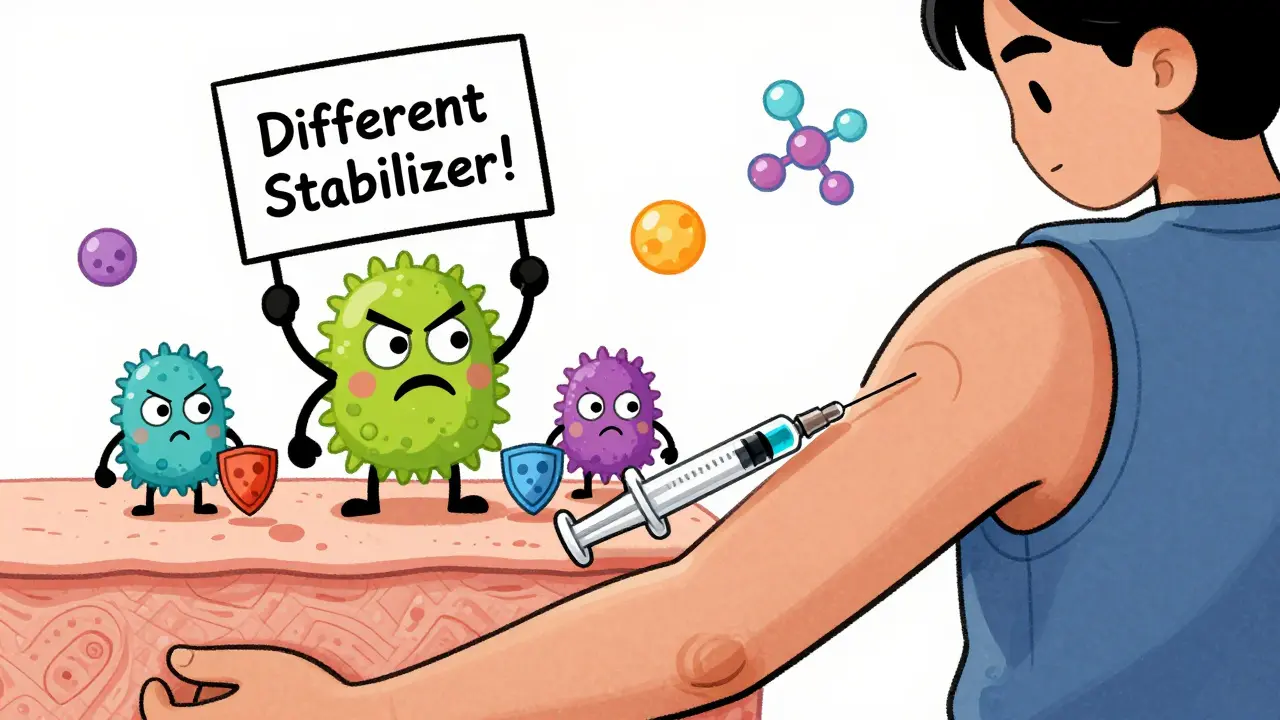
Who’s Most at Risk?
Not everyone reacts the same. Your genes matter. People with a specific version of the HLA-DRB1*04:01 gene are nearly five times more likely to develop ADAs to certain biologics. Your disease state counts too. Someone with rheumatoid arthritis has a 2.3 times higher risk than a healthy person. That’s because their immune system is already on high alert. Age, other medications, and immune status also change the game. Patients on methotrexate - a common arthritis drug - have 65% lower ADA rates when taking it with a TNF inhibitor. That’s because methotrexate suppresses the immune response just enough to prevent antibody formation. On the flip side, people with weakened immune systems - say, from chemotherapy or HIV - actually develop fewer ADAs. Their bodies are too busy just surviving to mount a strong response.What Do Real Patients Experience?
Clinical trials are tightly controlled. Real life isn’t. In the NOR-SWITCH trial, patients switched from originator infliximab to its biosimilar CT-P13. ADA rates went up slightly - 11.2% vs. 8.5% - but no one lost clinical benefit. In Denmark, a registry study found adalimumab biosimilars had higher ADA rates (23.4%) than Humira (18.7%). But again, patients still responded well to treatment. Yet, patient stories on forums like Reddit tell a different story. One user reported severe injection site reactions after switching from originator etanercept to a biosimilar - reactions they’d never had before. Another said they switched between rituximab versions three times over three years and noticed zero difference. This isn’t contradiction. It’s nuance. For most people, the switch is seamless. For a small group, something shifts. Maybe it’s a subtle change in formulation. Maybe it’s their unique immune profile. Either way, it’s real.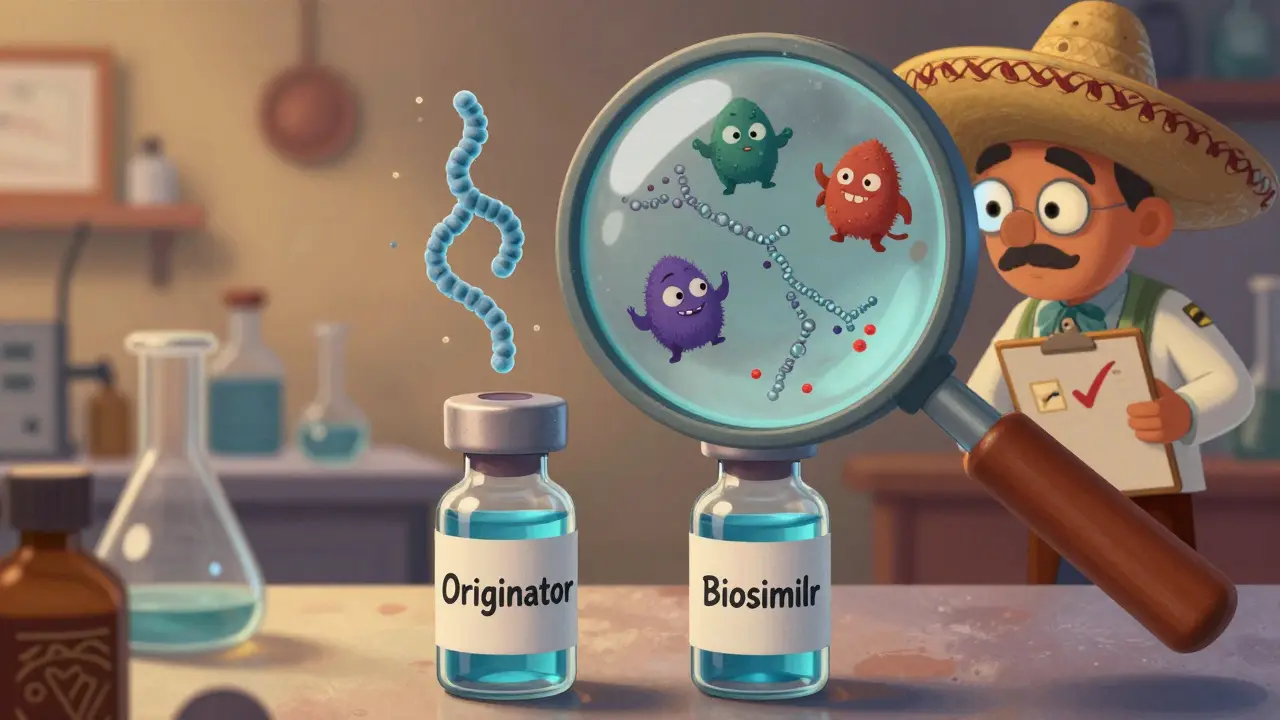
How Regulators Try to Catch These Differences
The FDA and EMA don’t just accept “close enough.” They demand head-to-head comparisons using the exact same lab methods. If a study uses one type of test to measure ADAs for the reference drug and a different one for the biosimilar, the results are meaningless. That’s why regulators insist on identical assays - same equipment, same reagents, same timing. Testing happens in layers. First, a screening test finds potential ADAs. Then, a confirmatory test checks if those signals are real. Finally, a neutralizing assay determines if the antibodies actually block the drug’s function. Cell-based neutralizing tests are preferred because they mimic real biology, even though they’re less precise than lab-based ones. The FDA’s “totality of evidence” rule means manufacturers must prove similarity not just in structure, but in function, safety, and immune response. That’s why a biosimilar can’t be approved without clinical data showing comparable immunogenicity.Is This a Big Problem?
Most experts say no - at least not yet. In Europe, 85% of infliximab prescriptions are now biosimilars. Patients have been on them for over a decade. Rates of serious adverse events haven’t spiked. In the U.S., adoption is slower, but real-world data is catching up. A 2022 survey of 347 rheumatologists found 68% think immunogenicity concerns are overblown. Only 22% say they’ve seen a clinically meaningful difference in practice. That’s encouraging. But the science isn’t settled. Minor glycosylation differences - even under 5% - can alter how the drug interacts with immune cells. A 2022 FDA workshop warned that these tiny changes might affect effector functions in susceptible people. That’s why researchers are now using multi-omics tools - combining proteomics, glycomics, and immunomics - to build a full picture of how each biosimilar behaves in the body.What This Means for You
If you’re considering a biosimilar, don’t panic. For most people, they work just as well as the original. They’re safe, effective, and save thousands of dollars. But if you’ve had a bad reaction to a biologic - unexplained fatigue, worsening symptoms, or new injection site pain - talk to your doctor. Don’t assume it’s “all in your head.” Your immune system might be reacting to something subtle. Ask: What’s the exact formulation? What’s the manufacturing process? Has this biosimilar been studied in people like me? And if you’ve been on a biosimilar for months without issue? Keep going. Most people don’t develop ADAs until after six months of treatment. Stability matters. The future? Better analytics. By 2027, advanced mass spectrometry will let manufacturers check sugar patterns and protein folds with 99.5% accuracy. That should make biosimilars even more predictable. For now, the message is simple: biosimilars aren’t generics. They’re highly similar - but not identical. And in immunology, even small differences can matter. But for the vast majority, they’re a safe, affordable, and powerful option.Are biosimilars as safe as the original biologics?
Yes, for most people. Regulatory agencies require biosimilars to show no clinically meaningful differences in safety, effectiveness, and immunogenicity compared to the original. Real-world data from Europe and the U.S. show similar rates of adverse events. However, rare cases of increased anti-drug antibodies have been observed in some patients, especially with specific formulations or delivery methods. These don’t usually lead to loss of efficacy, but monitoring is still recommended.
Can switching from a biologic to a biosimilar cause new side effects?
Possibly, but it’s uncommon. Some patients report new injection site reactions, fatigue, or flu-like symptoms after switching - often due to subtle differences in formulation or stabilizers. In clinical trials, these events are typically mild and temporary. However, in rare cases, patients have developed new anti-drug antibodies after switching, leading to reduced drug effectiveness. That’s why doctors often monitor patients closely for the first few months after a switch.
Why do some biosimilars have higher immunogenicity than others?
Because they’re made differently. Each biosimilar uses its own cell line, culture conditions, purification steps, and stabilizers. Small changes in glycosylation (sugar attachments), protein folding, or impurity levels can affect how the immune system sees the drug. For example, one biosimilar might use polysorbate 80, while the original uses polysorbate 20 - a difference that can increase protein aggregation and trigger more antibodies. Not all biosimilars are created equal, even if they target the same protein.
Do I need to get tested for anti-drug antibodies if I’m on a biosimilar?
Not routinely - unless you’re losing response or having unexpected side effects. Routine ADA testing isn’t standard practice because most people don’t develop neutralizing antibodies. But if your symptoms worsen after months of stable control, your doctor might check for ADAs. A rising antibody level combined with dropping drug concentration could mean your immune system is blocking the treatment. In those cases, switching back or adjusting therapy may help.
Can I switch back to the original biologic if I have issues with the biosimilar?
Yes, and many patients do. If you develop new side effects or notice your condition worsening after switching, talk to your doctor. In most cases, switching back to the originator biologic resolves the issue. Some insurance plans may require prior authorization for the switch, but clinical guidelines support returning to the original if safety or efficacy is compromised. There’s no rule that you must stay on the biosimilar once you start.


Written by Connor Back
View all posts by: Connor Back