
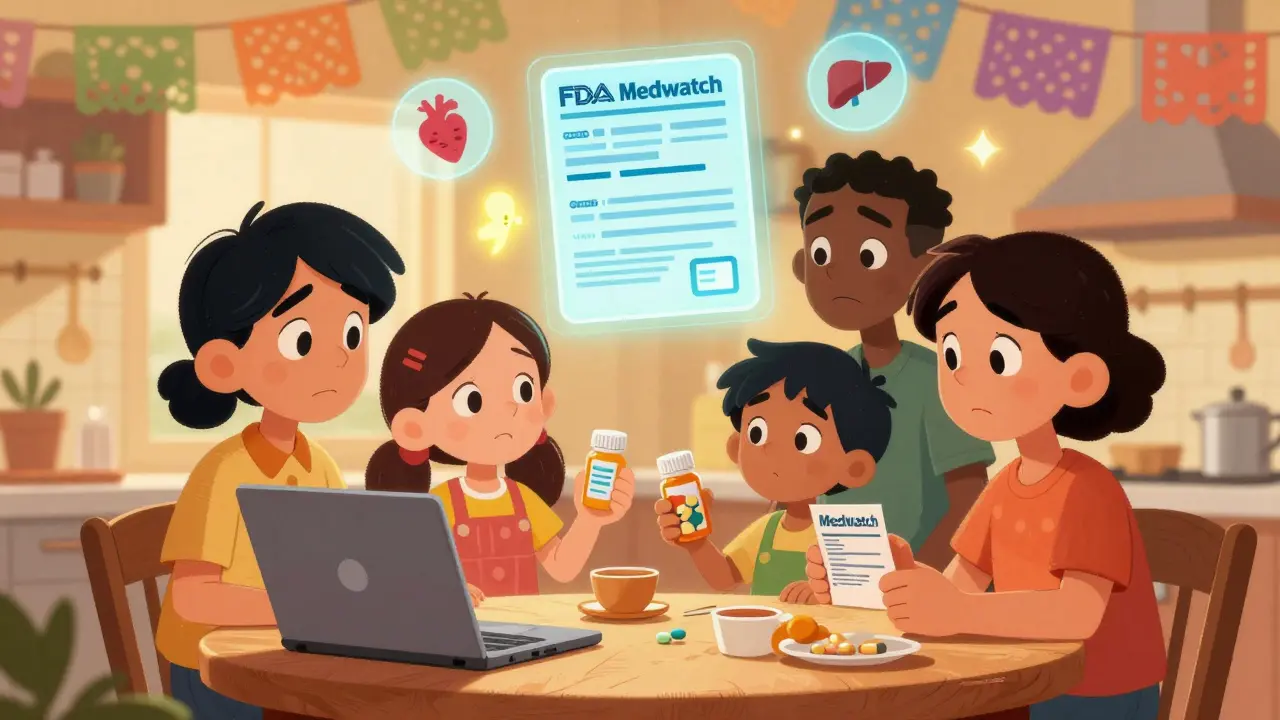
Every year, millions of people take prescription drugs without issue. But for some, a medication causes a serious side effect-something the doctor never warned about. Maybe it’s a sudden rash, trouble breathing, liver damage, or even a heart rhythm problem. When that happens, you’re not alone. And you’re not powerless. Reporting that reaction to the FDA isn’t just helpful-it’s critical. It could stop someone else from going through the same thing.
Why Reporting Matters
The FDA doesn’t know everything about a drug the day it hits the market. Clinical trials involve thousands of people, but real-world use involves millions. Rare side effects, interactions with other meds, or problems in older adults or pregnant women often don’t show up until after approval. That’s where adverse event reporting comes in.The FDA’s FAERS (FDA Adverse Event Reporting System) collects over 2 million reports every year. That’s the biggest safety database of its kind in the world. It’s not perfect-only 1% to 10% of actual side effects get reported-but every report adds a piece to the puzzle. In 2018, FAERS helped uncover the link between certain antibiotics and aortic aneurysms. That led to a Black Box Warning, the strongest safety alert the FDA can issue. Without those reports, that risk might have gone unnoticed for years.
Manufacturers are required to report serious side effects within 15 days. But you? You’re not required to report. But if you do, you’re helping protect others. And you might even get a follow-up from the FDA asking for more details-something that happens in about 1 in 50 reports with enough clinical detail.
Who Can Report
Anyone can report an adverse event to the FDA. That includes:- Patients and family members
- Doctors, nurses, pharmacists
- Pharmaceutical companies (they must)
- Healthcare facilities
Healthcare professionals are legally required to report serious side effects for certain drugs, especially vaccines under the National Childhood Vaccine Injury Act. But for most medications, reporting is voluntary-for them and for you.
Pharmaceutical companies face fines up to $2.3 million per violation if they miss deadlines. But patients? No penalties. Just the chance to make a real difference.
What Counts as an Adverse Event
An adverse event is any unexpected problem linked to a medication-even if it’s not clear the drug caused it. That includes:- Serious reactions: hospitalization, disability, birth defects, life-threatening conditions, death
- Unexpected side effects: rashes, dizziness, liver damage, heart palpitations
- Drug interactions: when two meds clash in a bad way
- Overdoses (accidental or intentional)
- Withdrawal symptoms
- Lack of expected effectiveness: if a drug completely fails to work
Even if you’re not sure the drug caused it, report it. The FDA’s rule is: if there’s a reasonable possibility the drug played a role, report it. You don’t need to be a doctor to judge that.
How to Report as a Patient or Family Member
You have two main ways to report: online or by phone.Option 1: Online Reporting (Recommended)
Go to the FDA’s MedWatch Online Form (Form 3500). It’s free, secure, and takes about 15-25 minutes.You’ll need:
- Patient’s age and gender
- Drug name (brand and generic, if known)
- Dosage and how long you took it
- Start and stop dates of the medication
- Exact description of the event: when it started, what happened, how bad it was
- Any hospital visits, lab tests, or imaging results
- Your contact info (optional but helpful for follow-up)
Pro tip: Upload a photo of the prescription label or pill bottle. That helps the FDA verify the product. You can save your progress for up to three days using a unique ID if you need to come back.
One user reported her daughter’s anaphylaxis to penicillin. She included lab results and the pediatrician’s notes. Within 10 business days, she got a call from an FDA safety reviewer asking for more details. That report went into the system-and helped others.
Option 2: Phone or Mail
If you can’t use the internet:- Call 1-800-FDA-1088
- Download Form 3500 from the FDA website and mail it to: MedWatch, 5600 Fishers Lane, Rockville, MD 20852
Phone reports are accepted, but they’re less detailed. You’ll still get credit for the report, but written reports with clinical details are 73% more likely to trigger further investigation.
What Makes a Report More Useful
Not all reports are created equal. The FDA says reports with these details are far more likely to lead to action:- Timeline: When did you start the drug? When did the side effect start? Did it get worse or better after stopping?
- Lab results: Blood tests, liver enzymes, kidney function-anything from a doctor’s visit.
- Other meds: List everything else you’re taking, including supplements and OTC drugs.
- Medical history: Any past reactions? Chronic conditions?
Reports with complete lab data are 68% more likely to be flagged for safety review. Those with clear timelines are 82% more likely to help determine if the drug was involved.
One doctor on Reddit spent 45 minutes filling out the form-only to have it time out. That’s frustrating. But if you save your draft, you can come back. Don’t give up.
What Happens After You Report
Your report goes into FAERS. It’s anonymized. No names, no addresses. Just the facts: drug, event, timeline, outcome.Statistical tools scan millions of reports looking for patterns. If a certain drug keeps showing up with the same rare side effect, it’s flagged as a “safety signal.” That doesn’t mean the drug caused it-it means it’s worth looking into.
From there, the FDA might:
- Update the drug’s label with new warnings
- Require the manufacturer to study the risk further
- Send out a public safety alert
- In rare cases, pull the drug from the market
But here’s the hard truth: it takes time. The FDA has only one safety reviewer for every 18,000 reports. On average, it takes 217 days from report submission to initial review. That’s why your report matters-it’s one of the few tools we have to catch problems early.

Common Problems and How to Avoid Them
Many people don’t report because they think:- “It’s not that serious.” But “serious” includes hospitalization, disability, or life-threatening events. If you’re unsure, report it anyway.
- “The doctor already knows.” Maybe they do. But they might not have reported it. Only 1 in 4 healthcare providers consistently report. Your report fills the gap.
- “It won’t make a difference.” That’s false. The FDA has used patient reports to change labeling for blood thinners, antidepressants, and diabetes drugs.
- “The form is too long.” It’s not. Most reports take under 20 minutes. And you can save your work.
The biggest mistake? Vague descriptions. Don’t say “I felt weird.” Say: “Three days after starting lisinopril, I developed swelling in my lips and throat. Went to ER. Diagnosed with angioedema. Stopped drug. Swelling gone in 48 hours.” That’s the kind of detail that saves lives.
What’s New in 2025
The FDA is upgrading the system. In 2024, they started using AI to scan reports for hidden patterns. Natural language processing now helps flag unusual events faster. The new FAERS Public Dashboard lets anyone search over 30 million reports-free.They’re also testing integration with electronic health records. If it works, reporting could go from manual to automatic. Imagine your doctor’s system flagging a reaction and asking: “Would you like to report this to the FDA?” That could boost reporting rates by 300%.
But until then, it’s up to you. The system still runs on real people-patients, caregivers, doctors-telling the truth about what happened.
Final Thought
You didn’t cause the side effect. The drug did. But you have the power to turn your experience into something that protects others. One report might not change everything. But thousands? They change medicine.Don’t wait for someone else to report it. If it happened to you, report it. It’s quick. It’s free. And it might save someone’s life.
Can I report an adverse event if I’m not in the U.S.?
Yes. The FDA accepts reports from anywhere in the world. If you’re outside the U.S., make sure the report is in English. Foreign reports are reviewed the same way as domestic ones. Many international patients have reported side effects from medications bought online or prescribed abroad.
Do I need to tell my doctor before reporting?
You don’t have to, but it’s a good idea. Your doctor may have more details to add-like lab results or medical history-that make your report stronger. Some doctors will even file the report for you. But if you’re uncomfortable or your doctor dismisses your concern, you can report directly. The FDA encourages patient reports.
Will my report be kept private?
Yes. The FDA removes all personally identifying information from reports before they’re added to the public database. Your name, address, phone number, and medical record number are not shared publicly. Only the drug, event, and timeline are included. Your identity is protected.
Can I report a side effect from an over-the-counter (OTC) drug?
Absolutely. The FDA tracks side effects from prescription drugs, OTC medicines, vitamins, supplements, and even some cosmetics. If you had a bad reaction to ibuprofen, allergy pills, or a herbal supplement, report it. OTC reactions make up about 15% of all reports.
What if I report and nothing happens?
That’s normal. Most reports don’t lead to immediate changes. But they all go into the system. One report might not be enough. But if 50 other people report the same issue with the same drug, the FDA will notice. Safety signals are built from patterns-not single events. Your report is a brick in the wall.
How do I know if my report was received?
Online submissions give you a confirmation number. You can use that to check your report status or retrieve your draft. If you mailed or called, you won’t get automatic confirmation. But if your report includes enough detail, you may receive a follow-up call or letter from the FDA within a few weeks.


Written by Connor Back
View all posts by: Connor Back