

Every year, nearly 700,000 people in the U.S. have a heart attack. Many of them survive - not because they got lucky, but because they recognized the signs early and called 911 right away. The difference between waiting and acting can mean the difference between life and death. And it’s not just about chest pain. Too many people miss the real warning signs - especially women, older adults, and younger people who think they’re too healthy to have a heart attack.
What a Heart Attack Actually Feels Like
A heart attack isn’t always a dramatic collapse on the sidewalk. More often, it starts with subtle discomfort that builds slowly. The most common sign is pressure, squeezing, or tightness in the center of your chest. It doesn’t have to be sharp pain - it can feel like someone is sitting on your chest, or like a heavy weight is pressing down. This discomfort lasts more than a few minutes, or it comes and goes.
But here’s what most people don’t know: about 65% of heart attack patients feel pain or pressure somewhere else - not in their chest. That includes discomfort in one or both arms, the back, neck, jaw, or even the stomach. I’ve talked to people who thought they had the flu, a bad stomachache, or acid reflux. One woman in Tampa called her doctor because her jaw hurt for three days. She didn’t have a dental issue. She was having a heart attack.
Other Symptoms You Can’t Ignore
Shortness of breath is another big one. You might not even feel chest pain - you just can’t catch your breath, even when you’re sitting still. This happens in about 40% of cases, and it’s more common in women than men. You might also break out in a cold sweat for no reason. Not from heat, not from exercise - just sudden, drenching sweat. Nausea or vomiting comes up in 25% of cases. Some people feel dizzy or lightheaded. Others notice their heart racing or skipping beats.
And then there’s fatigue. Not just being tired after a long day - this is a deep, bone-weary exhaustion that comes out of nowhere. Women report this more than men. One study found nearly half of women felt extreme tiredness in the days or weeks before their heart attack. They thought they were just stressed or getting older. They weren’t.
Gender Differences Matter - A Lot
Men and women don’t always have the same heart attack symptoms. About 90% of men feel chest pain. But only 64% of women do. That’s why so many women end up in the ER too late. Women are more likely to have symptoms like shortness of breath, nausea, vomiting, back or jaw pain - and they’re less likely to report chest tightness.
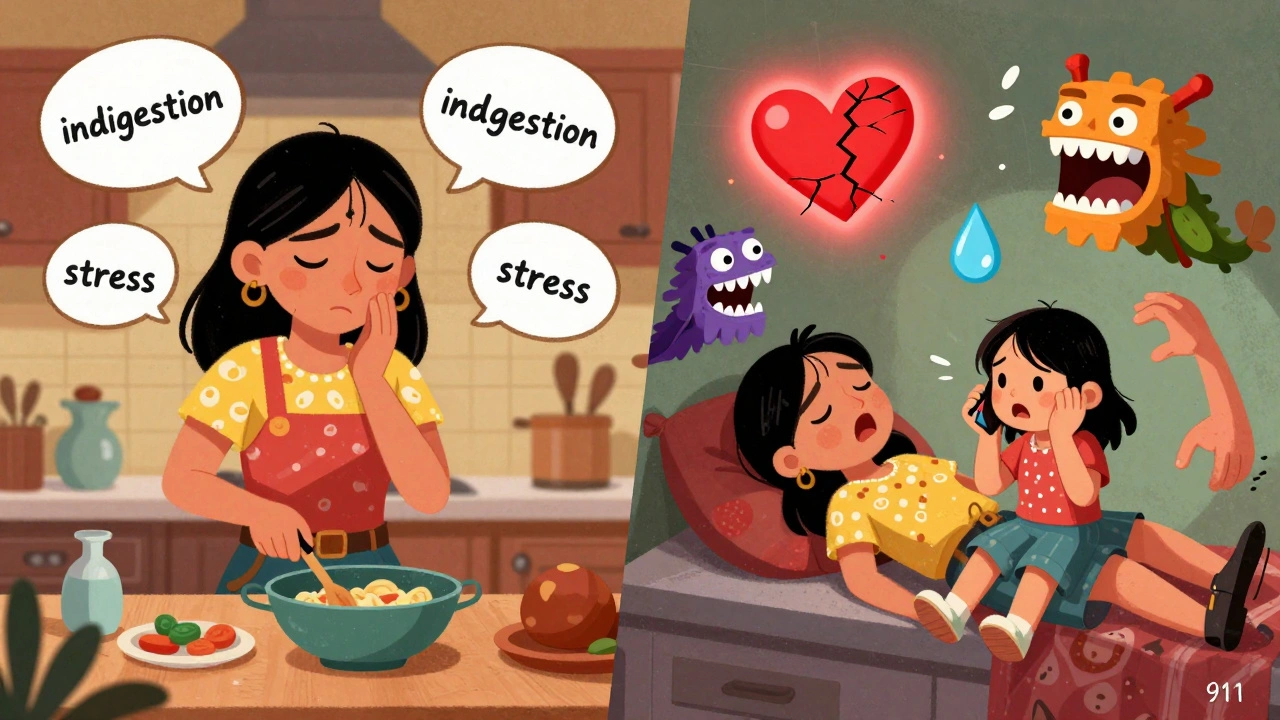
Women over 55 are twice as likely as men their age to have symptoms that look like anxiety or indigestion. Some feel overwhelming fear or a sense of doom. One woman told me she thought she was having a panic attack. She didn’t realize she was having a heart attack until she collapsed in the kitchen. Her daughter called 911. She survived because someone else trusted their gut.
Men aren’t immune to misreading signs either. I’ve seen men brush off upper abdominal pain as “just heartburn.” But that pain can be your heart screaming for help. The American College of Cardiology says 24% of heart attacks are mistaken for digestive issues. That’s one in four.
Age Changes the Picture Too
People over 75 are more likely to have what’s called a “silent” heart attack - no chest pain at all. Instead, they might just feel unusually weak, confused, or short of breath. They might not even realize something’s wrong. That’s why older adults should pay extra attention to any new, unexplained change in how they feel.
And it’s not just seniors. Heart attacks in people aged 25 to 44 have been rising for years. Younger people think they’re invincible. They ignore fatigue, shrug off chest tightness after a workout, or blame stress. But your heart doesn’t care how old you are. If blood flow stops, the damage starts.
What to Do - Right Now
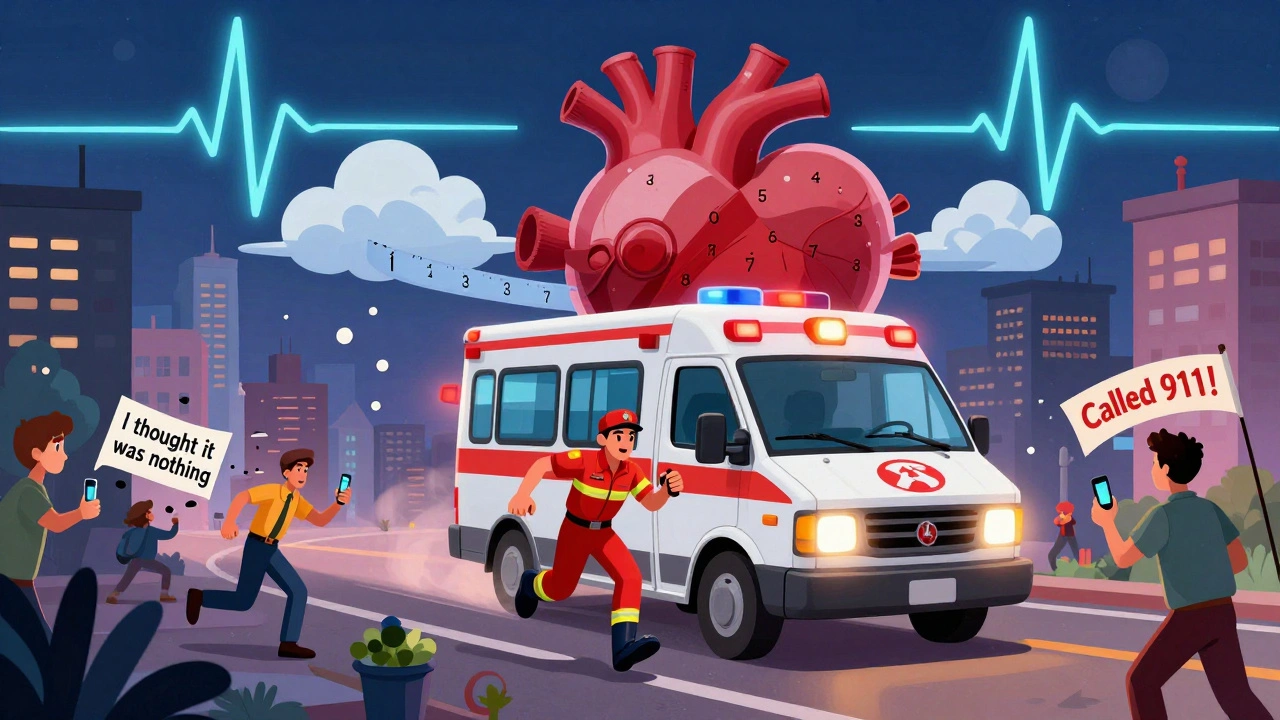
If you or someone else has any of these symptoms - even if they’re mild, even if they come and go - call 911 immediately. Don’t wait. Don’t drive yourself. Don’t text a friend. Don’t Google it. Don’t say, “Maybe it’s nothing.”
Emergency crews can start treatment on the way to the hospital. They can give oxygen, monitor your heart, and even administer aspirin if needed. The average person waits three hours before calling 911. That’s too long. Every minute counts. Each minute without blood flow kills about 1.5 million heart cells.
If you’re not allergic to aspirin and your doctor hasn’t told you to avoid it, chew one 325mg tablet while you wait for help. It helps thin the blood and can reduce damage. But don’t delay calling 911 to find aspirin. Call first, then take it if it’s handy.
Why People Wait - And Why They Shouldn’t
One of the biggest reasons people don’t call 911 is fear. Fear of looking silly. Fear of being wrong. The American Heart Association says one in three heart attack victims waits more than two hours because they’re afraid of embarrassing themselves. But here’s the truth: doctors would rather see you 100 times for false alarms than miss one real heart attack.
Another reason? Denial. “I’m healthy. I exercise. I don’t eat junk.” But heart attacks don’t care about your lifestyle. Genetics, stress, high blood pressure, diabetes - they all play a role. And sometimes, there’s no warning at all. About 10% of cardiac arrests happen with no prior symptoms. That’s why knowing the signs isn’t optional - it’s survival.
What Helps - And What Doesn’t
Community programs that teach people how to recognize heart attack signs cut response time by nearly 50 minutes on average. That’s huge. And it’s not just for older people. Schools, workplaces, and churches are starting to run simple 15-minute training sessions. You don’t need to be a doctor. You just need to know what to look for.
Mobile EKG devices are more common now. If you have one and it shows an abnormal rhythm during symptoms, that’s a red flag. But don’t rely on it. If you feel something’s wrong, call 911 anyway. Technology helps - but it doesn’t replace human judgment.
And don’t wait for confirmation. You don’t need a test to prove you’re having a heart attack. By the time tests are done, it might be too late. The symptoms are the signal. Trust them.
Survivors Say This
People who’ve survived heart attacks often say the same thing: “I wish I’d listened to my gut.” One man in Florida thought his arm pain was from lifting boxes. He waited 10 hours. By the time he got to the hospital, he’d lost a third of his heart muscle. He’s alive today because his wife refused to take “no” for an answer.
Another woman, 42, had jaw pain for three days. Her dentist said it was TMJ. Her doctor said it was stress. She went to the ER when she started sweating and couldn’t breathe. She had a major heart attack. She’s now an advocate for women’s heart health.
These aren’t rare stories. They’re common. And they’re preventable - if we act fast.
Be the One Who Acts
Heart attacks don’t announce themselves with sirens. They whisper. And too many people ignore the whisper. Don’t be one of them. Know the signs. Teach your family. Talk to your friends. If someone says they feel off - even if it’s not classic chest pain - don’t dismiss it. Ask: “Have you called 911 yet?”
Because in the race against a heart attack, seconds matter. Minutes matter. And sometimes, the only thing standing between life and death is someone who refused to wait.
What are the most common heart attack symptoms in women?
Women are more likely than men to experience shortness of breath, nausea, vomiting, back or jaw pain, and extreme fatigue without chest pain. About 64% of women have chest discomfort during a heart attack, compared to 90% of men. Many women describe pressure or tightness rather than sharp pain, which leads to delays in seeking help.
Can you have a heart attack without chest pain?
Yes. About 30% of heart attacks in people over 75 are silent - meaning there’s no chest pain at all. Symptoms may include sudden weakness, confusion, dizziness, or shortness of breath. Women and people with diabetes are also more likely to have heart attacks without classic chest pain.
How long do heart attack symptoms last?
Heart attack symptoms typically last more than a few minutes and may come and go. If discomfort in your chest, arms, jaw, or stomach lasts longer than 5 minutes - especially if it’s new or unusual - don’t wait. Call 911. Even if it fades, it could return and worsen.
Should I take aspirin during a heart attack?
If you’re not allergic to aspirin and your doctor hasn’t told you to avoid it, chewing one 325mg tablet can help reduce damage by thinning the blood. But never delay calling 911 to find aspirin. Call first, then take it if it’s nearby. Don’t take aspirin if you’re unsure - it’s safer to wait for medical advice.
Is it safe to drive myself to the hospital during a heart attack?
No. Driving yourself delays treatment and puts you and others at risk. Emergency responders can start life-saving care on the way to the hospital, including oxygen, heart monitoring, and medications. They also get you to the hospital 25% faster than private vehicles. Always call 911.
Can stress or anxiety mimic a heart attack?
Yes, anxiety can cause chest tightness, shortness of breath, and sweating - symptoms that overlap with heart attacks. But you can’t tell the difference on your own. If you’re unsure, treat it as a heart attack until proven otherwise. It’s better to be safe than sorry. Emergency teams can quickly rule out cardiac issues with tests.
What should I do if someone else is having heart attack symptoms?
Call 911 immediately. Stay with the person. Help them sit down and stay calm. If they’re conscious, not allergic to aspirin, and have no doctor’s warning against it, help them chew one 325mg tablet. Don’t give them anything to eat or drink. If they lose consciousness and stop breathing, start CPR if you’re trained. If not, follow the dispatcher’s instructions.
Are heart attacks more dangerous for women?
Yes. Women are 50% more likely to be misdiagnosed during a heart attack and have a 50% higher one-year death rate after surviving one. This is partly because their symptoms are often different and less recognized. Women also tend to delay seeking care, partly due to societal expectations to “tough it out.” Awareness and faster action save lives.


Written by Guy Boertje
View all posts by: Guy Boertje