
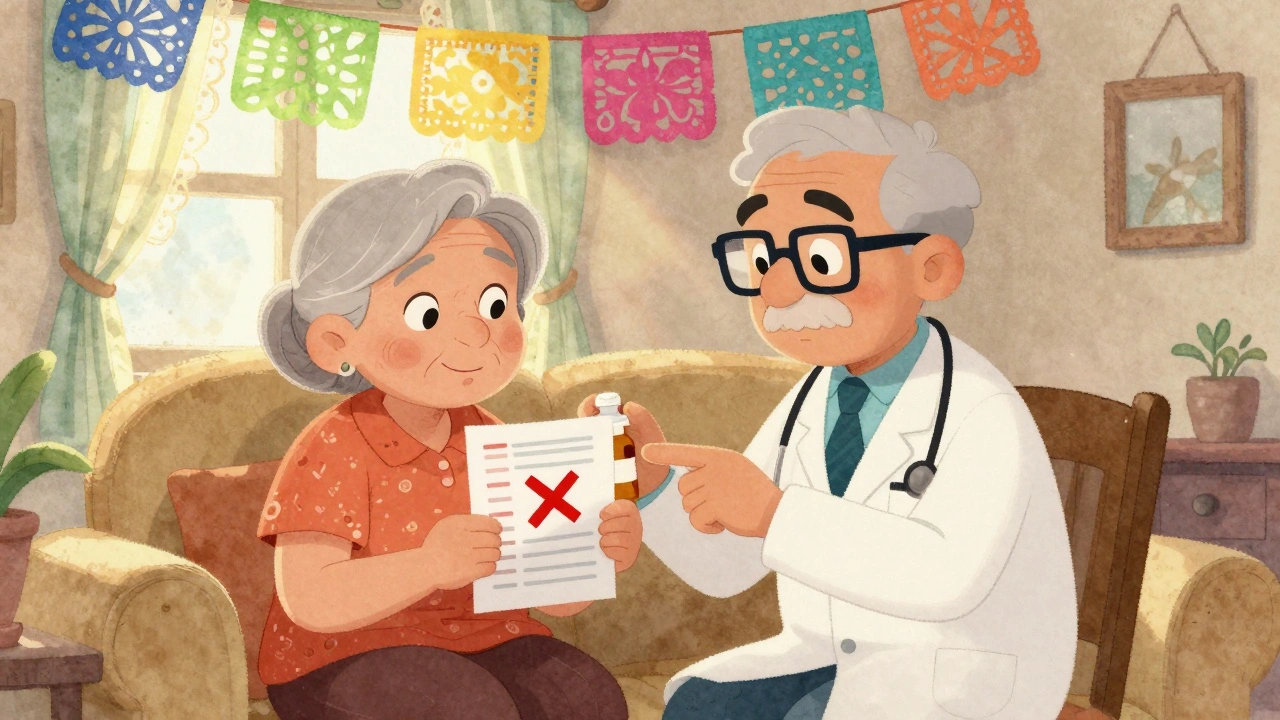
Medication Review & Deprescribing Guide
This tool helps you identify medications that may be potentially inappropriate for older adults according to the Beers Criteria. Important: This is not medical advice. Always discuss medication changes with your healthcare provider.
Add Your Medications
Added Medications
Your Results
Medications to Review
Next Steps
Important: This tool uses the Beers Criteria to identify potentially inappropriate medications for older adults. It is not a substitute for medical advice. Always discuss your medications with your healthcare provider before making any changes.
Every year, millions of older adults in the U.S. take more medications than they need. Some of these drugs were prescribed years ago for conditions that have since changed-or disappeared. Others were meant to prevent future problems, but now the risks outweigh the benefits. This isn’t just a numbers game. It’s a safety issue. And the growing body of research on deprescribing shows that carefully stopping unnecessary medications can lead to real improvements in health, quality of life, and even survival.
What Exactly Is Deprescribing?
Deprescribing isn’t just quitting pills. It’s a planned, step-by-step process where doctors and patients work together to reduce or stop medications that may no longer be helping-or might even be hurting. The American Geriatrics Society defines it as "the planned and supervised process of dose reduction or stopping of medication that might be causing harm, or no longer be of benefit." It’s not about cutting corners. It’s about being smarter. Think of it like this: When you start a new drug, you don’t just hand someone a prescription and walk away. You explain why, monitor side effects, adjust doses, and check in regularly. Deprescribing demands the same level of care. It’s prescribing in reverse. The process starts with asking: "Is this drug still doing what it was meant to do?" For many older adults, especially those with multiple chronic conditions, the answer is no. A 2023 study in JAMA Network Open found that community-dwelling older adults with polypharmacy (taking five or more medications) were often on drugs with little to no proven benefit for their current health status. Some were on blood pressure meds that lowered their pressure too far. Others were still taking statins or osteoporosis drugs meant for long-term prevention-but now had limited life expectancy.Who Benefits Most from Reducing Medications?
Not everyone needs to cut back. But certain groups stand to gain the most:- Older adults with multiple health problems and frailty
- People with advanced dementia or terminal illness
- Those taking high-risk drugs like benzodiazepines, antipsychotics, or blood thinners
- Patients on preventive medications (like aspirin or statins) with no clear short-term benefit
- Anyone who’s developed new symptoms-dizziness, confusion, falls, fatigue-that could be drug-related
The Five Steps of Safe Deprescribing
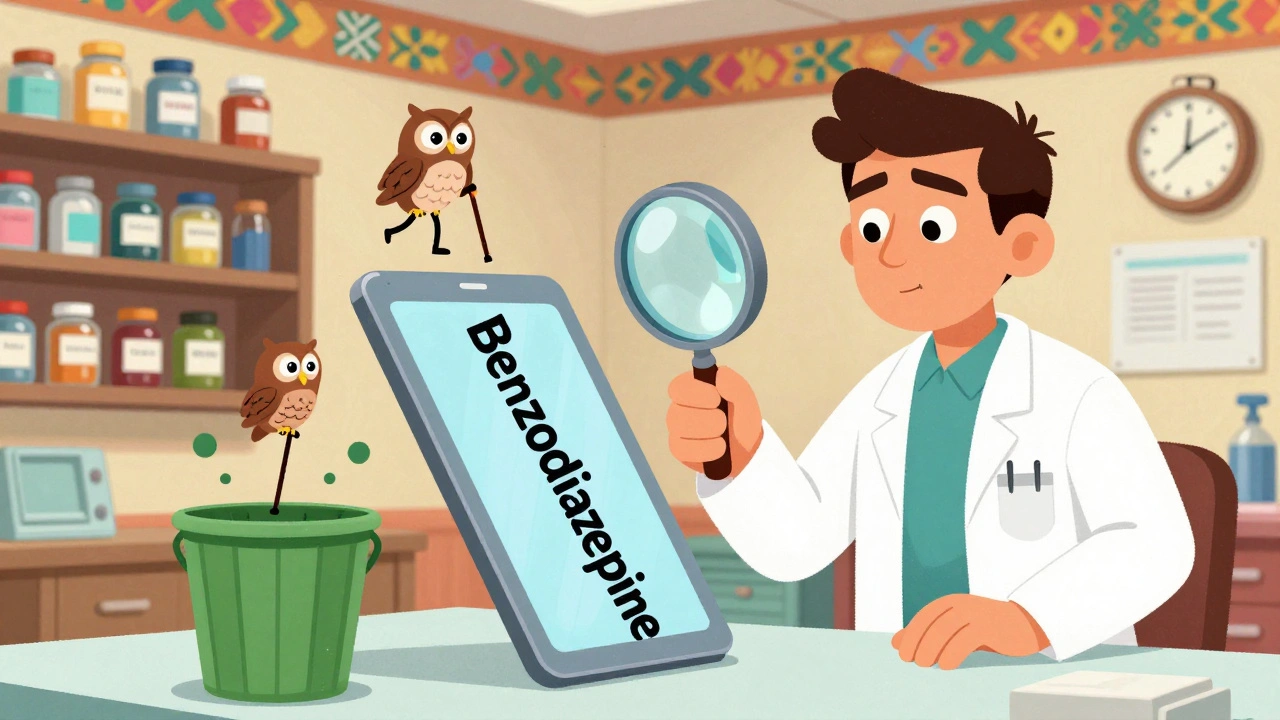
This isn’t a one-time decision. It’s a process. Experts agree on five key steps:- Identify potentially inappropriate medications-Use tools like the Beers Criteria (updated by the American Geriatrics Society in 2023) to flag drugs that carry higher risks in older adults.
- Determine if stopping or reducing is possible-Ask: Is this drug still needed? Has its benefit faded? Are side effects outweighing gains?
- Plan a taper-Don’t stop cold turkey. Some drugs, like antidepressants or steroids, need gradual reduction to avoid withdrawal symptoms.
- Monitor closely-Watch for return of original symptoms, new side effects, or signs of improvement. Keep a log.
- Document everything-Record why the drug was stopped, how the patient responded, and whether it was restarted. This helps future providers.
What Does the Research Say About Outcomes?
The evidence is clear on one thing: deprescribing reduces the number of pills people take. A 2023 meta-analysis in JAMA Network Open showed that after deprescribing interventions, the average number of medications dropped from 9.74 to around 8.7 per person. That’s a small change for one person-but when scaled across thousands of patients, it adds up. A primary care doctor with 2,000 patients could eliminate over 140 unnecessary prescriptions just by applying these principles. But here’s what matters more: What happens to people’s health? Studies show consistent improvements in:- Reduced falls and dizziness
- Improved mental clarity and alertness
- Lower risk of hospitalization
- Decreased drug interactions
- Improved quality of life scores
Why Don’t More Doctors Do This?
You’d think reducing harmful drugs would be standard practice. But it’s not. Here’s why:- Doctors don’t always initiate the conversation. Patients rarely ask to stop meds. They assume if a doctor prescribed it, it’s still needed. A 2019 AAFP survey found that most patients want fewer pills-but wait for their doctor to bring it up.
- Time constraints. A 15-minute visit isn’t enough to review 12 medications, assess risks, and get informed consent.
- Fear of backlash. What if the patient’s blood pressure spikes after stopping a pill? What if they blame the doctor?
- Fragmented care. If a patient sees five different specialists, each prescribing their own drugs, who’s in charge of the big picture?
What’s Changing Now?
The tide is turning. Here’s what’s new in 2025:- Electronic health record tools are being built to flag high-risk meds automatically. Pilot programs in Florida and Minnesota clinics saw a 15% drop in inappropriate prescriptions after integrating deprescribing alerts into EHRs.
- Pharmacists are stepping in. In many health systems, clinical pharmacists now lead medication reviews. They’re trained to spot overlaps, redundancies, and outdated prescriptions.
- Patients are getting involved. The website deprescribing.org has been downloaded over 500,000 times since 2015. It offers printable guides for patients to bring to their doctors: "Here’s what I’m taking. Should I still be on all of it?"
- Personalized approaches are emerging. Early research is looking at genetic factors that affect how people metabolize drugs. For example, some people process proton pump inhibitors (like omeprazole) much slower-making long-term use riskier. Future deprescribing could be tailored to your DNA.

What Should You Do If You or a Loved One Is on Too Many Meds?
You don’t need to wait for your doctor to bring it up. Take action:- Make a full list of every pill, patch, supplement, and OTC drug you take-including doses and why you take them.
- Ask: "Which of these are still helping me? Which might be causing problems?"
- Bring the list to your primary care provider and say: "I’d like to review my medications. Are any of these no longer necessary?"
- Don’t stop anything on your own. Even "harmless" drugs like antacids or sleep aids can cause issues when stopped abruptly.
- Ask for a follow-up in 4-6 weeks to check how you’re feeling after any changes.
Is Deprescribing Right for Everyone?
No. Some medications are essential. Blood pressure drugs for someone with heart disease. Insulin for type 1 diabetes. Anticoagulants for atrial fibrillation with high stroke risk. These aren’t candidates for deprescribing. The key is context. A drug that’s lifesaving for one person might be dangerous for another. That’s why shared decision-making matters. You need to know the risks, the benefits, and the alternatives. And you need to feel heard.What’s Next?
By 2030, 20% of Americans will be 65 or older. That’s 70 million people-many of them on multiple medications. Without action, the number of drug-related harms will keep rising. Deprescribing isn’t a trend. It’s a necessity. And the research is clear: when done right, it saves lives, reduces suffering, and restores dignity. It’s time to stop thinking of medication as something you take forever-and start thinking of it as something you take because it still works. And if it doesn’t? It’s okay to let go.Is deprescribing the same as stopping medications cold turkey?
No. Deprescribing is a planned, supervised process. Some medications, like antidepressants or blood pressure drugs, need to be tapered slowly to avoid withdrawal symptoms or rebound effects. Stopping abruptly can be dangerous. Deprescribing means reducing or stopping under medical guidance, not on your own.
Can deprescribing cause harm?
There’s always a small risk when changing medications. Some people may experience temporary symptoms like anxiety, insomnia, or a return of original symptoms. But research shows that when done properly-with monitoring and follow-up-the risks are far lower than the risks of continuing harmful or unnecessary drugs. Studies tracking patients for 6-12 months show that most people feel better after deprescribing.
Who should I talk to about deprescribing?
Start with your primary care provider. They’re in the best position to see your full medication list and overall health picture. Pharmacists are also key partners-they’re trained to spot drug interactions and outdated prescriptions. If you see multiple specialists, ask your primary doctor to coordinate a full medication review.
What if my doctor says no to stopping a medication?
Ask why. Request evidence: "Is this drug still proven to help someone with my condition and life expectancy?" If you’re still unsure, ask for a second opinion or a referral to a geriatrician or clinical pharmacist. You have the right to understand the risks and benefits of every drug you take.
Are there tools to help me track my medications?
Yes. The website deprescribing.org offers free, printable medication lists and conversation starters for patients. Many pharmacies also offer free medication reviews. You can also use apps like MyTherapy or Medisafe to track what you take and when. Bring this information to every appointment.


Written by Guy Boertje
View all posts by: Guy Boertje