

CoQ10 Dosage Calculator for Statin Users
Find Your Ideal CoQ10 Dosage
Based on your statin type, symptom severity, and preferred form
Recommended Dosage
Important Warning
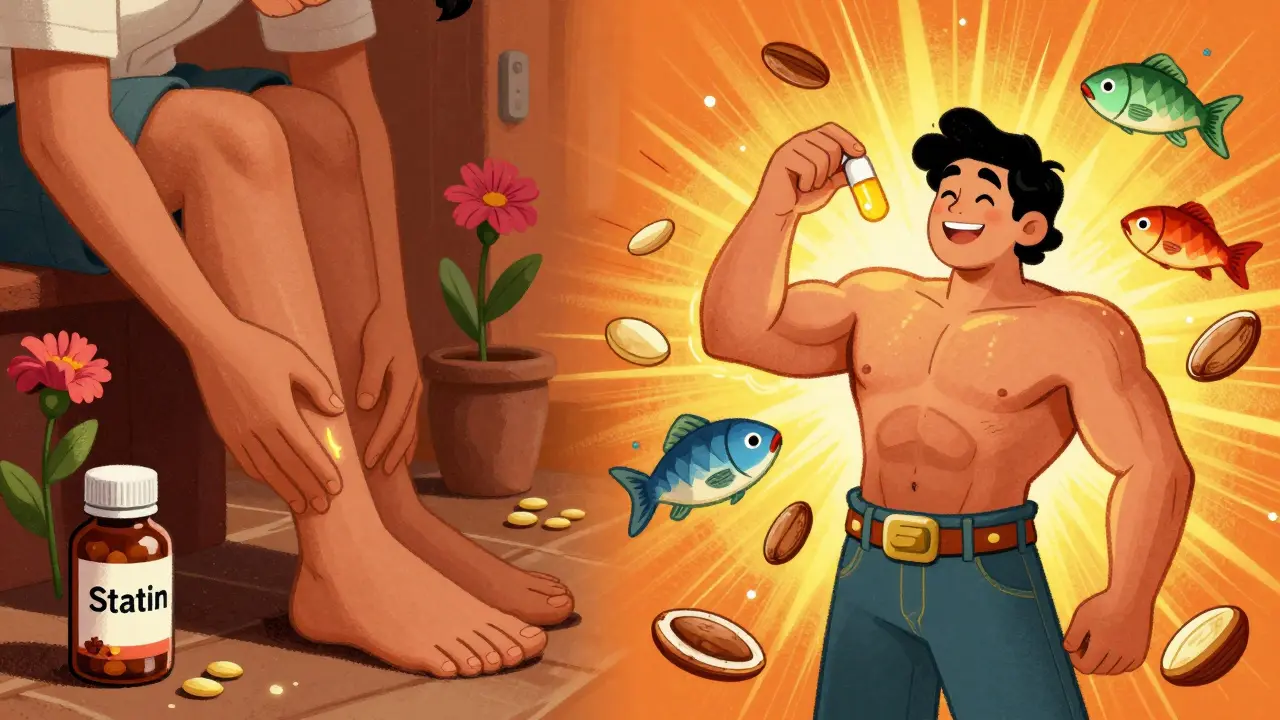
Millions of people take statins to lower cholesterol and protect their hearts. But for 1 in 5 of them, the cost is muscle pain-aching legs, weak arms, cramps that won’t quit. When that happens, many wonder: Coenzyme Q10 might help. Is it just a rumor, or is there real science behind it?
Why Statins Cause Muscle Pain
Statins work by blocking an enzyme called HMG-CoA reductase. That’s how they lower LDL cholesterol. But that same enzyme is also needed to make Coenzyme Q10 (CoQ10), a compound your body uses to produce energy in your muscles. When statins cut CoQ10 production, your muscles may not get enough fuel. Studies show statins can reduce blood levels of CoQ10 by 16% to 54%. That’s not a small drop.It’s not just about energy. Without enough CoQ10, muscle cells struggle to recover after activity. That’s when you feel the fatigue, the stiffness, the cramps. These symptoms-called statin-associated muscle symptoms (SAMS)-are real. About 5% to 20% of statin users experience them, according to the Mayo Clinic. And for many, it’s enough to quit the medication entirely. Half of all statin users stop taking them within two years, mostly because of muscle discomfort.
What Is Coenzyme Q10?
CoQ10, also called ubiquinone, is a natural antioxidant your body makes. It’s found in every cell, especially in organs that need a lot of energy-your heart, liver, kidneys, and muscles. You can also get it from food: fatty fish, organ meats, nuts, and seeds. But your body makes most of what you need-until you start taking a statin.When your CoQ10 levels drop, your muscles don’t work as well. That’s the theory behind taking CoQ10 supplements. The idea is simple: replace what the statin took away. And because CoQ10 is not a drug, it’s available over the counter. No prescription. No FDA approval for muscle pain. But millions are trying it anyway.
Does CoQ10 Actually Help?
The answer isn’t yes or no. It’s… maybe. And that’s the problem.Some studies say yes. A 2018 meta-analysis in the Journal of the American Heart Association looked at 12 clinical trials with nearly 600 people. Those taking CoQ10 reported less muscle pain, less weakness, and less fatigue compared to those on placebo. The reduction in pain was about 1.6 points on a 10-point scale-small, but meaningful for someone in daily discomfort.
Other studies show even stronger results. One 2014 trial gave people 100 mg of CoQ10 daily for a month. Pain dropped by 33% in the CoQ10 group. In the placebo group? Almost no change. Another study found 75% of patients with mild-to-moderate muscle pain felt better after taking CoQ10.
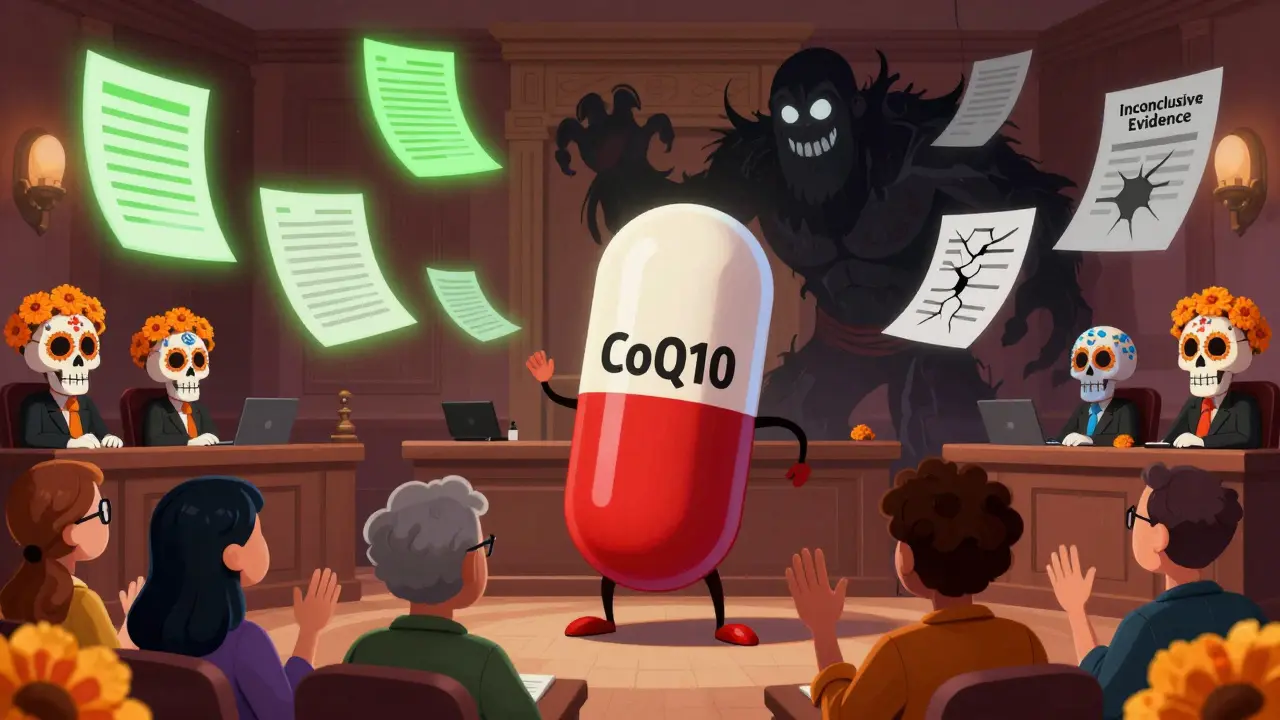
But then there are the studies that say no. A 2007 trial gave 200 mg of CoQ10 daily for 12 weeks to people on statins. Plasma CoQ10 levels went up-big time. But muscle pain didn’t improve. The National Lipid Association, a group of cholesterol experts, says the evidence is still inconclusive. They’ve said this since 2013. And they’re not alone.
So why the contradiction? One big reason: the studies are messy. Some use different doses. Some use different forms of CoQ10-ubiquinone vs. ubiquinol. Some last 30 days. Others go 12 weeks. Some measure pain with questionnaires. Others use blood tests. And here’s the kicker: one study found that statin users actually had higher CoQ10 levels in their muscles than non-users. That doesn’t make sense… unless the body is trying to compensate.
What Do Real People Say?
If you go to Reddit’s r/Supplements, you’ll find hundreds of posts like this one from a user named u/StatinSurvivor: “After six months of crippling leg cramps on atorvastatin, I started 200 mg of CoQ10. Within three weeks, the pain was gone. My cholesterol stayed down. I didn’t have to quit my statin.”On Amazon, CoQ10 supplements average 4.2 out of 5 stars. Over 60% of the 5-star reviews mention muscle pain relief from statins. That’s powerful anecdotal evidence.
But flip the coin. On Drugs.com, someone named MaryT wrote: “Tried three brands of CoQ10 at 200 mg for four months. Zero improvement.” A survey on Inspire.com found that while 67% of statin users who tried CoQ10 felt some benefit, only 32% said it made a significant difference.
So what’s going on? It’s possible CoQ10 helps some people but not others. Maybe it only works if your body is truly low on CoQ10. Maybe it works better if you’ve had symptoms for less than a year. Maybe it only helps with mild pain, not severe muscle damage.
How to Take CoQ10 If You Want to Try It
If you’re considering CoQ10, here’s what most doctors and researchers recommend:- Dose: Start with 100-200 mg per day. Some studies used up to 600 mg, but there’s no evidence higher doses work better for muscle pain.
- Form: Choose ubiquinol. It’s the reduced, active form of CoQ10. It’s better absorbed than ubiquinone-up to 3 to 8 times more, according to manufacturer data.
- When to take it: With a meal that has fat. CoQ10 is fat-soluble. Without fat, your body absorbs very little.
- How long to wait: Give it at least 4-8 weeks. Some people feel better sooner. Others need 12 weeks. Don’t quit after two weeks.
Cost-wise, it’s cheap. A month’s supply runs $15-$40. Compare that to switching to a different statin, which can cost $300-$600 a month under some insurance plans. Or paying for doctor visits and blood tests to rule out other causes.
What the Experts Really Think
The American College of Cardiology says CoQ10 is a “reasonable option to consider” for people with mild muscle symptoms who are thinking about stopping their statin. But they stress: the evidence is still inconclusive.Dr. Beatrice Golomb from UC San Diego, who’s studied statin side effects for over 20 years, believes many negative trials failed because they didn’t pick the right patients. She thinks CoQ10 might only help those who are actually deficient-not everyone on statins.
Cardiologists are pragmatic. A 2021 survey found that 42% of them recommend CoQ10 to patients with muscle pain-even though the science isn’t solid. Why? Because the risks are low, the cost is low, and for some patients, it works.
The European Atherosclerosis Society says the same thing: the biology makes sense, but we need better studies. A big, multi-center trial with standardized pain measurements is still waiting to be done. That trial hasn’t happened yet, even though it was first called for over a decade ago.
Is It Safe?
Yes. Extremely. CoQ10 has been studied for over 40 years. Even at doses up to 600 mg per day, no serious side effects have been reported. The most common complaint? Mild stomach upset. Rarely, headaches or dizziness.It doesn’t interfere with statins. It doesn’t raise or lower cholesterol. It doesn’t cause liver damage. It doesn’t interact with blood thinners like warfarin, unlike some other supplements.
That’s why it’s so popular. You’re not gambling with your health. You’re trying something safe, inexpensive, and potentially helpful.
When Not to Try CoQ10
CoQ10 isn’t a magic fix. If you have severe muscle pain, weakness, or dark urine (signs of rhabdomyolysis), stop your statin and call your doctor immediately. That’s a medical emergency. CoQ10 won’t help.Also, if you’ve tried CoQ10 for 12 weeks and feel nothing, it’s probably not working for you. Don’t keep spending money on it. There are other options: switching to a different statin, lowering your dose, or trying non-statin cholesterol drugs like ezetimibe or PCSK9 inhibitors.
And if your muscle pain started right after you began a statin, it’s likely related. But if it started months later, or if you have joint pain, swelling, or fever, it might be something else-like arthritis, thyroid issues, or vitamin D deficiency. Get checked before assuming CoQ10 is the answer.
Bottom Line
CoQ10 won’t fix everything. But for people with mild-to-moderate muscle pain from statins, it might be worth a shot. It’s safe. It’s cheap. And for some, it’s the difference between staying on their heart-protecting medication and quitting it altogether.The science isn’t perfect. The studies are mixed. But the real-world experience? It’s strong enough that doctors are willing to try it. If you’re struggling with muscle pain on statins, talk to your doctor about a 3- to 6-month trial of 100-200 mg of ubiquinol daily-with food. If you feel better? Keep going. If not? You’ve lost little and gained clarity.
Statin therapy saves lives. Don’t quit because of muscle pain-unless you’ve tried everything else. CoQ10 might be the bridge you need to stay on track.
Can CoQ10 lower cholesterol?
No, CoQ10 does not lower cholesterol. It doesn’t affect LDL, HDL, or triglycerides. Its only known benefit in this context is reducing muscle pain caused by statins. Don’t take it as a replacement for your statin or other cholesterol meds.
How long does it take for CoQ10 to work for muscle pain?
Most people start noticing improvement between 4 and 8 weeks. Some feel better in 2 weeks. Others need up to 12 weeks. Don’t give up before 8 weeks. Muscle recovery takes time, and CoQ10 rebuilds cellular energy slowly.
Is ubiquinol better than ubiquinone?
Yes, ubiquinol is the more bioavailable form. It’s the active version your body uses directly. Ubiquinone must be converted first, and that conversion slows with age and illness. For statin users, ubiquinol is the better choice-especially if you’re over 40.
Can I take CoQ10 with other supplements?
Yes. CoQ10 has no known dangerous interactions. Many people take it with vitamin D, magnesium, or omega-3s-all of which also support muscle and heart health. Just avoid high doses of red yeast rice-it contains natural statins and can worsen muscle pain.
Should I get my CoQ10 levels tested?
Not usually. Blood tests for CoQ10 aren’t reliable or widely available. Even if they were, there’s no agreed-upon “normal” level for muscle pain. Doctors don’t recommend testing-it’s better to try supplementation and see if symptoms improve.
Will CoQ10 help if I’ve already stopped my statin?
Maybe, but it’s not the point. CoQ10 is meant to help you stay on your statin, not replace it. If you’ve already stopped, focus on getting your cholesterol under control another way. CoQ10 won’t lower your risk of heart attack if you’re not taking a cholesterol-lowering drug.


Written by Connor Back
View all posts by: Connor Back