
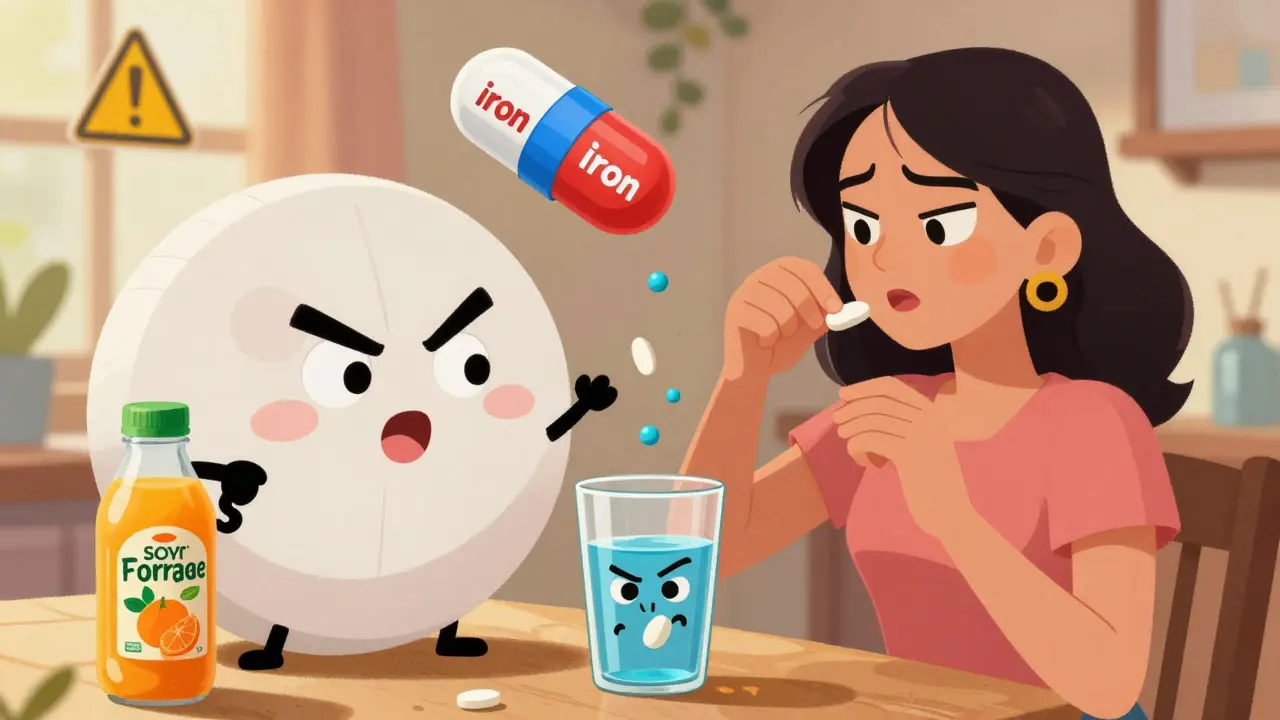
If you’re taking levothyroxine for hypothyroidism, and you’re also taking calcium or iron supplements, you might be unknowingly reducing the effectiveness of your thyroid medication. This isn’t a minor issue-it can throw your entire hormone balance off, leading to fatigue, weight gain, brain fog, and even dangerous spikes in TSH levels. The problem isn’t that these supplements are bad. It’s that they block your thyroid medicine from being absorbed.
Why Calcium and Iron Interfere with Thyroid Medication
Levothyroxine, the most common thyroid hormone replacement, needs to be absorbed in the small intestine. But when calcium or iron enters the digestive tract at the same time, they bind to the hormone like magnets. These minerals-especially calcium carbonate and ferrous sulfate-form hard, insoluble complexes that your body can’t break down. That means your thyroid medicine just passes through, useless. Studies show this isn’t theoretical. A 2000 study found that taking 1,200 mg of calcium carbonate with levothyroxine cut absorption by 22% to 36%. Another study in 2008 showed iron supplements reduced absorption by 21%. More recent data from the American Association of Clinical Endocrinologists confirms that iron taken within two hours of levothyroxine can reduce absorption by up to 39%. It’s not just pills. Calcium-fortified orange juice? One 8-ounce glass has about 350 mg of calcium-enough to interfere. Same with soy milk, almond milk, and other fortified plant-based drinks. If you’re sipping one with your thyroid pill, you’re sabotaging your treatment.How Much Time Should You Wait?
Timing matters more than you think. You can’t just take them an hour apart and expect it to work. The magic window is longer. The Mayo Clinic recommends waiting at least four hours between levothyroxine and calcium supplements. The same goes for iron. Some guidelines, like those from the European Thyroid Association, say two to three hours is enough, but that’s the bare minimum-and risky if you’re not consistent. Here’s what works best in real life:- Take your thyroid medication first thing in the morning, on an empty stomach, with a full glass of water.
- Wait at least 30 to 60 minutes before eating or drinking anything else.
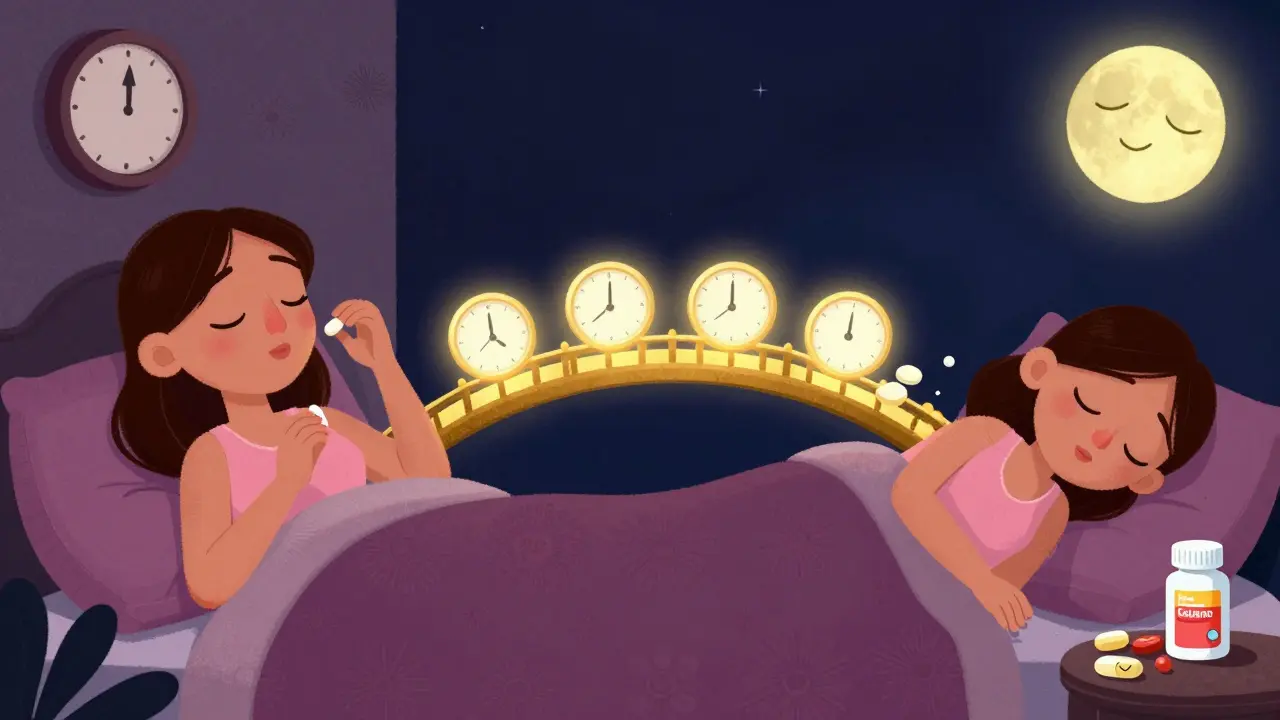
- Take calcium supplements at bedtime, or at least four hours after your thyroid pill.
- Take iron supplements with dinner, or at least four hours after your thyroid dose.
Who’s at Highest Risk?
Not everyone will have a problem. But certain groups are more likely to see big drops in thyroid hormone levels:- Pregnant women: Iron needs spike during pregnancy, and thyroid demands go up too. Even taking iron four hours after levothyroxine can still cause TSH spikes. One case study showed a pregnant woman with a TSH of 8.2 despite timing separation.
- Menstruating women: Blood loss means iron loss. Many take supplements daily, often without knowing the interaction.
- Elderly patients: Often on multiple medications, including calcium for bone health. Many don’t get clear instructions from their doctors.
- People with gut issues: Conditions like celiac disease or gastric bypass surgery already reduce absorption. Adding calcium or iron makes it worse.
Other Things That Interfere (And What to Do)
Calcium and iron aren’t the only troublemakers. Here’s the full list of common offenders:- Soy products: Soy milk, tofu, edamame-can increase your levothyroxine dose by 18% to 30%.
- Walnuts: One study showed a 24% drop in absorption if eaten with your pill.
- Coffee and tea: Tannins block absorption. Wait at least one hour after taking your medication.
- High-fiber foods: More than 30 grams of fiber within an hour of your dose can raise TSH by 15% to 25%.
- Biotin: Found in hair and nail supplements. At doses over 5 mg daily, it can make your thyroid blood tests look falsely normal or elevated.
- Antacids and proton pump inhibitors: These reduce stomach acid, which can also affect how well levothyroxine dissolves.
What If You’re Already Taking Them Together?
If you’ve been taking calcium or iron with your thyroid medication for months-or years-you might not even know there’s a problem. Symptoms like fatigue, weight gain, cold intolerance, or depression could be your body telling you your dose isn’t working. The first step: get your TSH and free T4 levels checked. If your TSH is above 5 mU/L, that’s a red flag. A 2017 study of 450 patients found that 4.4% developed elevated TSH levels within a year after starting calcium supplements without proper spacing. If your levels are off, stop taking the supplement with your thyroid pill. Wait four hours. Retest in six to eight weeks. Most patients see their TSH drop back into range once they fix the timing. One Reddit user, u/HypoMama, shared how switching her levothyroxine from morning to bedtime solved her iron interference issues after postpartum anemia. She’d been taking iron at breakfast, and her TSH kept climbing. Moving her thyroid pill to night, and iron to morning, fixed everything.
Are There Better Alternatives?
Yes-and they’re coming. Newer formulations of levothyroxine are being tested to bypass these interactions. One liquid version showed only an 8% drop in absorption when taken with calcium, compared to 32% for regular tablets. Another option is enteric-coated tablets that dissolve in the small intestine, where calcium and iron don’t interfere as much. But here’s the catch: these newer versions cost about $350 a month. Generic levothyroxine is $15. Most insurance won’t cover the upgrade unless you’ve tried everything else. Until then, the best solution is still timing. It’s not glamorous, but it works.Real-World Tips for Getting It Right
Here’s how to make this work in your daily life:- Use a pill organizer: Separate your thyroid pill from calcium and iron. Label them clearly.
- Set phone reminders: One for your thyroid pill at 7 a.m., another for your calcium at 11 p.m.
- Check food labels: If your almond milk says “fortified with calcium,” don’t drink it within four hours of your pill.
- Ask your pharmacist: When you pick up a new supplement, ask: “Will this interfere with levothyroxine?”
- Don’t skip your blood tests: Get TSH checked every 6 to 8 weeks after changing your routine.
Can I take calcium and iron together with my thyroid medication if I space them out?
No. Even if you take them at different times, if either calcium or iron is in your system within four hours of your thyroid pill, it can still interfere. Take them separately, and space them at least four hours apart from levothyroxine. Don’t combine them in the same meal or supplement routine near your thyroid dose.
What if I forget and take my calcium with my thyroid pill?
Don’t panic. One mistake won’t ruin your treatment. But don’t double up on your next dose. Just go back to your normal schedule. If this happens often, your TSH will rise over time. Get a blood test in six to eight weeks to make sure your levels are still on track.
Is there a thyroid medication that doesn’t interact with calcium or iron?
There are newer formulations in development-like liquid or enteric-coated levothyroxine-that show less interference. But they’re expensive and not widely covered by insurance. For now, the standard tablet is still the most common, and timing remains the best solution.
Can I take vitamin D with my thyroid medication?
Yes. Vitamin D does not interfere with levothyroxine absorption. You can take it with your thyroid pill, or at any time of day. Many people with hypothyroidism are low in vitamin D, so it’s safe and often recommended.
Should I take my thyroid medication at night instead of in the morning?
It can help. Some people find it easier to take levothyroxine at bedtime, especially if they take iron or calcium in the morning. Studies show nighttime dosing works just as well as morning dosing, as long as you take it on an empty stomach and wait at least 30 minutes before eating. Talk to your doctor before switching your timing.
Does biotin affect thyroid medication directly?
Biotin doesn’t block absorption of levothyroxine. But it can mess up your lab results. At doses above 5 mg per day, it can cause falsely high T4 and low TSH readings, making your doctor think you’re overmedicated when you’re not. Stop biotin at least 3 days before your thyroid blood test.
What to Do Next
If you’re on levothyroxine and taking calcium or iron:- Check your supplement labels-do they contain calcium or iron?
- Write down your current timing: when you take your thyroid pill, when you take your supplements.
- Call your doctor or pharmacist and ask: “Should I be spacing these out?”
- Get a TSH and free T4 blood test in 6 to 8 weeks after changing your routine.
- Set phone alarms to remind you when to take each pill.


Written by Guy Boertje
View all posts by: Guy Boertje