

Tacrolimus-Azole Dose Adjustment Calculator
Dose Adjustment Calculator
Calculate the appropriate tacrolimus dose reduction when starting an azole antifungal to prevent dangerous drug interactions and kidney damage.
Recommended Adjustment
When starting , you should adjust your tacrolimus dose as follows:
Recommended Dose: mg/day
Dose Reduction:
Warning: Even with dose adjustment, the interaction between azoles and tacrolimus can cause dangerous toxicity and kidney damage. Always monitor closely and follow your medical team's instructions.
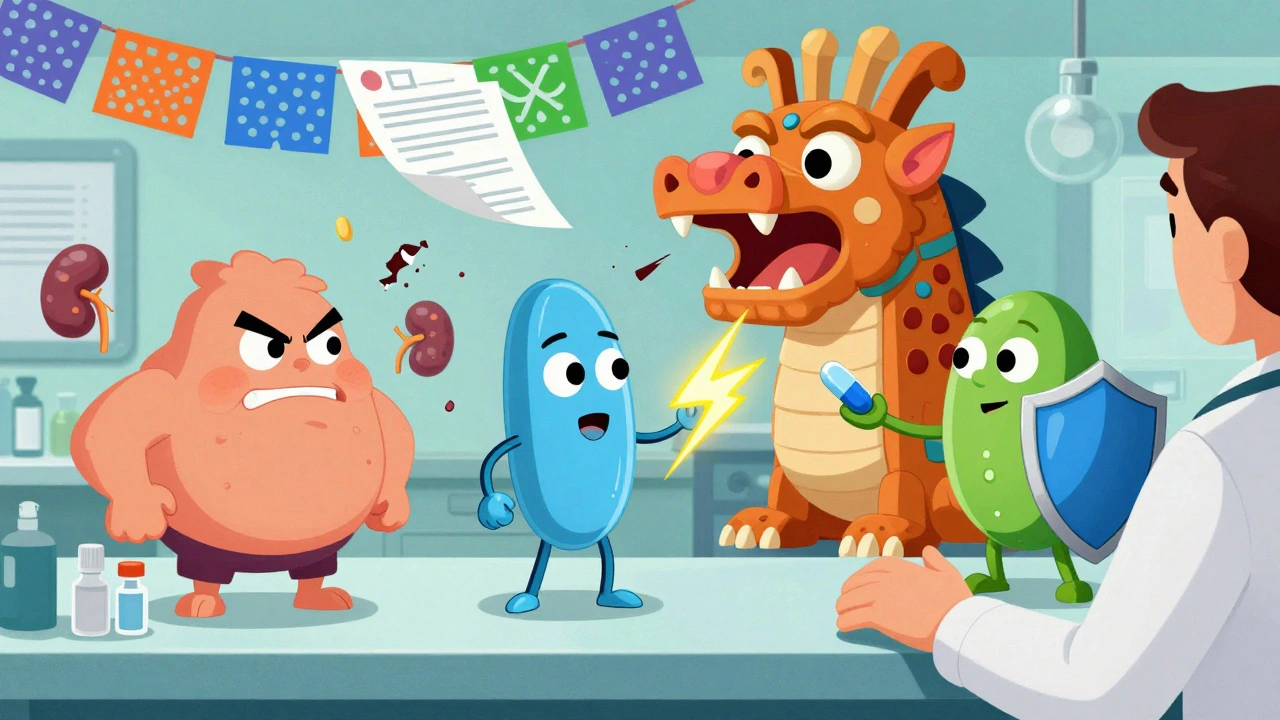
When a transplant patient gets a fungal infection, doctors often reach for an azole antifungal like voriconazole or posaconazole. It makes sense - these drugs work well against common fungi like Aspergillus. But there’s a hidden danger: combining these antifungals with tacrolimus, the immunosuppressant most transplant patients rely on, can cause tacrolimus levels to skyrocket. And when that happens, kidney damage isn’t just possible - it’s likely.
Why This Interaction Isn’t Just a Theory - It’s a Daily Reality
This isn’t a rare case study. It’s a routine challenge in transplant clinics. Every week, pharmacists and nurses see tacrolimus levels jump from a safe 6 ng/mL to over 20 ng/mL within days of starting an azole. One kidney transplant patient in a 2023 forum post described it this way: "My levels went from 6.5 to 18.2 overnight. My creatinine doubled. I ended up in the hospital with acute kidney injury." The reason? Azoles block the CYP3A4 enzyme - the same enzyme your liver uses to break down tacrolimus. When that enzyme is shut down, tacrolimus doesn’t get cleared. It builds up. And because tacrolimus has a narrow therapeutic window - the difference between effective and toxic is small - even a small increase can be dangerous.Studies show ketoconazole can boost tacrolimus levels by 300% to 500%. Voriconazole? That’s a 100% to 300% increase. Posaconazole isn’t far behind. Even newer azoles like isavuconazole, which are weaker inhibitors, still push levels up by 30% to 50%. That might sound manageable - until you realize that a 50% increase in tacrolimus can mean the difference between controlled immunosuppression and kidney failure.
How Tacrolimus Kills the Kidneys - Slowly and Quietly
Tacrolimus doesn’t just raise blood pressure. It directly attacks the kidneys. It causes vasoconstriction in the tiny blood vessels inside the kidney, reducing blood flow. Over time, this leads to scarring, loss of filtering units (nephrons), and permanent damage. The higher the blood level, the worse the damage. Research from 2023 shows that peak concentrations - not just average levels - are the real drivers of kidney injury.What makes this worse is that symptoms don’t show up right away. Patients might feel fine. Their urine output looks normal. But their creatinine - a marker of kidney function - starts climbing. By the time swelling, fatigue, or confusion appear, the damage may already be advanced. In transplant centers, azole-tacrolimus interactions account for 15% to 20% of all tacrolimus-related kidney injuries. And in some hospitals, these interactions cause at least one unplanned hospital admission per month.
Not All Azoles Are Created Equal - Here’s the Real Ranking
Doctors often assume all azoles are the same. They’re not. The strength of CYP3A4 inhibition varies dramatically:- Ketoconazole: Strongest inhibitor. Avoid completely in transplant patients. Even low doses can cause life-threatening toxicity.
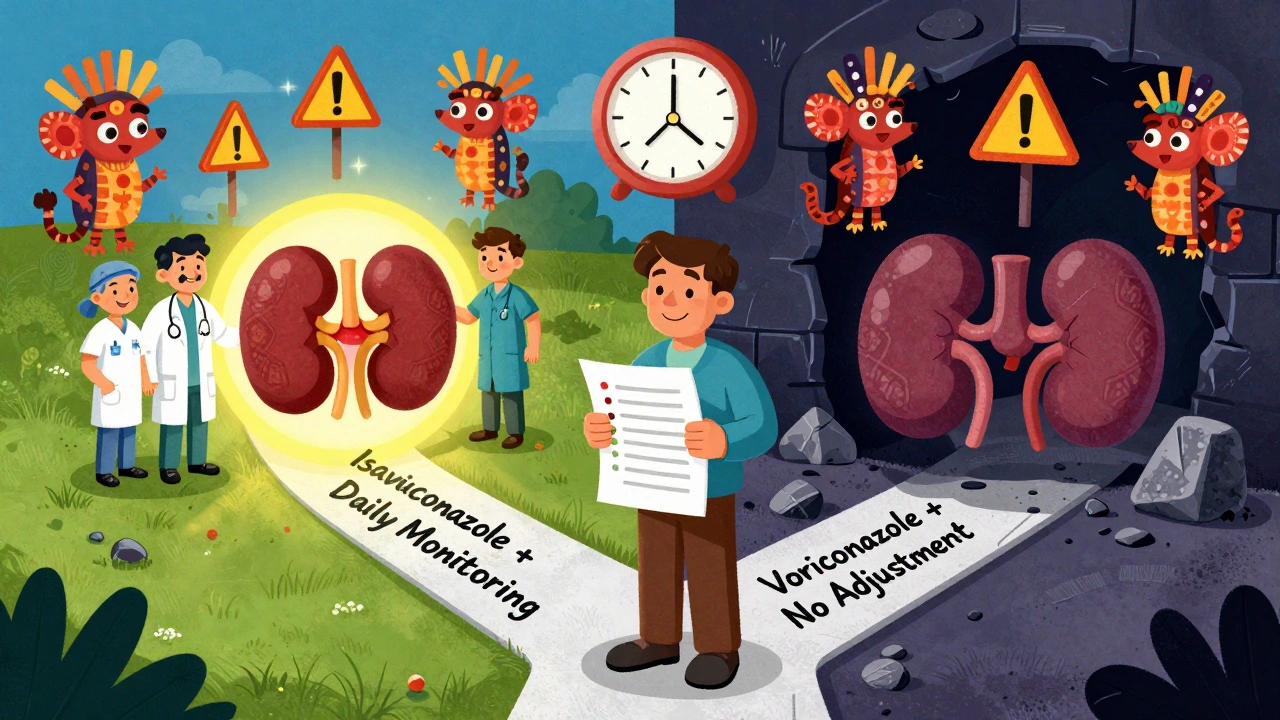
- Voriconazole: Very high risk. Levels often spike 2-3x. Requires immediate tacrolimus dose reduction and daily monitoring.
- Itraconazole: High risk. Similar to voriconazole. Often avoided unless no other option exists.
- Posaconazole: Moderate to high risk. Levels rise 1.5x to 2x. Still dangerous, but more predictable.
- Isavuconazole: Lowest risk among azoles. Increases levels by only 30-50%. Often the best choice when an azole is needed.
But here’s the catch: insurance often won’t cover isavuconazole as a first-line drug. It’s more expensive. So even though it’s safer, many patients still get voriconazole or posaconazole - and pay the price.
What Happens When You Don’t Adjust the Dose
Imagine a liver transplant patient on 5 mg of tacrolimus twice daily. Their level is stable at 8 ng/mL. They get pneumonia, then a fungal infection. The doctor prescribes voriconazole 200 mg twice daily. No change to tacrolimus.Three days later, the level is 24 ng/mL. The patient’s creatinine jumps from 1.2 to 2.8. They’re in acute kidney injury. Their tacrolimus dose had to be cut to 1 mg twice daily. They spent a week in the hospital. Their kidney function never fully recovered.
This isn’t hypothetical. It’s documented in multiple transplant centers. A 2022 survey of 127 transplant pharmacists found that 89% considered this the most common dangerous drug interaction they manage. And 76% said it caused at least one hospital admission per month in their unit.
How to Prevent This - The Proven Protocol
The solution isn’t complicated. It’s consistent. And it’s not optional.- Reduce tacrolimus dose BEFORE starting the azole. For voriconazole or posaconazole, cut the dose by 50-75%. For isavuconazole, 25-50% is enough.
- Check tacrolimus levels daily for the first 3-5 days. Don’t wait for the weekly lab. Levels can rise fast.
- Switch to a safer antifungal if possible. If the infection isn’t life-threatening, consider echinocandins (micafungin, caspofungin) or lipid-based amphotericin B. These don’t interfere with CYP3A4.
- Monitor kidney function daily. Track creatinine, urine output, and electrolytes. A rising creatinine is your first warning sign.
- Use therapeutic drug monitoring (TDM) with C/D ratios. Instead of just looking at trough levels, divide the level by the daily dose. A rising C/D ratio means the body is struggling to clear the drug - even if the level hasn’t spiked yet.
Centers that use this protocol see a 60% drop in toxicity events. One transplant center in Chicago reduced hospitalizations by 70% after implementing standardized order sets and EHR alerts.
Why This Keeps Happening - And What’s Changing
Despite clear guidelines from the American Society of Transplantation and the Infectious Diseases Society of America, mistakes still happen. Why?- Doctors forget. Especially in busy clinics, the interaction slips through.
- Pharmacists aren’t always consulted before the prescription is written.
- Electronic health records don’t always flag the interaction - or they flag too many, so staff ignore them.
- Patients don’t know to report new medications. They pick up an over-the-counter antifungal cream or take fluconazole for a yeast infection - and don’t tell their transplant team.
But things are improving. In 2015, only 40% of transplant centers had formal protocols for managing this interaction. By 2023, that number jumped to 78%. The FDA’s 2023 approval of an extended-release tacrolimus formulation also helps - it reduces peak concentrations, lowering the risk of acute toxicity.
Even more promising? Research into CYP3A5 genetics. About half of people of African descent carry a gene variant that makes them "expressers" - their bodies naturally clear tacrolimus faster. These patients may need higher doses and may be less affected by azole interactions. Future guidelines will likely use genetic testing to personalize dosing.
What Patients Need to Know
If you’re on tacrolimus:- Never start any new antifungal - even creams or pills - without checking with your transplant team.
- Know your current tacrolimus level. Ask for a copy of your last lab result.
- If you feel unusually tired, nauseous, or notice swelling in your legs or ankles, call your clinic immediately.
- Keep a list of all your medications - including vitamins and supplements - and update it every time you see a new doctor.
Transplant patients are survivors. They’ve beaten cancer, liver failure, kidney disease. But this interaction is silent. It doesn’t announce itself. It doesn’t care how strong you are. It only cares about enzyme inhibition and blood levels. That’s why vigilance isn’t optional - it’s survival.
Can I take fluconazole with tacrolimus?
Fluconazole is a weaker CYP3A4 inhibitor than voriconazole or posaconazole, but it still raises tacrolimus levels - typically by 20% to 50%. It’s not safe to use without dose adjustment. Most transplant centers reduce tacrolimus by 25-50% when fluconazole is started and monitor levels closely. Always consult your transplant team before taking it.
Is there a safer alternative to azoles for transplant patients?
Yes. Echinocandins like micafungin and caspofungin don’t affect CYP3A4 and are preferred for serious fungal infections. Lipid-based amphotericin B is another option, though it carries its own kidney risk. Isavuconazole is the safest azole, with the lowest interaction potential. The choice depends on the infection type, patient history, and insurance coverage.
How often should tacrolimus levels be checked when starting an azole?
Daily for the first 3 to 5 days after starting the azole. After that, check 2-3 times per week until levels stabilize. Once stable, return to your regular monitoring schedule - but stay alert. Levels can still shift if the azole dose changes or if you start another medication.
Can kidney damage from this interaction be reversed?
Early detection is critical. If caught quickly and tacrolimus is lowered immediately, some kidney function can recover. But if levels stay high for days or weeks, scarring sets in. That damage is permanent. This is why prevention - not reaction - is the only safe approach.
Do all transplant patients react the same way to this interaction?
No. Genetics play a big role. About 50-60% of people of African descent have a gene variant (CYP3A5*1) that makes them fast metabolizers of tacrolimus. They naturally clear the drug faster and may need higher doses. They’re also less affected by azoles. Caucasians and Asians are more likely to be slow metabolizers - meaning even small drug interactions can cause big spikes. Future guidelines will use genetic testing to tailor treatment.


Written by Connor Back
View all posts by: Connor Back