
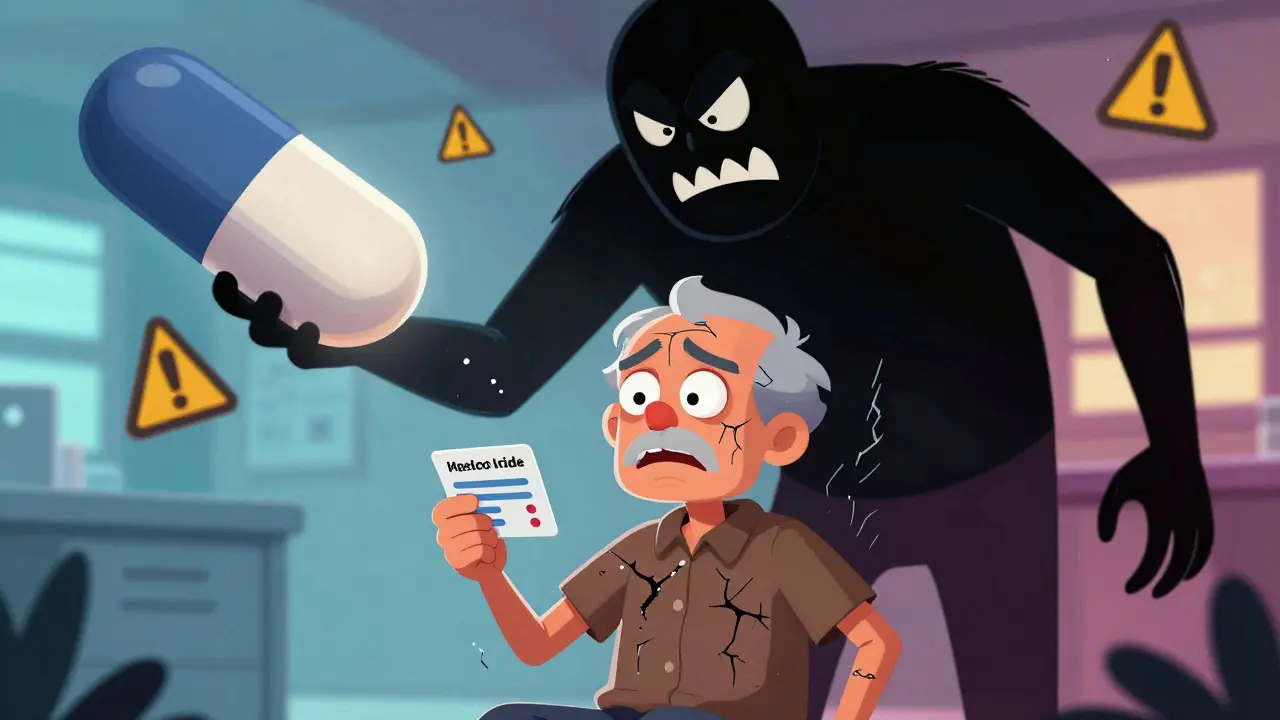
When you have Parkinson’s disease, even a simple case of nausea can turn into a medical emergency - not because of the nausea itself, but because the medicine meant to treat it might make your tremors worse, freeze your movements, or send you back to bed for weeks. This isn’t hypothetical. It’s happening in hospitals, ERs, and doctor’s offices every day. And it’s often avoidable.
Why Nausea Is a Big Problem in Parkinson’s
About 40 to 80% of people starting levodopa - the most common Parkinson’s medication - get nauseated. It’s not just discomfort. It can make patients skip doses, stop treatment, or lose trust in their care. But here’s the catch: the drugs doctors usually reach for to stop nausea - like metoclopramide or prochlorperazine - block dopamine receptors. And in Parkinson’s, your brain is already running dangerously low on dopamine.Levodopa works by turning into dopamine in the brain, helping restore movement control. When an antiemetic blocks dopamine receptors in the basal ganglia, it’s like turning off the lights in a room that’s already half-dark. The result? Worsening rigidity, slower walking, more freezing episodes, and sometimes severe dystonia. Patients report being fine one day, then unable to stand or speak the next after getting a standard anti-nausea shot.
The Most Dangerous Antiemetics
Not all anti-nausea drugs are created equal. Some are outright dangerous for Parkinson’s patients. The American Parkinson Disease Association (APDA) lists these as medications to avoid:- Metoclopramide (Reglan) - 95% risk of worsening symptoms. Despite being commonly prescribed for nausea, it crosses the blood-brain barrier and blocks dopamine receptors. Even though it has some serotonin-boosting effects, it still triggers motor decline in most patients.
- Prochlorperazine (Stemetil) - High risk. Often used in ERs for vomiting, but it’s a phenothiazine that causes acute parkinsonism in vulnerable people.
- Haloperidol (Haldol) - An antipsychotic, but sometimes used off-label for nausea. Extremely high risk. Can cause irreversible movement disorders.
- Promethazine (Phenergan) - Used for motion sickness and nausea. Blocks dopamine and has strong anticholinergic effects, which can confuse the brain further.
- Chlorpromazine - Another phenothiazine. Avoid completely.
Dr. Alberto Espay from the University of Cincinnati calls this the “most common medication error” in Parkinson’s care. Emergency staff give metoclopramide because it’s fast, cheap, and widely available. They don’t know the patient has Parkinson’s - or they forget. And the patient? They’re too nauseated to speak up.
The Safer Alternatives
There are antiemetics that don’t touch dopamine in the brain. These are your best options:- Domperidone (Motilium) - This is the gold standard for Parkinson’s patients. It blocks dopamine receptors, but only in the gut. It barely crosses the blood-brain barrier because of a natural pump (P-glycoprotein) that pushes it out. Studies show less than 2% risk of worsening motor symptoms. The catch? It’s not FDA-approved for oral use in the U.S. - you need special access through an IND application. Many patients get it from Canada or use compounded versions under a doctor’s supervision.
- Cyclizine (Vertin) - An antihistamine that works on H1 receptors, not dopamine. Only 5-10% risk. Often the first-line choice in the UK and Australia. Works well for motion sickness and general nausea. No major interactions with levodopa.
- Ondansetron (Zofran) - Blocks serotonin (5-HT3) receptors. About 15-20% risk. Doesn’t affect dopamine, but it’s less effective for nausea caused by levodopa. Good for chemo-like nausea, but may not help with the kind tied to Parkinson’s meds.
- Levomepromazine (Nozamine) - A middle-ground option. About 30-40% risk. Only to be used after consultation with a neurologist and palliative care specialist. Low doses (6.25mg twice daily) may be tolerated in advanced cases.
- Aprepitant (Emend) - A newer option targeting neurokinin-1 receptors. A 2023 trial showed 92% effectiveness for nausea in Parkinson’s patients with zero motor worsening. Not yet widely used, but promising.
One patient on Reddit, ‘ParkinsonsWarrior87,’ switched from metoclopramide to cyclizine and said: “The difference was night and day - no more freezing episodes that I had been experiencing weekly.” That’s not an outlier. The Michael J. Fox Foundation’s 2022 survey found that 85% of patients using domperidone reported effective nausea control without motor decline.

Non-Drug Options That Actually Work
Before reaching for any pill, try these simple, safe approaches:- Ginger - 1 gram daily (capsules or tea). Proven in multiple studies to reduce nausea with no side effects. Works well with levodopa.
- Small, frequent meals - Large meals slow levodopa absorption and can trigger nausea. Eat every 2-3 hours.
- Stay hydrated - Dehydration worsens nausea. Sip water or electrolyte drinks throughout the day.
- Take levodopa on an empty stomach - At least 30 minutes before or 60 minutes after eating. Protein interferes with absorption, which can lead to erratic symptoms and more nausea.
- Try acupressure - Wristbands (like Sea-Bands) that press on the P6 point have helped some patients reduce nausea.
Dr. Espay recommends these as first-line strategies. If they don’t work, then consider medication - but only the safe ones.
What Happens When You Get It Wrong
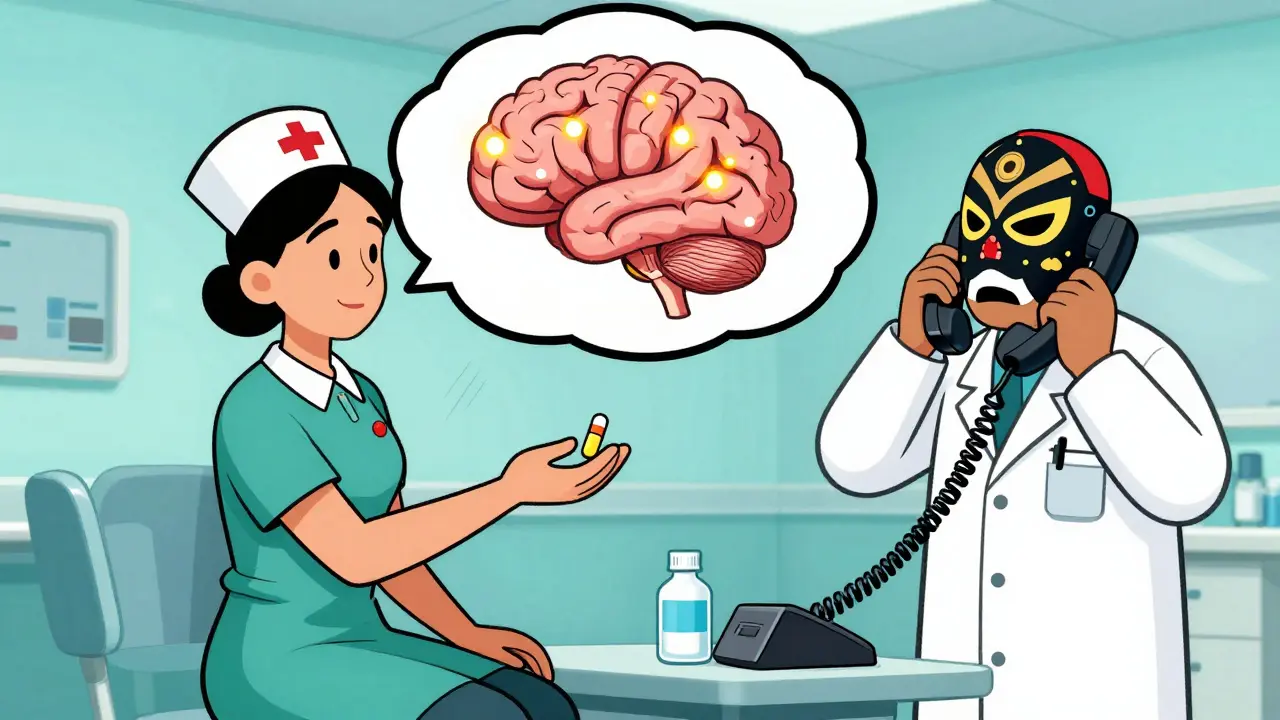
The consequences aren’t minor. A 2022 survey by the Michael J. Fox Foundation found that 68% of Parkinson’s patients who received dopamine-blocking antiemetics in the hospital reported a major worsening of symptoms. Over 20% needed extended hospital stays. One patient on the Parkinson’s NSW Forum described being given metoclopramide after dental surgery: “My tremors worsened dramatically. It took three weeks to return to baseline - even after increasing my levodopa.”Why didn’t the doctor know? A 2022 study in the Journal of Parkinson’s Disease found only 37% of ER physicians could correctly identify metoclopramide as dangerous for Parkinson’s patients. That’s not incompetence - it’s a systemic education gap.
How to Protect Yourself
You can’t control every prescription - but you can control your own safety net:- Carry a Medication Alert Card - The APDA offers free wallet cards listing dangerous drugs. Get one. Keep it in your wallet or phone case.
- Always tell every provider you have Parkinson’s - Even if they don’t ask. Say: “I cannot take any antiemetic that blocks dopamine.”
- Ask: “Is this a dopamine antagonist?” - If they say yes, ask for an alternative. If they don’t know, ask to speak with a pharmacist or neurologist.
- Keep a list of safe drugs - Domperidone, cyclizine, ondansetron, ginger. Print it. Share it.
- Know your emergency plan - If you’re admitted to the hospital, insist your neurologist be contacted before any antiemetic is given.
The Movement Disorder Society now requires that all antiemetic orders for Parkinson’s patients include the note: “Parkinson’s disease: verify antiemetic safety.” That’s progress. But it’s not universal.
The Future Is Getting Better
The Parkinson’s Foundation’s 2023 Quality Improvement Initiative trained over 1,200 doctors and nurses in antiemetic safety. Result? A 55% drop in inappropriate prescriptions in those hospitals. Research is moving fast - new drugs targeting nausea without touching dopamine are in development. A $1.2 million grant from the Michael J. Fox Foundation is funding a novel serotonin modulator designed specifically for Parkinson’s patients.For now, the message is clear: Don’t accept the old standard. You don’t have to suffer through nausea. And you don’t have to risk your mobility to get relief. The right alternatives exist. You just need to ask for them.
Can metoclopramide make Parkinson’s symptoms worse?
Yes, metoclopramide can significantly worsen Parkinson’s symptoms. It blocks dopamine receptors in the brain, which interferes with levodopa’s effect. Up to 95% of patients experience increased tremors, rigidity, or freezing after taking it. Many report needing weeks to recover, even after increasing their levodopa dose. It is on the American Parkinson Disease Association’s list of medications to avoid.
Is domperidone safe for Parkinson’s patients?
Yes, domperidone is considered the safest antiemetic for Parkinson’s patients. It blocks dopamine only in the gut and doesn’t cross the blood-brain barrier due to P-glycoprotein efflux. Studies show less than 2% risk of worsening motor symptoms. It’s not FDA-approved for oral use in the U.S., but it’s available through special access programs or from international pharmacies under medical supervision.
What’s the best over-the-counter anti-nausea medicine for Parkinson’s?
Ginger (1 gram daily in capsule or tea form) is the best over-the-counter option. It’s effective, safe, and has no interaction with Parkinson’s medications. Cyclizine (available by prescription) is the safest OTC-style antiemetic, though it’s not technically OTC in the U.S. Avoid dimenhydrinate (Dramamine) and meclizine - they have anticholinergic effects that can worsen cognition and motor control.
Why do ER doctors keep giving metoclopramide to Parkinson’s patients?
Because it’s fast, cheap, and widely stocked. Many ER staff aren’t trained in Parkinson’s-specific drug interactions. A 2022 study found only 37% of emergency physicians knew metoclopramide was dangerous for these patients. It’s a systemic education gap, not individual negligence. Patients must speak up and ask for alternatives.
Can I use ondansetron (Zofran) if I have Parkinson’s?
Yes, ondansetron is generally safe because it blocks serotonin (5-HT3), not dopamine. It carries only a 15-20% risk of not working well for levodopa-induced nausea, but it won’t worsen your motor symptoms. It’s a good option if domperidone or cyclizine aren’t available. However, it’s less effective than domperidone for nausea tied to dopamine therapy.
Should I stop taking my Parkinson’s meds if I get nauseated?
Never stop levodopa or other Parkinson’s medications without talking to your neurologist. Stopping suddenly can cause life-threatening complications like neuroleptic malignant syndrome or severe withdrawal. Instead, focus on safe antiemetics, ginger, dietary changes, and timing your doses correctly. Nausea is a side effect - not a reason to quit treatment.
Are there any new anti-nausea drugs being developed for Parkinson’s?
Yes. Aprepitant (Emend), which blocks neurokinin-1 receptors, showed 92% effectiveness in a 2023 trial with zero motor side effects. The Michael J. Fox Foundation is funding research into a new peripheral-acting serotonin modulator designed specifically for Parkinson’s-related nausea - one that won’t cross into the brain. These developments are promising and may become standard within the next few years.


Written by Guy Boertje
View all posts by: Guy Boertje