

Every year, millions of Americans take medications that don’t belong in their regimen. Some are duplicates. Others cause side effects no one ever told them about. A few might even be doing more harm than good. The good news? You don’t have to guess whether your pills are safe. An annual medication review with a pharmacist can stop these problems before they land you in the hospital.
Why Your Doctor Might Not Catch These Problems
Your doctor sees you for 10 to 15 minutes. They’re focused on your blood pressure, your diabetes, your joint pain. They don’t have time to ask if you’re taking that herbal supplement for sleep, or if you’ve been doubling up on ibuprofen because your knee still aches. And they certainly don’t know about the over-the-counter cold medicine you picked up last week-or the magnesium you started taking after reading a blog post. That’s where pharmacists come in. Unlike doctors, pharmacists are trained to look at your whole medication list-not just one condition. They know how every drug interacts, what side effects to watch for, and when a pill is no longer needed. In fact, 90% of Americans live within five miles of a pharmacy. That means your pharmacist is often the most accessible expert on your meds.What Happens During an Annual Medication Review
An annual medication review isn’t just a quick chat. It’s a full 30-minute evaluation done by a trained pharmacist. Here’s exactly how it works:- Collect every pill, patch, and capsule you take. That includes prescriptions, over-the-counter drugs, vitamins, herbal supplements, and even eye drops or creams. Don’t just bring the bottles-bring the actual pills. Or better yet, bring a list with the name, dose, and how often you take each one.
- Review each one for purpose and safety. The pharmacist will ask: Why was this prescribed? Is it still helping? Is the dose right? Could it be causing your fatigue, dizziness, or stomach upset? They’ll check for overlaps (like taking two different painkillers that both contain acetaminophen) and dangerous combinations (like blood thinners mixed with certain supplements).
- Make a plan. You’ll walk away with clear next steps: stop one drug, lower the dose of another, switch to a safer alternative, or add a new one. No guesswork. No pressure. Just facts tailored to you.
Who Benefits Most From This Review
Not everyone needs an annual review-but if you fit any of these profiles, you’re a prime candidate:- You take four or more long-term medications (this is called polypharmacy).
- You’re 65 or older. About 40% of seniors take five or more prescriptions.
- You’ve been hospitalized recently for a reaction or fall.
- You’re confused about why you’re taking certain pills.
- You’ve noticed new symptoms-brain fog, dry mouth, muscle weakness-and no one’s connected them to your meds.
Real Stories: What People Discover
One 72-year-old woman came in complaining of constant dizziness. She was on eight medications. The pharmacist found she was taking two different drugs for high blood pressure that did the same thing. One was unnecessary. Stopping it cut her dizziness in half within two weeks. Another man took melatonin for sleep and turmeric for inflammation. The pharmacist pointed out that turmeric can thin the blood-and he was already on warfarin. Mixing them raised his risk of bleeding. He switched to a safer anti-inflammatory, and his INR levels stabilized. These aren’t rare cases. They happen every day. People think their aches, fatigue, or memory lapses are just part of aging. But often, it’s their meds.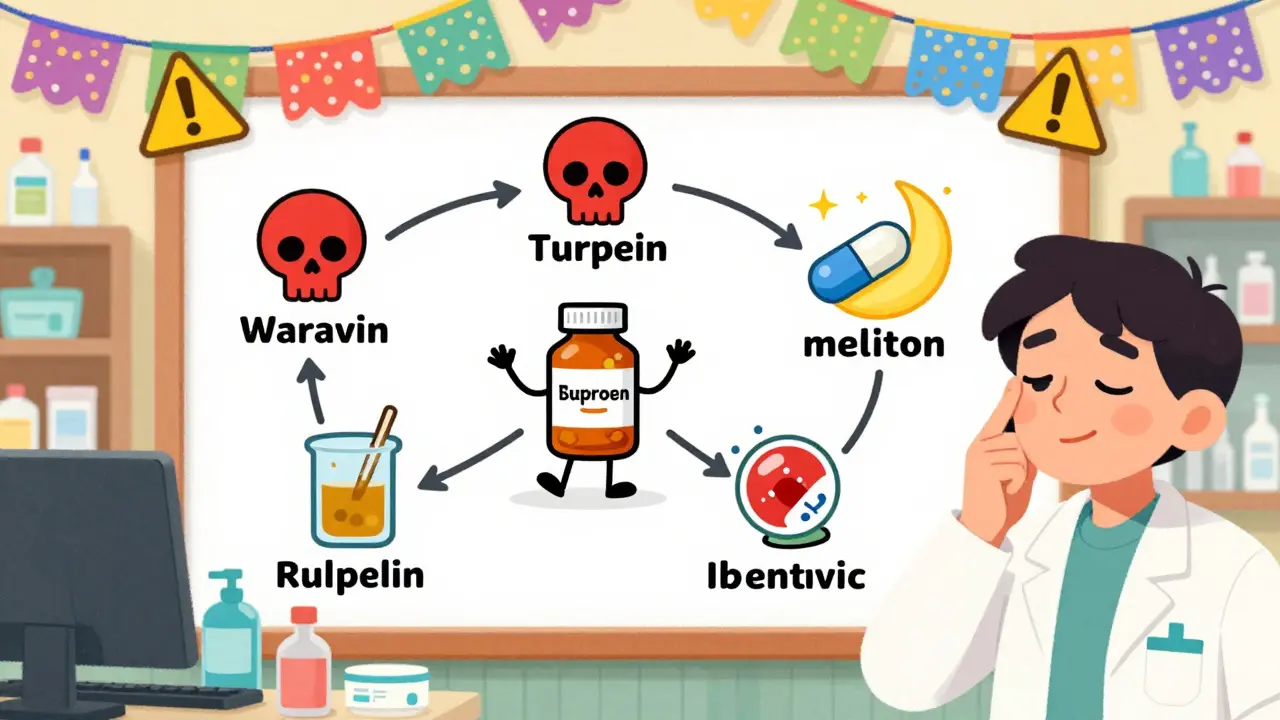
What to Bring to Your Review
Don’t wing it. Preparation makes the difference between a good review and a great one. Here’s what to bring:- All prescription bottles (even empty ones)
- All over-the-counter pills, including pain relievers, sleep aids, and antacids
- All vitamins, minerals, and herbal supplements (ginseng, fish oil, St. John’s wort, etc.)
- A list of any recent changes: new prescriptions, skipped doses, side effects you’ve noticed
- Your insurance card and Medicare Part D info (if applicable)
What Happens After the Review
Your pharmacist won’t just hand you a list and send you on your way. They’ll:- Send a written summary to your doctor with recommendations
- Help you set up a pill organizer or blister pack if your regimen is complex
- Connect you with medication synchronization services so all your refills are due on the same day
- Follow up in a few weeks to see how you’re doing
Why This Isn’t Just a Good Idea-It’s Necessary
Medication errors are one of the leading causes of hospital admissions for seniors. About 20% of all adverse drug events could be avoided with a simple review. And the cost savings? They’re huge. For every dollar spent on a pharmacist-led review, the healthcare system saves up to $6 in avoided hospital visits and emergency care. The National Institute for Health and Clinical Excellence (NICE) says patients should be active partners in their medication reviews. That means asking questions. Saying no to pills you don’t understand. And insisting on clarity. This isn’t about replacing your doctor. It’s about adding a layer of safety. Your pharmacist is the one person in your care team whose whole job is to make sure your meds work without hurting you.
What If You’re Not on Medicare?
You still qualify. While Medicare Part D requires pharmacies to offer these reviews to eligible members, many private insurers now cover them too. Call your pharmacy and ask: “Do you offer annual medication reviews? Is it covered under my plan?” If they say no, ask if they can do it as a private service. Most pharmacists will do it for $25-$50 out-of-pocket. That’s less than one co-pay. And it could save you thousands in hospital bills down the road.Common Myths About Medication Reviews
- Myth: My doctor already checks my meds.
Truth: Doctors don’t have the time or training to review every drug interaction. That’s why pharmacists exist. - Myth: I only take a few pills-it’s not a big deal.
Truth: Even two drugs can interact dangerously. And many side effects come from combinations, not single pills. - Myth: I don’t need this unless I’m sick.
Truth: These reviews are preventive. They catch problems before you feel them.
Next Steps: How to Get Started
1. Call your pharmacy. Ask if they offer annual medication reviews. Most do.Is an annual medication review free?
Yes, if you’re enrolled in Medicare Part D, the review is covered at no cost. Many private insurers also cover it. Even if your plan doesn’t, most pharmacies offer the service for $25-$50 out-of-pocket-far less than the cost of a single emergency visit caused by a medication error.
Do I need to see my doctor before scheduling a review?
No. You can schedule a review directly with your pharmacist. After the review, they’ll send a summary to your doctor with recommendations. You don’t need prior approval. Just bring your meds and show up.
Can a pharmacist really stop my medication?
No, only your doctor can officially discontinue a prescription. But your pharmacist can recommend stopping a drug, explain why, and help you talk to your doctor. They’ll provide written evidence to support the change, which makes it easier for your doctor to agree.
What if I’m taking supplements? Do I need to mention them?
Absolutely. Supplements like St. John’s wort, ginkgo, garlic, and fish oil can interact with blood thinners, antidepressants, and blood pressure meds. About half of patients forget to mention them-but pharmacists see the risks right away. Don’t assume they’re harmless just because they’re natural.
How often should I get a medication review?
At least once a year. But if you’ve had a major health change-like a new diagnosis, hospital stay, or surgery-or if you’ve started or stopped several medications, schedule a review sooner. Don’t wait for the calendar to turn.


Written by Guy Boertje
View all posts by: Guy Boertje