
Facial Weakness: Causes, Treatments, and What You Need to Know
When your face suddenly feels heavy, droops on one side, or won’t smile properly, you’re dealing with facial weakness, a loss of muscle control in the face caused by nerve disruption. Also known as facial paralysis, it’s not just cosmetic—it can affect eating, speaking, and even blinking. This isn’t rare. About 1 in 5,000 people get it each year, and for many, it shows up overnight with no warning.
Bell’s palsy, a sudden, often temporary facial weakness tied to viral inflammation of the facial nerve, is the most common cause. But it’s not the only one. Stroke, a medical emergency where blood flow to the brain is cut off can also trigger facial weakness—usually paired with arm weakness, slurred speech, or confusion. Then there’s trauma, tumors, Lyme disease, or even complications from ear infections. The key difference? Stroke-related weakness often hits other body parts too. Bell’s palsy usually stays in the face.
What you do next matters. If your face drops suddenly, don’t wait. Call for help right away—because if it’s a stroke, minutes count. If it’s Bell’s palsy, early treatment with steroids can cut recovery time in half. Most people recover fully within weeks, but some need physical therapy to retrain muscles. Others might need eye drops or patches if they can’t blink. The right diagnosis starts with a doctor checking your reflexes, hearing, and balance—and sometimes ordering an MRI to rule out tumors or other nerve issues.
What you’ll find below are real, practical guides on how facial weakness connects to other health issues. You’ll read about how facial weakness can be a warning sign for neurological conditions, how certain medications might worsen nerve function, and what treatments—both medical and natural—are backed by evidence. Some posts dig into how antibiotics or autoimmune drugs can trigger nerve problems. Others show how physical therapy, acupuncture, or even music therapy helps rebuild muscle control after damage. You’ll see what works, what doesn’t, and what to ask your doctor before trying anything new.
Bell’s Palsy Treatment: How Corticosteroids Help Restore Facial Movement
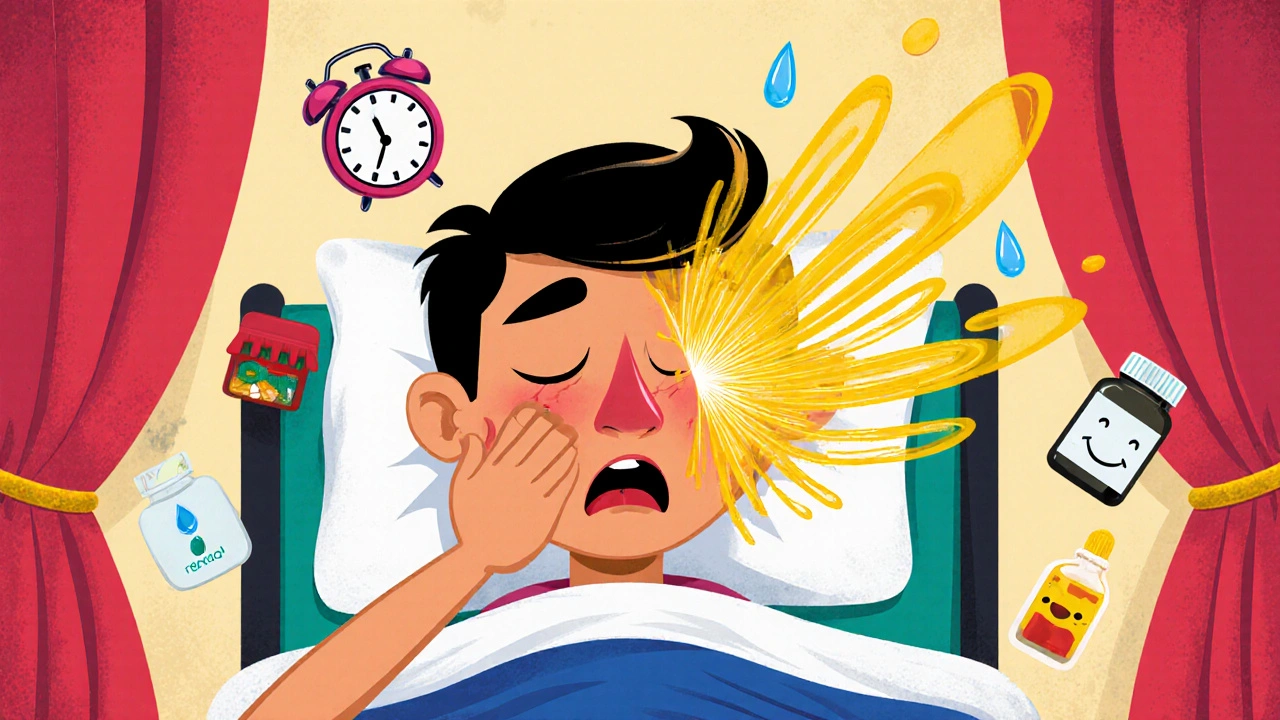
Bell's palsy causes sudden facial paralysis, but prompt treatment with corticosteroids like prednisone can dramatically improve recovery. Learn how, when, and why steroids work-and what to avoid.
- Nov 21, 2025
- Guy Boertje
- 13